Construction has officially commenced on a network upgrade in Australia’s New South Wales Upper Hunter region, which is set to boost transfer capacity by at least 1GW by 2028, in support of the state’s renewable energy transition.
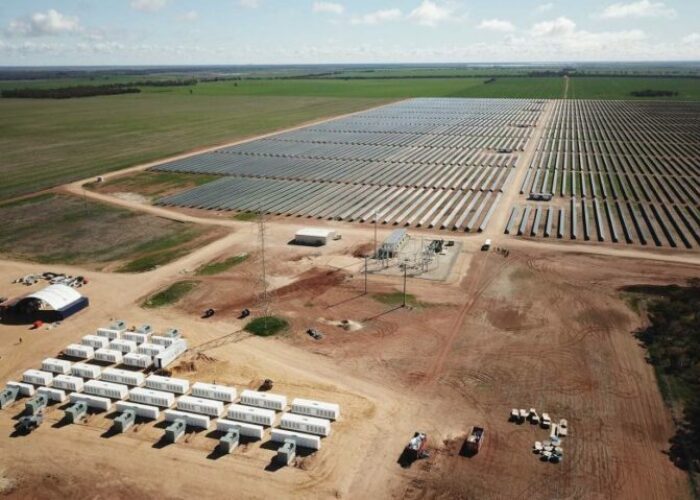
Works have begun on the estimated AU$590 million (US$413 million) Hunter-Central Coast Renewable Energy Zone (REZ) network infrastructure project, which will enable an additional 1.8GW of new renewable generation and storage projects to connect to the New South Wales grid.
Try Premium for just $1
- Full premium access for the first month at only $1
- Converts to an annual rate after 30 days unless cancelled
- Cancel anytime during the trial period
Premium Benefits
- Expert industry analysis and interviews
- Digital access to PV Tech Power journal
- Exclusive event discounts
Or get the full Premium subscription right away
Or continue reading this article for free
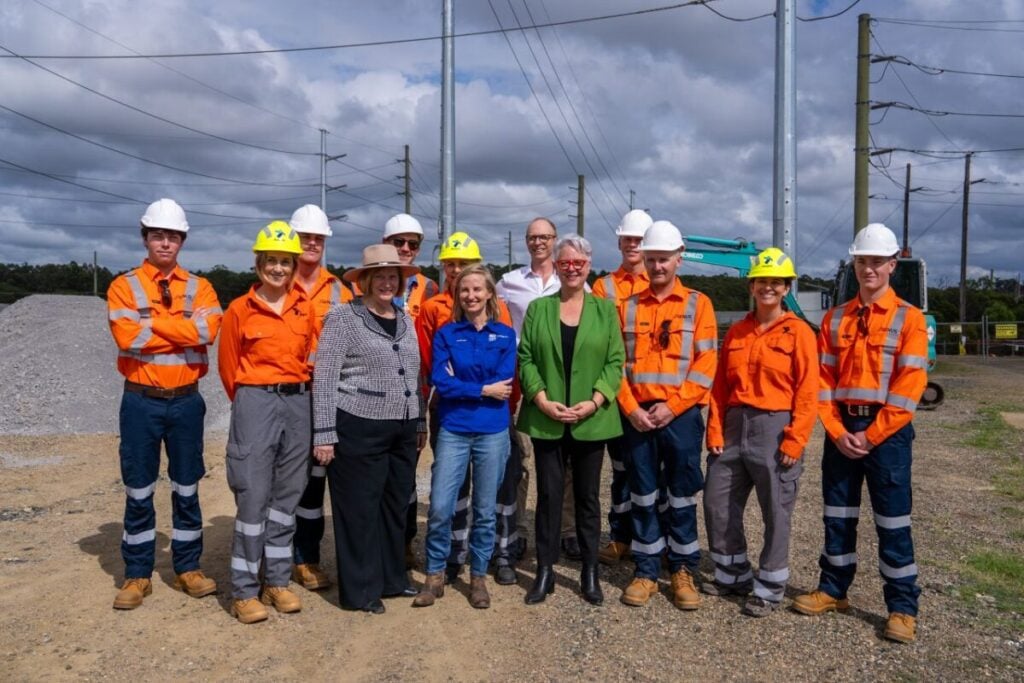
Construction was marked by a visit from the New South Wales Minister for Climate Change and Energy, Penny Sharpe, who visited the Kurri Kurri site to mark the commencement of works.
The Hunter-Central Coast REZ will create 590 jobs during construction and provide 220 secure local positions once operational. EnergyCo chief executive Hannah McCaughey emphasised that 90% of the ongoing jobs are expected to be filled by locals, reinforcing the project’s commitment to regional employment.
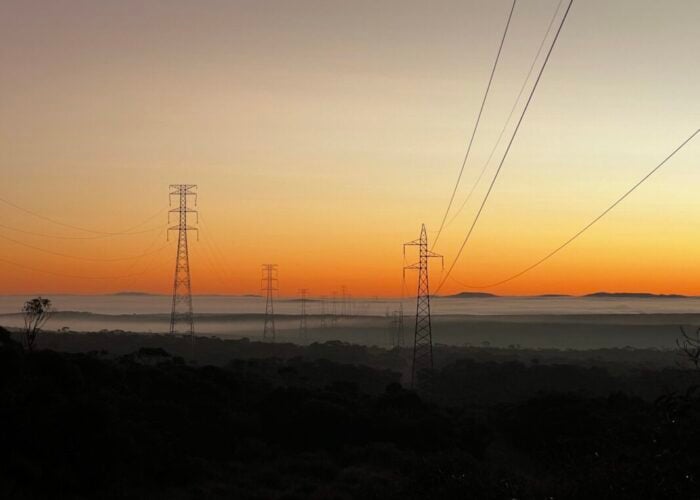
The project includes upgrades to approximately 85km of existing sub-transmission lines and upgrades to existing substations, including the one at Kurri Kurri. Two new 132 kV substations will be built in the Muswellbrook local government area at Sandy Creek and Antiene as part of the programme.
The upgrade has an intended network capacity of 1GW and will allow for 1.8GW of new renewable generation and storage projects to connect to the grid.
Electricity distributor Ausgrid has partnered with state body EnergyCo to deliver the Hunter-Central Coast REZ upgrades and will build, finance, operate and maintain the REZ network infrastructure.
The Hunter-Central Coast REZ has attracted substantial commercial interest since its inception.
In February 2022, New South Wales received 40GW of applications for the new renewable energy zone, representing a US$72 billion investment.
The registration of interest process attracted 24 solar energy projects, 35 large-scale battery energy storage systems, eight pumped hydro projects and 20 wind farms, demonstrating the region’s appeal to renewable energy developers.
The overwhelming response reflected investor confidence in the Hunter and Central Coast regions, which possess excellent renewable energy resources and can utilise existing power stations, rehabilitated mining land, electricity network infrastructure, port and transport infrastructure and a skilled workforce.
The regions span nine local government areas, including Muswellbrook Shire Council, Newcastle City Council, and Central Coast Council, and cover the lands of the Awabakal, Bahtabah, Biraban, Darkinjung, Mindaribba, Wanaruah, and Worimi people.
The Hunter-Central Coast REZ construction comes as part of New South Wales’ broader commitment to renewable energy infrastructure.
Last year, Australia’s New South Wales government earmarked AU$2.1 billion for transmission infrastructure to connect its Renewable Energy Zones and support utility-scale renewable energy and storage projects. The investment, delivered via the Transmission Acceleration Facility, will be spread over four years across the state’s five REZs.
The Hunter-Central Coast REZ is one of five designated clean energy zones in the state government’s electricity roadmap, alongside Central-West Orana, New England, South-West and Illawarra regions.
The Central-West Orana REZ recently became Australia’s first REZ to begin construction, delivered by ACEREZ, a consortium of ACCIONA, COBRA and Endeavour Energy.
Beyond traditional electricity generation, the Hunter-Central Coast REZ will support emerging technologies including green hydrogen, ammonia and metal production, offshore wind development, EV fleet operations and industrial process electrification.
The project includes an online directory connecting local businesses with contract opportunities across all REZ regions, enabling regional companies to participate in the growing pipeline of energy projects.
Member for Cessnock Clayton Barr encouraged local participation, stating the project represents “hundreds of new jobs coming to our local area” and an opportunity to upgrade the electricity system network.
Full capacity for the Hunter-Central Coast REZ is expected by 2028, with the network infrastructure designed to accommodate the substantial renewable energy development interest the region has attracted.