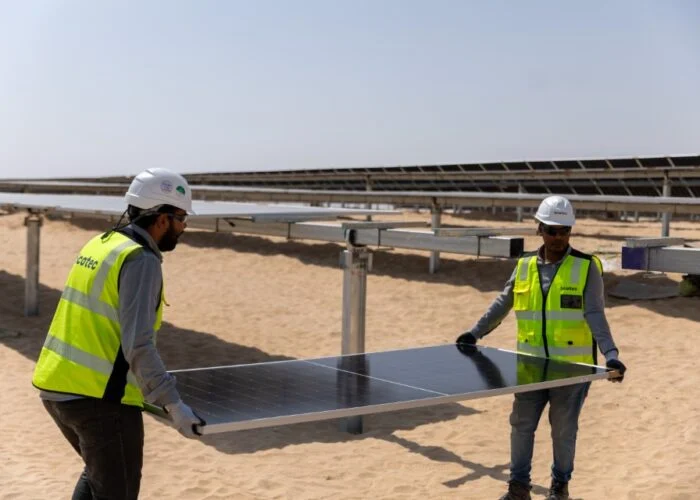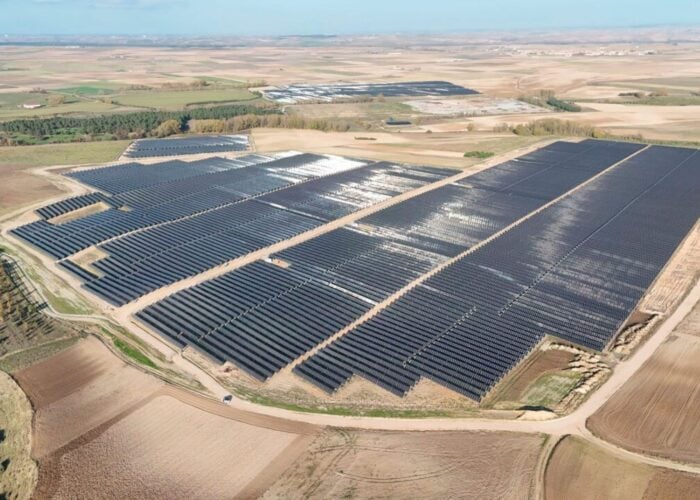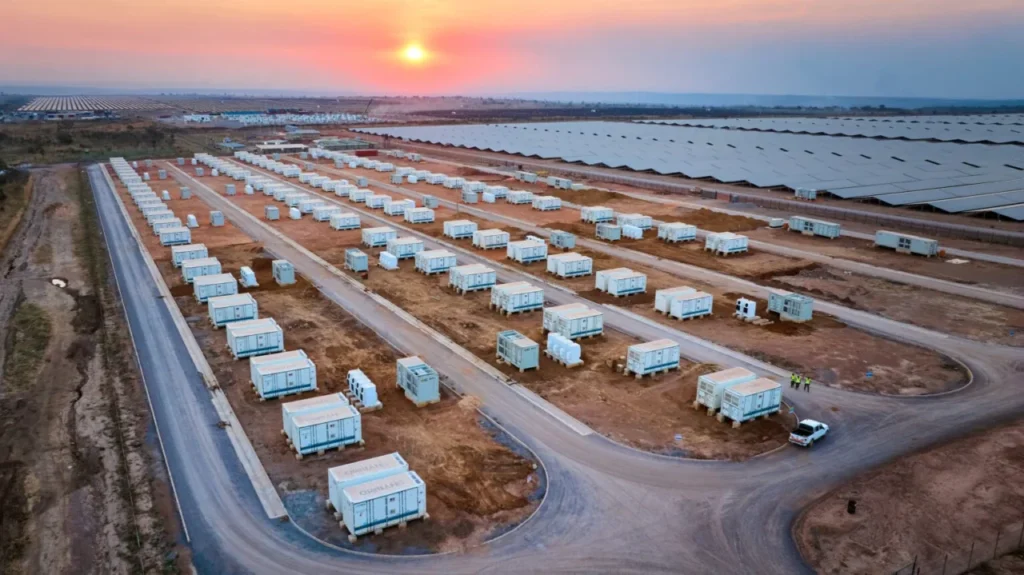
African renewables financier CrossBoundary Energy has begun commercial operations at a 233MW/526MWh solar-plus-storage project in the Democratic Republic of the Congo (DRC).
The Kamoa solar project is located next to the Kamoa-Kakula Copper mine, the largest copper mine in Africa and one of the largest on earth. The mine is jointly owned by Canadian mining firm Ivanhoe Mines and Chinese state-run mining firm Zijin Mining, along with the DRC government.
Try Premium for just $1
- Full premium access for the first month at only $1
- Converts to an annual rate after 30 days unless cancelled
- Cancel anytime during the trial period
Premium Benefits
- Expert industry analysis and interviews
- Digital access to PV Tech Power journal
- Exclusive event discounts
Or get the full Premium subscription right away
Or continue reading this article for free
The solar project is backed by a power purchase agreement (PPA) with the Kamoa Copper mine, under which CrossBoundary said it would supply “round-the-clock” power to the mine’s operations, to “enable continued expansion” at the site.
“By leveraging declining costs of solar and battery technologies, the project demonstrates that renewable baseload power can now compete with and outperform traditional fossil fuel generation in heavy industry,” CrossBoundary Energy said in an announcement.
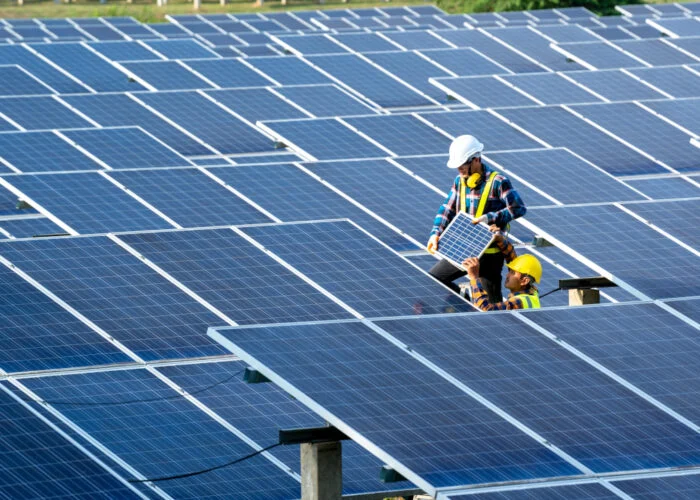
The project deploys around 360,000 back contact (BC) modules from Chinese solar panel manufacturer Aiko. The company’s 655W dual-glass ABC modules have a reported efficiency of 24.2%, with “superior temperature coefficient and hotspot suppression” that improve their safety and performance under hot conditions like the DRC.
CrossBoundary said that the project was built within 16 months of first signing the PPA deal with the mine, making it “the fastest built large-scale solar/BESS project in Africa”.
Solar deployments in the DRC have grown significantly in recent years and are expected to increase by over 500% in 2026, according to data from energy think tank Ember. The country has historically had very low rates of electricity adoption and access, though the expansion of mining operations to exploit the country’s rich supplies of critical minerals has increased investment in new energy capacity, like the Kamoa solar project.
Ember also said that the price shocks to oil and diesel resulting from the ongoing Middle East conflict have pushed people who had been using generators towards installing solar. The think tank said that solar module imports from China to Africa grew by 53% year-on-year in the 12 months to June 2026, and 19 countries, including the DRC, Zimbabwe and Egypt, are on track to see solar installations grow by more than 100% this year.
Alongside solar growth, the DRC has imported more batteries than solar modules by dollar value over the last two years, according to Ember. It said that battery imports “far exceeded solar imports” in the country, largely to power solar-plus-storage projects at copper mines.