At the end of May 2020, the European Commission announced that this is Europe’s moment to repair and prepare for the next generation as it targets support for a major recovery plan to help rebuild following the unprecedented COVID-19 pandemic. A key part of this includes the proposed new mechanism, Next Generation EU, which will look protect lives and livelihoods, repair the Single Market, as well as to build a lasting and prosperous recovery.
Key for the solar industry, was that this instrument is not just looking to rebuild the economy as it was, but actively green it, targeting sustainability, climate action and – crucially – renewable energy.
Try Premium for just $1
- Full premium access for the first month at only $1
- Converts to an annual rate after 30 days unless cancelled
- Cancel anytime during the trial period
Premium Benefits
- Expert industry analysis and interviews
- Digital access to PV Tech Power journal
- Exclusive event discounts
Or get the full Premium subscription right away
Or continue reading this article for free
European Commission president Ursula von der Leyen said the recovery plan would turn an “immense challenge” into an opportunity but not just supporting recovery but investing in the future.
“The European Green Deal and digitalisation will boost jobs and growth, the resilience of our societies and the health of our environment,” she continued. “This is Europe's moment. Our willingness to act must live up to the challenges we are all facing. With Next Generation EU we are providing an ambitious answer.”
Next Generation EU centres around €750 billion in funding, along with targeted reinforcements to the long-term EU budget for 2021-2027. In total this would bring the financial firepower of the EU budget to €1.85 trillion.
While these headline figures have been broadly welcomed by those in the solar sector however, how this money will be targeted remains to be seen and will depend on the applications put forward by member states. The multiannual financial framework will allow funding to be channelled through EU programmes and repaid not before 2028 but not after 2058.
Currently the EU is working on developing the details of how the funding will be used, with more detail expected by the autumn to clarify exactly what it will mean for renewables.
Recovery and resilience: Greening the next steps
From the European Commission’s initial proposal we know funding for the renewables sector and other green sectors within Next Generation is split into a number of segments. The largest of these is the Recovery and Resilience Facility, which will consist of €560 billion of financial support for investments and reforms. This includes green and digital transitions, the EU stated, as key priorities.
Miguel Herrero Cangas, policy advisor at trade body SolarPower Europe says that in order for Recovery & Resilience Plans to be approved by the Commission, member states will have to show their actions can “significantly contribute to the green and digital transition”. While this is vague, he continues, “this could potentially have a strong impact on the renewable energy sector and the solar sector in particular as a major contributor to the green transition and driver of green jobs”.
Beyond this, there is funding available to help kick-start the EU economy by incentivising private investments. This includes upgrading its current investment programme, InvestEU, to a level of €15.3 billion. A new facility will be built into this, to generate investments up to €150 billion in strategic sectors.
In order to address lessons learnt from the COVID-19 crisis, further spending has been set aside for health programmes and civic protection. Additionally, €94.4 billion will go to Horizon Europe, to reinforce vital research into various areas including the green transition.
The lack of clarity as to what will go to each sector currently seems to be partly by design; the exact allocation will be influenced by the responses from member states, allowing them to direct the funding towards the most impactful areas through the consultation period.
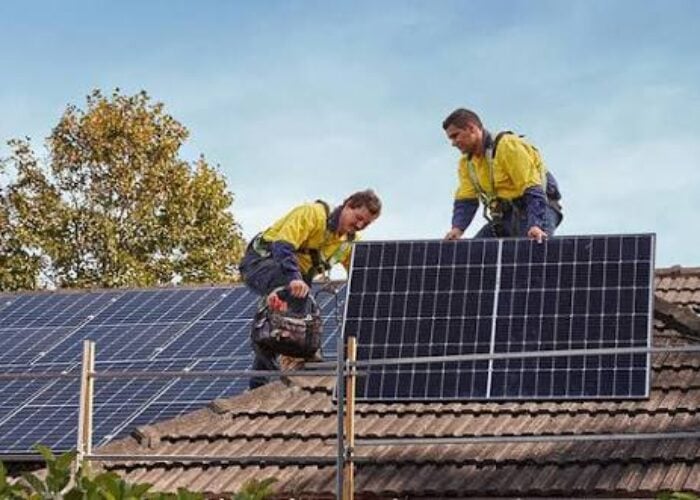
According to a leaked document published on website Euractiv a week before the official plan was shared, €91 billion has been earmarked for rooftop solar panels, insulation and renewable heating systems.
As part of this, the document suggests that the EU will tender 15GW of renewable electricity over the next two years. There will be a renewable energy acceleration programme designed to support 25% of the market, with a total capital investment of €25 billion. If this rings true, the EU’s green recovery holds a lot of promise for the solar sector.
This is an extract of an article first published in Volume 24 of PV Tech Power. The full article can be read here, or in the full digital copy of PV Tech Power 24, which can be downloaded via the PV Tech Store here