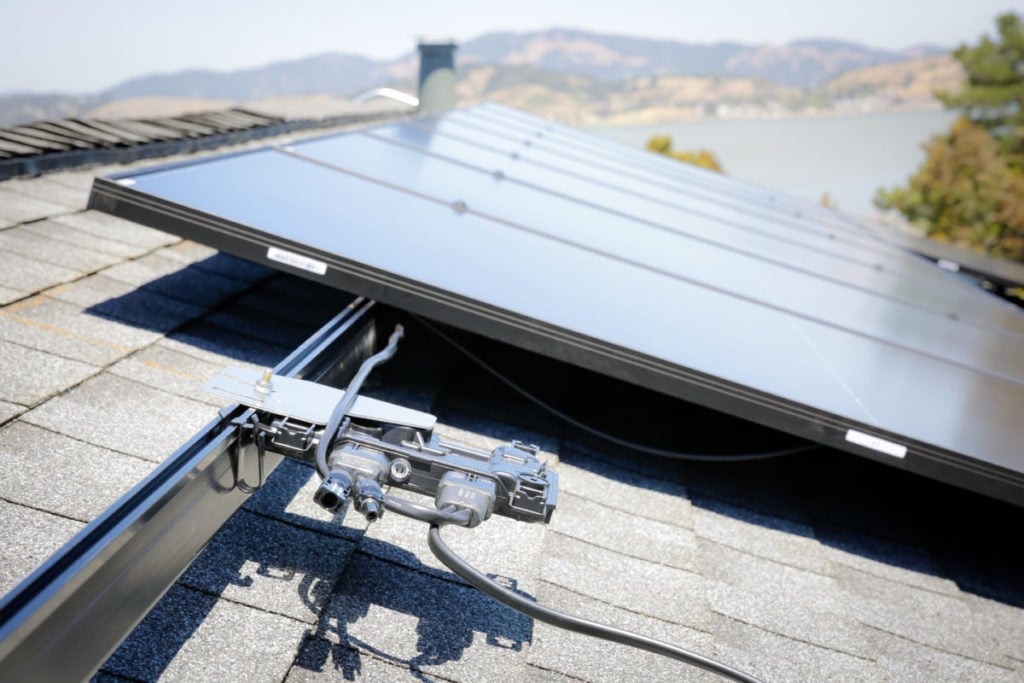
US microinverter producer Enphase Energy has released a residential power control product that it says can support larger solar PV and energy storage systems without needing to upgrade the home electricity panel.
The Busbar Power Control software analyses and manages the power of residential solar panels and batteries to maximise their efficiency while protecting the busbar, the metal bar at the centre of a home electricity panel.
Try Premium for just $1
- Full premium access for the first month at only $1
- Converts to an annual rate after 30 days unless cancelled
- Cancel anytime during the trial period
Premium Benefits
- Expert industry analysis and interviews
- Digital access to PV Tech Power journal
- Exclusive event discounts
Or get the full Premium subscription right away
Or continue reading this article for free
Enphase said the software “unlocks bigger systems and enables homeowners to maximise the usable power … without requiring an upgrade to the main electrical panel.”
The technology can also manage the interactions between a home energy system and the grid, which Enphase said can “optimise savings from self-consuming solar and battery electricity, as well as increase power exports to the grid”.
In an explanatory video, Enphase said that its busbar overload control software can both allow greater self-consumption at peak times by increasing the rate at which residential solar and batteries can discharge their power, and allow greater exporting of power to the grid at the most beneficial times. Both of these are achieved through managing the safety and efficiency of the home busbar, allowing it to operate at maximum potential.
“The ability to dynamically control the busbar power is transforming how we approach system designs,” said Cory Johnson, owner of New Day Solar, a PV installer in California. “Our clients can now maximise their solar investments and benefit from increased energy output and grid exports.”
Inverters changing course
Products like these reflect the changing technological requirements for inverters.
In its announcement, Enphase claimed the software would be particularly beneficial for Californian homeowners under the state’s NEM 3.0 legislation.
California changed its net energy metering (NEM) scheme in early 2023, reducing the compensation for residential solar power sold back to the grid and instead incentivising energy storage systems with demand-based repayments. The changes were controversial and have contributed to job losses in the solar sector and a decline in solar capacity additions in one of the world’s leading markets. Simultaneously, residential energy storage installations have increased.
Enphase has directly targeted the Californian NEM market before. It previously released products which allow Californians grandfathered into the NEM 2 and NEM 1 legislation to expand their residential solar capacity without being subject to new NEM 3.0 rates.
The shift towards energy storage and away from lucrative residential solar incentives is also happening in other developed markets, such as Italy and the Netherlands. In October the Netherlands announced plans to scrap its net metering scheme and the national solar trade body called for incentives for energy storage adoption. Italy has announced reductions to its Superbonus residential solar incentives.
For inverter manufacturers, this shift has shaken things up. Enphase itself announced 500 job cuts and abandoned plans for a Mexico manufacturing contract last month, following Q3 financial results that showed a significant slowdown in sales. Competitors SMA Solar and SolarEdge have also gone through business restructuring and announced job cuts in recent months.
PV Tech Premium heard from an analyst from S&P Global last month who said that the move towards residential energy storage and more complex system management products has required inverter manufacturers to create more specialised and intelligent products. Known as the “brains” of an electrical energy system, inverters are increasingly required to facilitate complex digital management and optimisation operations between solar, batteries, vehicle chargers and the grid.
Simultaneously, it was reported that inverter products have become more commoditised and harder to differentiate from one another, which has put pressure on Western manufacturers, including Enphase, to innovate to set themselves apart from Chinese market competitors who can often produce at lower prices and higher volumes.