The European Council has formally adopted plans for a phased ban of Russian gas imports starting from March.
The regulation has been praised by Ukrainian campaign group Razom We Stand as a “historic decision” and a “major step towards Europe’s full independence from Russian fossil fuels and a cleaner energy future.”
Try Premium for just $1
- Full premium access for the first month at only $1
- Converts to an annual rate after 30 days unless cancelled
- Cancel anytime during the trial period
Premium Benefits
- Expert industry analysis and interviews
- Digital access to PV Tech Power journal
- Exclusive event discounts
Or get the full Premium subscription right away
Or continue reading this article for free
The regulation, formally agreed by the 27 member states today, is part of the REPowerEU scheme, which was introduced to reduce European reliance on Russian fuel and increase domestic renewables deployments following the full-scale invasion of Ukraine in 2022.
“As of today, the EU energy market will be stronger, more resilient and more diversified,” said Michael Damianos, Cypriot minister for energy, commerce and industry. “We are breaking away from detrimental reliance on Russian gas and taking a major step, in a spirit of solidarity and cooperation, towards an autonomous Energy Union.”
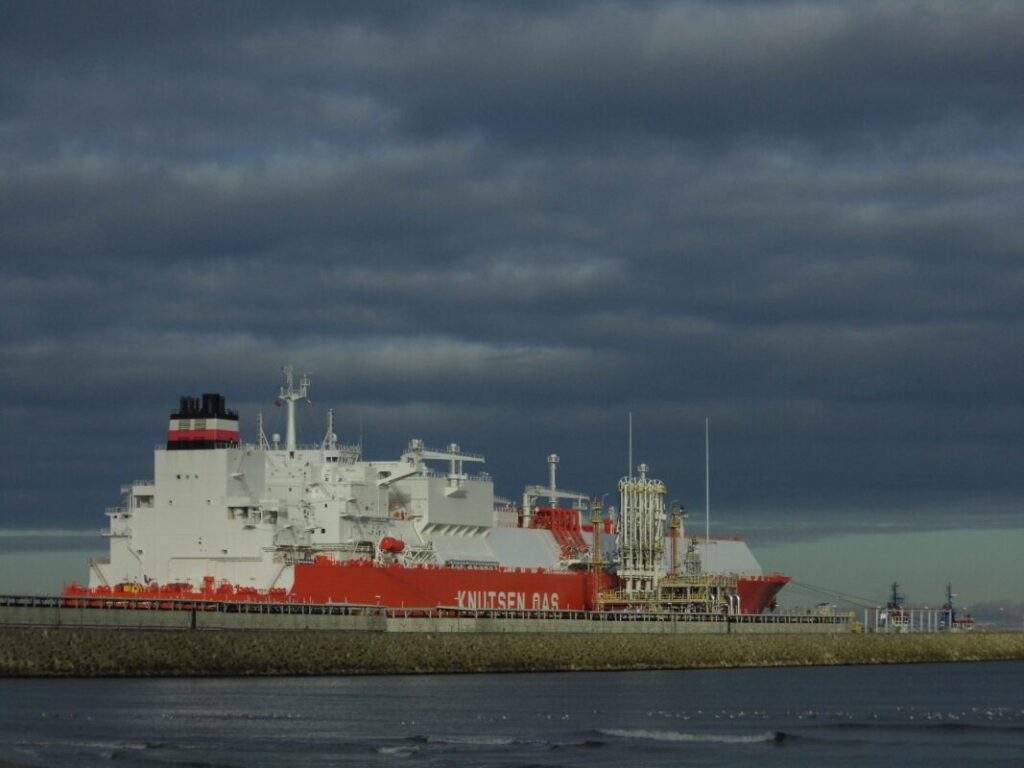
By 1 March, EU countries must prepare national plans to replace Russian gas, with a “stepwise” ban beginning six weeks after the regulation enters into force and a full ban on LNG by the start of 2027 and on pipeline gas by autumn next year. EU countries will have to verify the country from which imported gas is produced before authorising its entry to the bloc. The Council added that existing contracts will have a “transition period”.
Non-compliance with the new rules may result in maximum penalties of at least €2.5 million (US$2.9 million) for individuals and at least €40 million (US$47 million) for companies, the council said, or alternatively a minimum of 3.5% of a company’s global turnover or 300% of the estimated transition turnover.
The Council retains a provision to suspend the ban for up to four weeks in case of a supply emergency.
“We applaud this historic decision—it proves Europe can get rid of Russian gas and build a secure, sustainable energy system instead,” said Svitlana Romanko, founder and executive director of Razom We Stand.
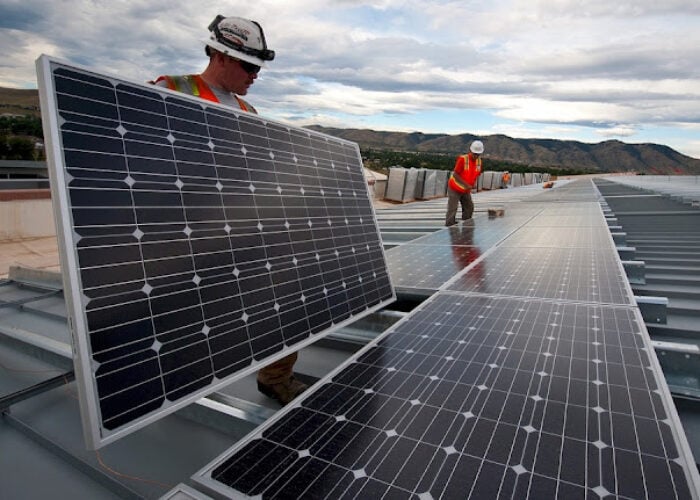
Reducing reliance on Russian gas has coincided with a significant rise in renewable energy deployments in Europe, supported by the REPowerEU plan. The EU’s solar sector grew by 47% and 51% in 2022 and 2023, respectively, in direct response to the energy crisis triggered by the full-scale invasion of Ukraine. Over this period, REPowerEU and its Recovery and Resilience Facility (RRF) funded significant solar PV and energy storage investments across the EU.
Despite seeing a decline in growth for the first time in a decade in 2025, solar was the main contributor to record levels of renewable energy generation in Europe last year, when renewables out-produced all fossil fuels across the Union for the first time ever.
Despite these advances, Razom We Stand called on the EU to go further to cut ties with Russian fuel imports.
“Adopting the REPowerEU Regulation is just the start,” said Romanko. “Russia’s still raking in billions from gas and oil—every cubic meter and barrel sold funds bombs raining down upon Ukraine, blowing up our energy and heating systems as the weather plummets to -20 degrees Celsius. The EU must finally slam the door shut completely on Russia’s fossil fuel-funded war economy.”
The EU Council said that Russian gas still accounted for around 13% of EU imports in 2025, equating to roughly €15 billion (US$17.7 billion).
Razom We Stand has urged the EU to introduce a full ban on maritime services for Russian gas products and tougher enforcement of ship inspections and seizures, both of which are aimed at targeting Russia’s “shadow fleet” of tankers designed to evade international sanctions.
It also said Brussels should close the “refining loophole” by banning oil products refined in third countries using Russian crude oil, and called for the “rapid scale-up of cheaper decentralised clean energy” to “create real energy security in both Ukraine and Europe.”
Decentralised self-consumption PV systems have played a big part in keeping Ukraine powered during the war, PV Tech Premium heard last year. Data from the country’s solar industry body said that the majority of the roughly 850MW of new PV capacity installed in Ukraine in 2024 was self-consumption solar, and we heard that decentralised energy systems with more generation sites offer greater security under artillery fire than relying on traditional, large, centralised power plants.
Razom criticises UK contracts with TotalEnergies
In a separate announcement, Razom We Stand condemned the UK government’s decision to keep public contracts with French energy giant TotalEnergies, which it said is “heavily involved” in Russian LNG exports.
An open letter signed by Razom We Stand and fellow campaign group Business for Ukraine (B4Ukraine), along with a range of other organisations and four British MPs, urges Westminster not to renew TotalEnergies’ public sector gas contract and to outline plans to transition public contracts away from companies with exposure to Russia.
It cites TotalEnergies’ partial ownership of Russian LNG projects in Siberia and the Arctic and revelations from Politico that showed that 10 Downing Street, the prime minister’s residence, and much of Whitehall have been powered with TotalEnergies gas.
“It is indefensible that public money from UK taxpayers is still flowing to a company like TotalEnergies, which is helping to prop up Putin’s war economy,” said Romanko. “We implore the UK government to immediately announce an end to its contract with TotalEnergies”. TotalEnergies’ UK public contract comes up for review next month.