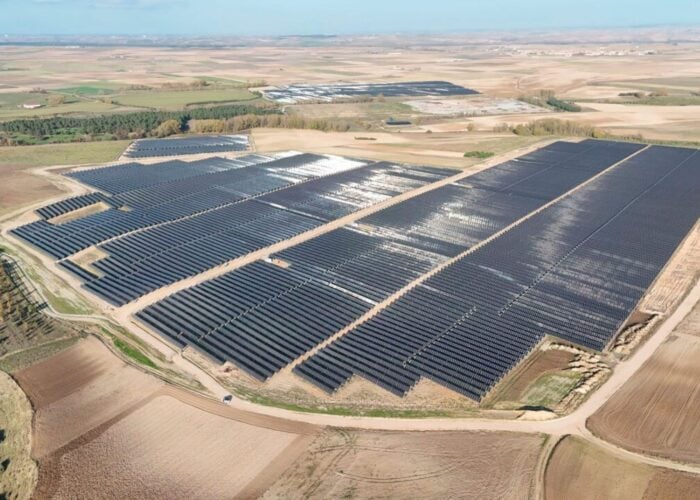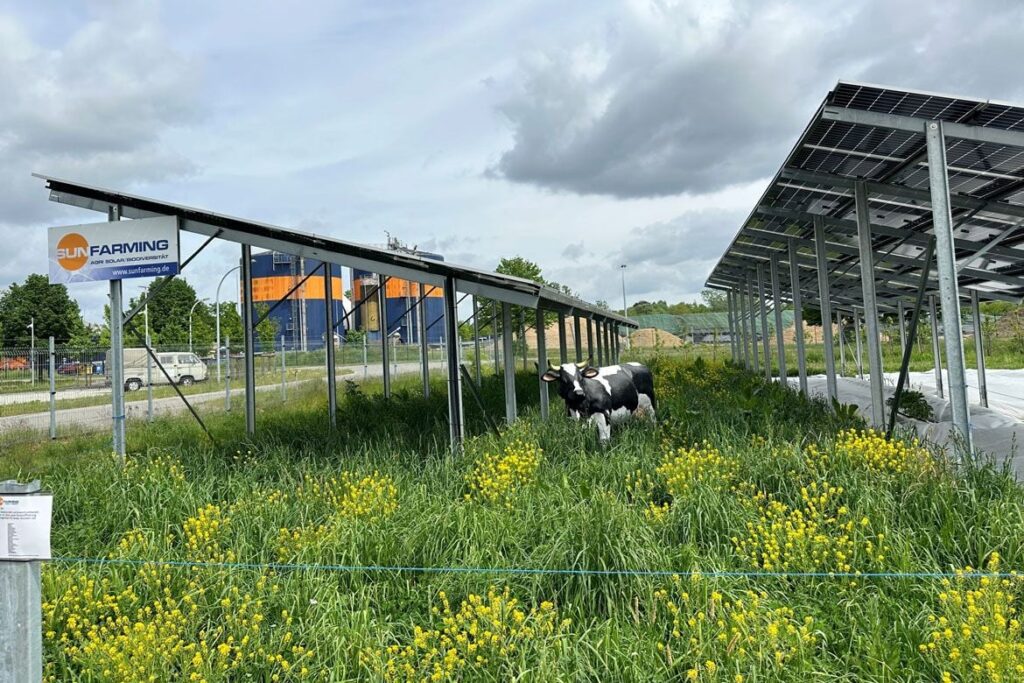
The EU would benefit from more supportive legislation to encourage the development of PV projects, which are designed to minimise biodiversity damage, according to a new report from SolarPower Europe and the Nature Conservancy.
The report, ‘Rewarding and incentivising nature-inclusive solar through EU policy’ makes a number of recommendations at the EU level to simultaneously encourage the installation of new solar capacity, and mitigate environmental damage. The report begins with a definition of “nature-inclusive solar”, which can be described as the construction of PV plants that includes the completion of environmental and biodiversity assessments, the creation of habitats for local biodiversity and continuous site management during the project’s lifespan.
Try Premium for just $1
- Full premium access for the first month at only $1
- Converts to an annual rate after 30 days unless cancelled
- Cancel anytime during the trial period
Premium Benefits
- Expert industry analysis and interviews
- Digital access to PV Tech Power journal
- Exclusive event discounts
Or get the full Premium subscription right away
Or continue reading this article for free
Clarifying such a definition is one of the report’s key policy recommendations, as it notes that existing terms, such as “biodiversity-friendly” or “nature-positive” are nebulous, and too open to interpretation.
Alongside this recommendation, the report calls on both the EU and individual member states to “create an enabling environment” for nature-inclusive solar park deployment through policy; integrate these policies into local legal frameworks and spatial planning; and continue to conduct research into nature-inclusive PV in the future.
“The Nature Conservancy and SolarPower Europe are calling for a coherent EU-wide policy framework that defines nature-inclusive solar, aligns with existing EU policies, and incorporates a monitoring and evaluation system,” said SolarPower Europe policy adviser for sustainability Lina Dubina. “This kind of framework could simplify and standardise practices across EU countries, helping nature-friendly solar parks become more widespread and effective.”
Building on effective policies
The report notes that there are some policies in place in Europe that could help the deployment of nature-inclusive PV, such as the EU’s Nature Restoration Law (NRL), which came into effect this August, and requires member states to put into place environmental restoration measures on at least 20% of the EU’s land and sea areas by 2030.
SolarPower Europe and the Nature Conservancy argue that land used for nature-inclusive solar farms would qualify as restored land, due to the potential for such solar projects to aid in the restoration of pollinator population and support the monitoring of biodiversity over time.

The report also notes that the widespread deployment of nature-inclusive solar projects could shift perceptions of both solar projects and biodiversity initiatives. The study assumes that nature-inclusive PV refers to land primarily used for solar projects, where biodiversity protection is an important but secondary consideration; the report argues that on land where nature conservation is the “primary purpose” of the land, in keeping with legislation such as the NRL, local solar farms can be seen as a means to finance these conservation projects.
It is also worth noting that the rehabilitation of land through solar projects does not necessarily mean a majority of the EU’s land will need to be given over to solar developments. The report points to figures from the European Environmental Bureau (EEB), which found that only 0.3% of the EU’s total land will be needed for current and future solar projects, and the installation of solar and wind projects on just 2.2% of EU land would be sufficient to meet net-zero targets by 2040.
The news follows encouraging reporting in the agrivoltaics (agriPV) sector in particular, a well-established industry that combines solar deployments with environmental and agricultural management. Figures from energy think tank Ember suggest that Central Europe alone could deploy up to 180GW of agriPV, which would nearly triple the region’s annual renewable electricity production.
Read the full SolarPower Europe and the Nature Conservancy report here.