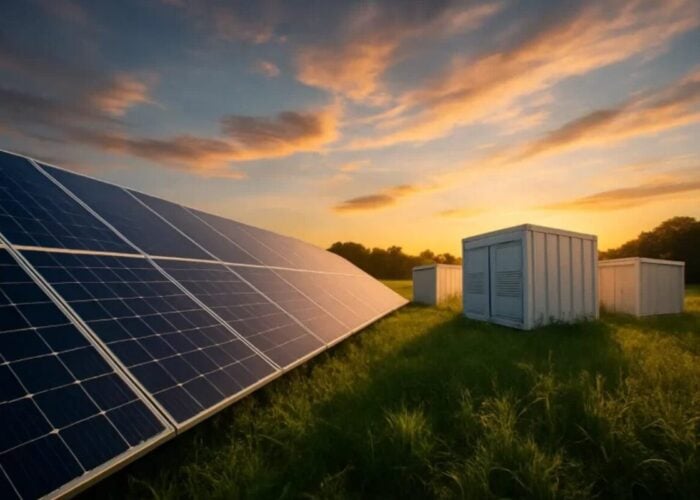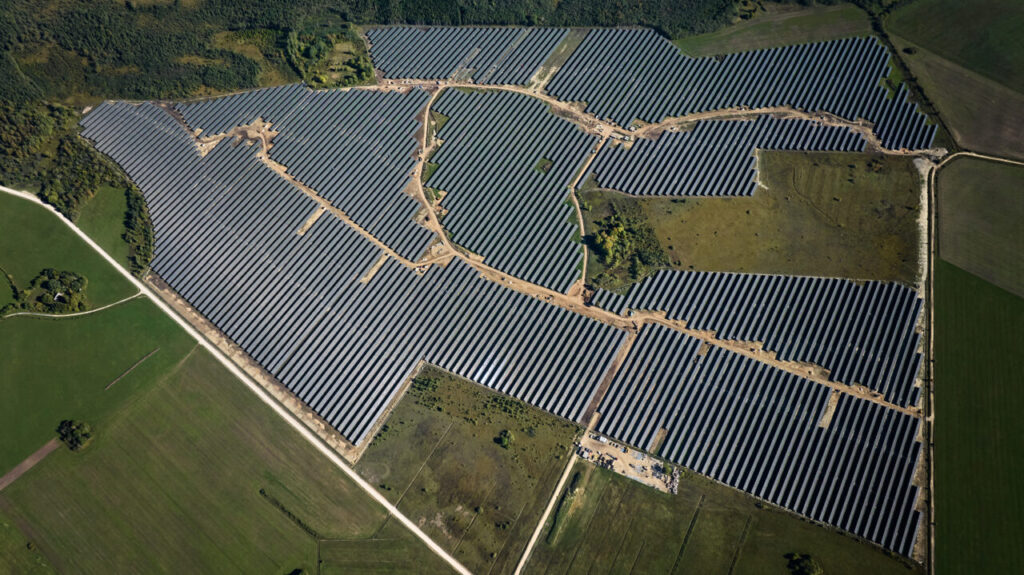
A 77.5MW PV power plant in Estonia is to be co-located with a 55MW/250MWh battery energy storage system (BESS) to create what is claimed will be the country’s largest hybrid project.
Developer Evecon and investment manager Mirova, through their jointly owned Baltic Renewable Energy Platform (BREP), have also concluded, they say, the Baltic region’s first flexibility and power purchase agreement (FPPA) under a 10-year deal with Pure Energy.
Try Premium for just $1
- Full premium access for the first month at only $1
- Converts to an annual rate after 30 days unless cancelled
- Cancel anytime during the trial period
Premium Benefits
- Expert industry analysis and interviews
- Digital access to PV Tech Power journal
- Exclusive event discounts
Or get the full Premium subscription right away
Or continue reading this article for free
The hybrid project will combine Evecon’s Kirikmäe solar PV plant, commissioned in 2024, with a 250MWh BESS under construction since the start of 2026. WiSo Engineering is the EPC contractor for the BESS element, with Chinese firm Huawei supplying the batteries, power conversion equipment and medium-voltage components.
The BESS unit is due for completion in late 2026 and, once operational, will deliver key grid-stability services, such as frequency containment reserve (FCR), automatic frequency restoration reserve (aFRR) and manual frequency restoration reserve (mFRR).
Such capabilities have become increasingly important since the Baltic countries decoupled from the Belarus-Russia-Estonia-Latvia-Lithuania (BRELL) network last year and synchronised with the European grid.
Alongside the planned hybrid project, the BREP partners have secured what they hope will become a new commercial model for renewable‑plus‑storage assets in the Baltics and Nordics, in support of the long‑term integration of variable renewable energy into the grid.
The FPPA deal with Pure Energy, a Germany-based clean-tech company specialising in renewables asset management, will integrate its renewable electricity sales and flexibility capabilities, covering the full output from BREP’s portfolio. In addition to the Kirikmäe hybrid project, this includes the 15.5MW Imavere and 12.8MW Lohu Mets PV power plants, both in Estonia.
BREP’s activities are backed by a new long-term financing facility from Swedbank worth €85 million (US$100 million). The package covers the construction of the Kirikmäe BESS, the refinancing of its existing solar portfolio and other credit facilities.
Raphaël Lance, global head of private assets at Mirova, highlighted the wider significance of the hybrid project and FPPA deal: “The construction of 55MW BESS capacity to build the largest Baltic hybrid plant, combined with the signing of this first long term FPPA illustrates how innovation can accelerate the integration of renewables and storage into Europe’s power systems. At a time when Europe’s energy sovereignty has become a strategic priority, investing in assets that strengthen local resilience is both an environmental imperative and an economic necessity.
PPAs incorporating the flexibility capabilities offered by batteries are becoming increasingly common, particularly in Europe, where high renewables penetration has created market volatility. At the same time, the market for traditional PPAs has cooled.
Recent figures from market intelligence firm Pexapark recorded a threefold increase in the volume of BESS capacity contracted under flexibility purchase agreements in 2025 compared with 2024.
As reported by our sister site, Energy-Storage.news, Evecon and Mirova, along with French independent power producer Corsica Sole, are partners in another joint venture, Baltic Storage Platform, which recently inaugurated a 100MW/200MWh BESS in Estonia. The Hertz 1 project will be joined by a second BESS of the same size, Hertz 2, which is due for completion later this year.