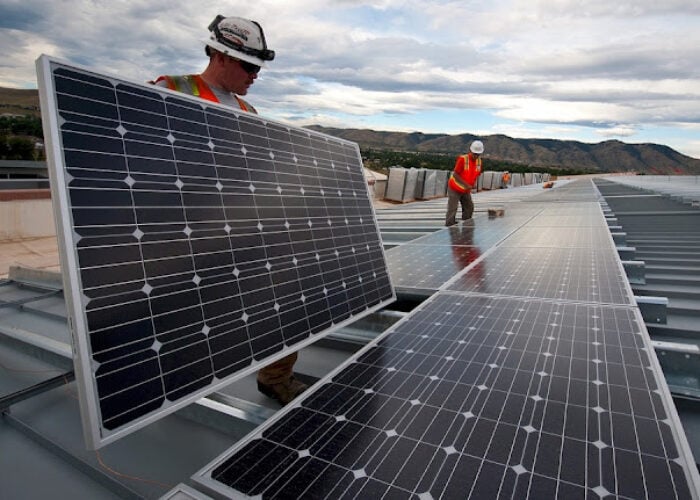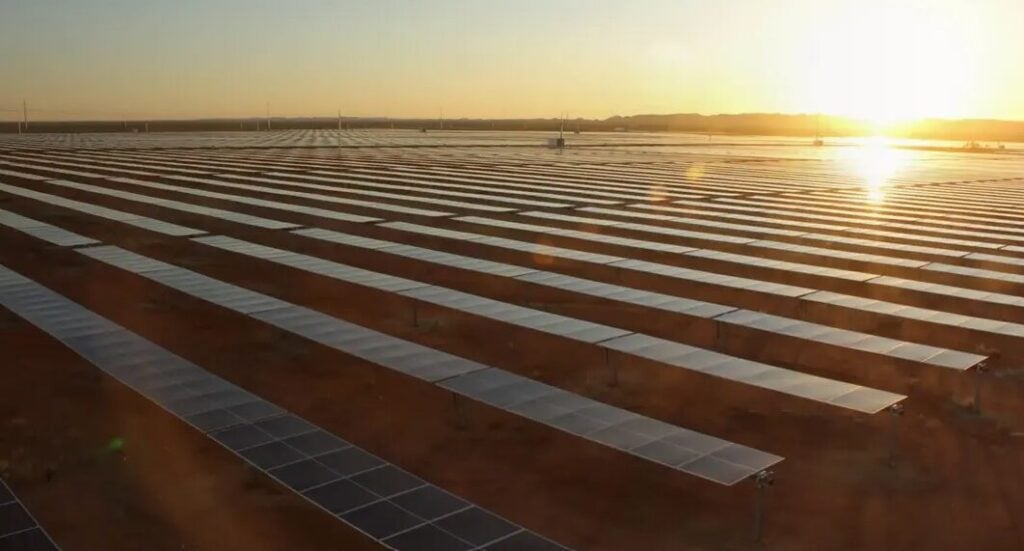
Mining giant Fortescue has begun construction of its 440MW Solomon Airport solar PV power plant in Western Australia’s Pilbara region.
Upon completion in 2028, Fortescue claims the project will become Western Australia’s largest solar development.
Try Premium for just $1
- Full premium access for the first month at only $1
- Converts to an annual rate after 30 days unless cancelled
- Cancel anytime during the trial period
Premium Benefits
- Expert industry analysis and interviews
- Digital access to PV Tech Power journal
- Exclusive event discounts
Or get the full Premium subscription right away
Or continue reading this article for free
The Solomon Airport facility represents a substantial expansion of Fortescue’s solar portfolio, requiring the installation of approximately 671,000 solar modules across the Pilbara landscape.
The project is designed to deliver around one-third of the total solar capacity required for Fortescue to achieve its ‘Real Zero’ target, demonstrating the scale of renewable energy infrastructure needed to decarbonise heavy industrial operations.
Fortescue is owned by Dr Andrew Forrest, one of Australia’s wealthiest people, who made his fortune through the mining industry. Forrest also advocates for the energy transition and has committed his business to achieving ‘Real Zero’, a swipe at net zero targets he says includes “scams” such as carbon credits or carbon offsetting.
Instead, the business aims to eliminate all its emissions and help build the technologies needed to achieve ‘Real Zero’ worldwide.
Construction on the Solomon Airport solar PV power plant follows the near-completion of Fortescue’s 190MW Cloudbreak solar PV plant, which is approximately two-thirds finished. The Cloudbreak project marked a major step in Fortescue’s renewable energy journey when construction began.
Fortescue Metals and Operations CEO Dino Otranto emphasised the strategic importance of the Pilbara’s natural resources in powering the company’s operations.
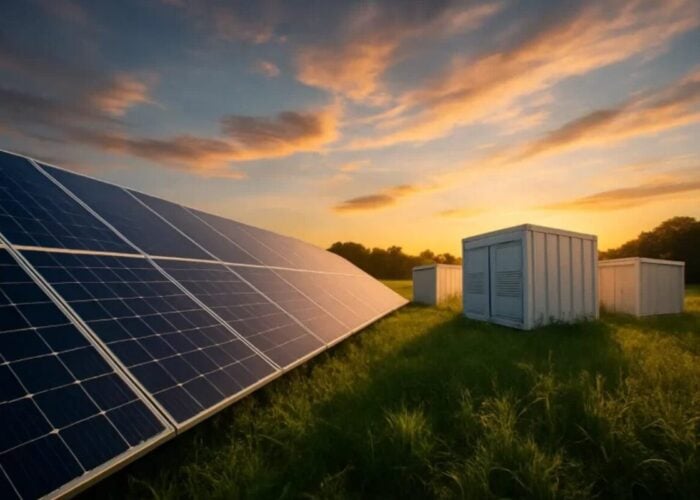
“Across the Pilbara, we’re using the region’s sun and wind to generate green power for our sites,” Otranto said. “We’re building the solar and wind farms, connecting them through our high-voltage transmission network and backing them with battery storage to provide 24/7 firm power.”
Otranto also highlighted the improving economics of successive solar projects, noting that technological advances and economies of scale are driving down installed capital intensity.
“Importantly, each successive solar project is being delivered more efficiently than the last. As technology improves and we gain scale, our installed capital intensity continues to come down – strengthening the economics of replacing diesel and gas with renewable energy,” Otranto explained.
The Solomon Airport project forms part of a broader renewable energy expansion that will establish Fortescue as one of Australia’s largest industrial renewable energy operators.
Fortescue confirmed that its proposed 644MW solar PV plant at Turner River is anticipated to commence construction later this year, having recently sought environmental approval under the Environment Protection and Biodiversity Conservation (EPBC) Act.
Once operational, the Solomon, Cloudbreak and Turner River projects, combined with the existing 100MW North Star Junction solar PV plant, which also includes a battery storage system, will deliver approximately 1.3GW of solar generation capacity.
Together, these projects represent one of the largest renewable energy deployments by any heavy industry company in Australia. The Pilbara region’s emergence as a renewable energy hub has been supported by government investment, with AU$45 million (US$31 million) in ARENA funding helping establish the area as a solar technology testbed.
The proposed Solar Innovation Hub, owned by Fortescue, will function as a 500MW test bed for emerging technology within Fortescue’s planned solar PV development pipeline.
The project introduces a novel funding approach, trialling a portfolio of up to 10 individual projects that deploy various technologies under one agreement, aimed at cutting costs, demonstrating technical and commercial feasibility, and sharing knowledge across the solar PV and clean technology sectors.
Transmission infrastructure enables an integrated renewable energy network
The Pilbara region’s abundant solar resources and existing industrial infrastructure make it an ideal location for testing and deploying utility-scale solar technologies.
The area’s high solar irradiance and proximity to major mining operations provide optimal conditions for demonstrating the commercial viability of advanced solar technologies in real-world operations.
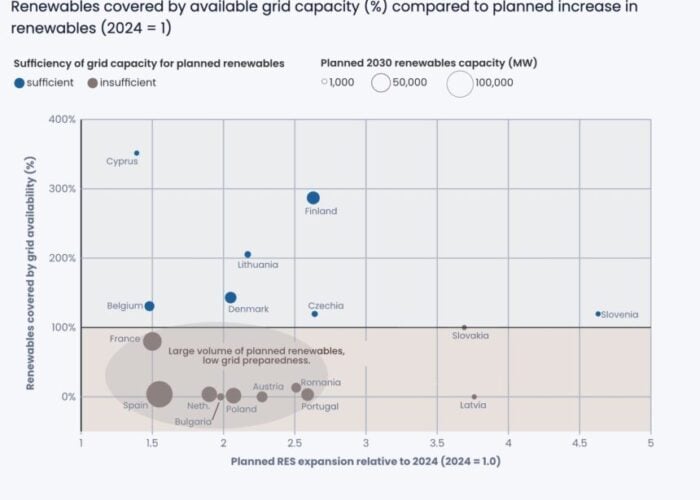
Despite the potential of solar PV generation in the Pilbara region, current infrastructure constraints, and more bluntly, a lack of a vast interconnected grid system in Western Australia, mean that the development and expansion of grid infrastructure will be required to capture the opportunity.
However, plans are already in place to extend the South West Interconnected System (SWIS) deeper into the Pilbara, with the Australian government having made up to AU$3 billion in concessional finance available through the Rewiring the Nation programme to support transmission infrastructure.
Meanwhile, Fortescue has been taking grid matters into its own hands by developing transmission infrastructure through its Pilbara Energy Connect initiative.
Fortescue has already constructed more than 480km of high-voltage transmission lines across the Pilbara, with plans to extend the network to more than 620km upon completion.
This transmission network will physically link Fortescue’s energy assets to its mining operations and rail network, enabling the integration of multiple renewable energy sources across vast distances.
The transmission network will be essential for managing the variable output from solar and wind installations, allowing power to be distributed where needed across Fortescue’s operations.
Combined with battery storage systems, the network aims to provide 24/7 firm power, addressing one of the key challenges in renewable energy adoption for continuous industrial processes.