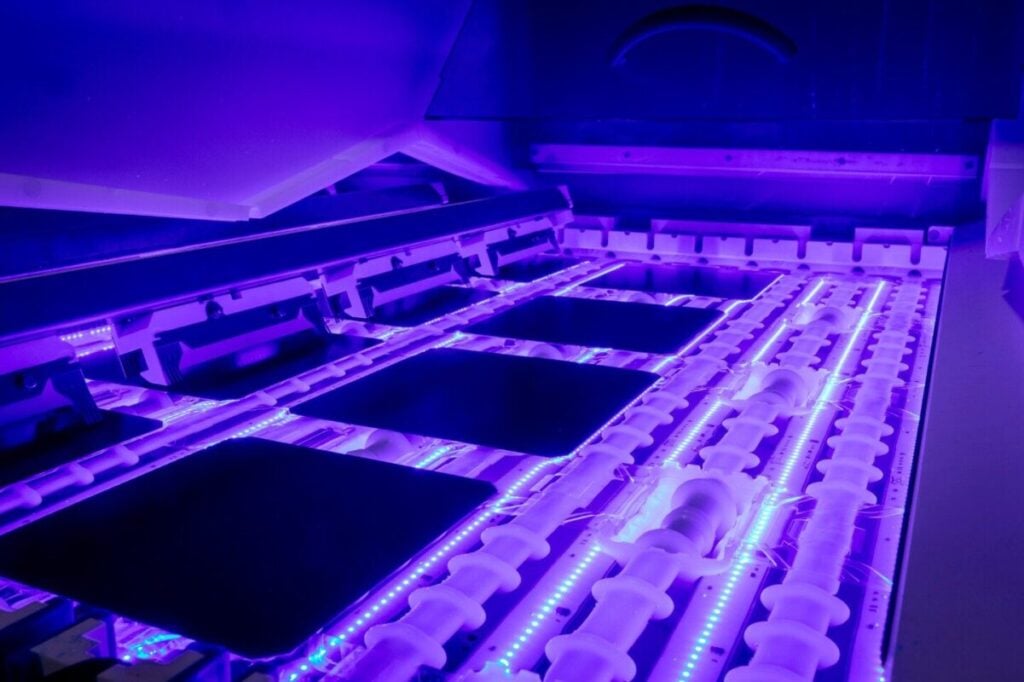
Scientists at the Fraunhofer Institute for Solar Energy Systems ISE claim to have reduced the silver content of TOPCon solar cells tenfold.
In a statement today, the institute said its researchers had reduced the silver consumption of a TOPCon cell from its typical 10-12 milligrams per watt peak to 1.1 milligrams per watt peak.
Try Premium for just $1
- Full premium access for the first month at only $1
- Converts to an annual rate after 30 days unless cancelled
- Cancel anytime during the trial period
Premium Benefits
- Expert industry analysis and interviews
- Digital access to PV Tech Power journal
- Exclusive event discounts
Or get the full Premium subscription right away
Or continue reading this article for free
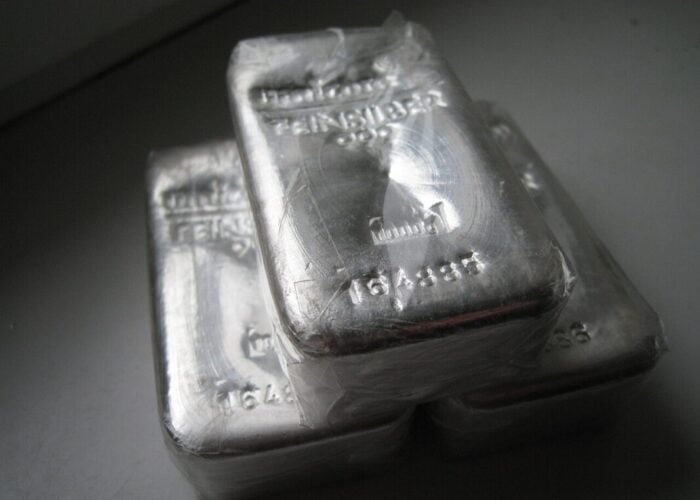
Compared to PERC solar cells, TOPCon solar cells consume more silver, and with global silver prices having increased dramatically in recent months, PV manufacturers are under pressure to reduce silver consumption. Silver was recently identified as the biggest single cost component in PV modules.
Copper is widely regarded as a cheaper alternative, but its use in TOPCon metallisation is only at the testing phase. Screen-printing with pure copper or hybrid silver-copper pastes is one method to reduce silver consumption in cell metallisation, but this is difficult to achieve with TOPCon, so research is instead focused on electroplating as an alternative low-silver metallisation process for TOPCon.
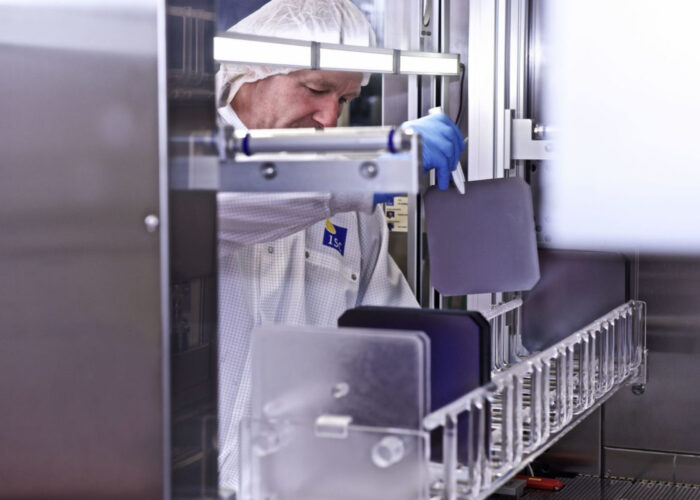
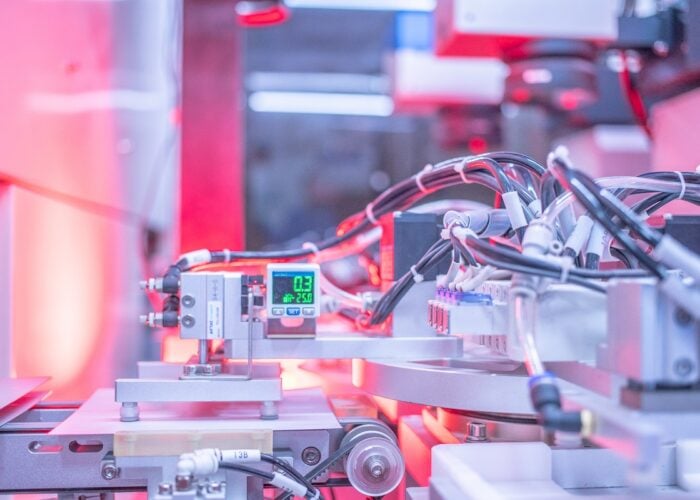
In the trial, the researchers tested an electroplating-based inline metallisation process on pilot systems developed by wet-processing specialist RENA Technologies. The research team produces M10-sized TOPCon solar cells with an efficiency of 24% by combining ultrashort UV laser structuring with the electrochemical deposition of nickel, copper and silver.
Fraunhofer said electroplated copper contacts could eventually almost completely replace the silver content of TOPCon solar cells. Nickel serves as a diffusion barrier against copper migration into the cell, copper handles the electrical conduction and a minimal amount of silver remains as oxidation protection.
The researchers said the trial demonstrated that electroplating metallisation is technically feasible at an industrial scale. They metallised several batches of M10 TOPCon solar cells on the electroplating system, and the efficiencies achieved matched those of the reference solar cells, whose silver contacts were applied using the conventional screen-printing process.
To verify compliance with low contact resistance and high fill factors, they demonstrated a fill factor of 82.1 ± 0.3% for a batch of 186 TOPCon solar cells. The solar modules manufactured with the trial solar cells also demonstrated good stability in degradation tests according to IEC61215, Fraunhofer said.
“So-called nickel/copper electroplating could be firmly established in the photovoltaic market within two to three years,” said Sven Kluska, group leader for electrochemical processes at Fraunhofer ISE. “It would offer many advantages for solar cell manufacturers, even if they have to integrate electroplating equipment into their production process as an initial investment.”
Florian Clement, head of the Metallisation and Structuring Technologies Department at Fraunhofer ISE, added that electroplating could also mean less dependence on China than is currently the case with the silver pastes and screen-printing metallisation processes commonly used today.
“Equipment and chemicals for copper electroplating come from European and American manufacturers; there is a global market for raw copper, without a concentration on Chinese suppliers. At the same time, we at Fraunhofer ISE are working intensively to establish European, resilient supply chains for copper-based screen-printing metallisation.”