New Zealand energy company Genesis Energy has officially begun construction on its 136MWp Tihori Solar Farm in Edgecumbe, Bay of Plenty.
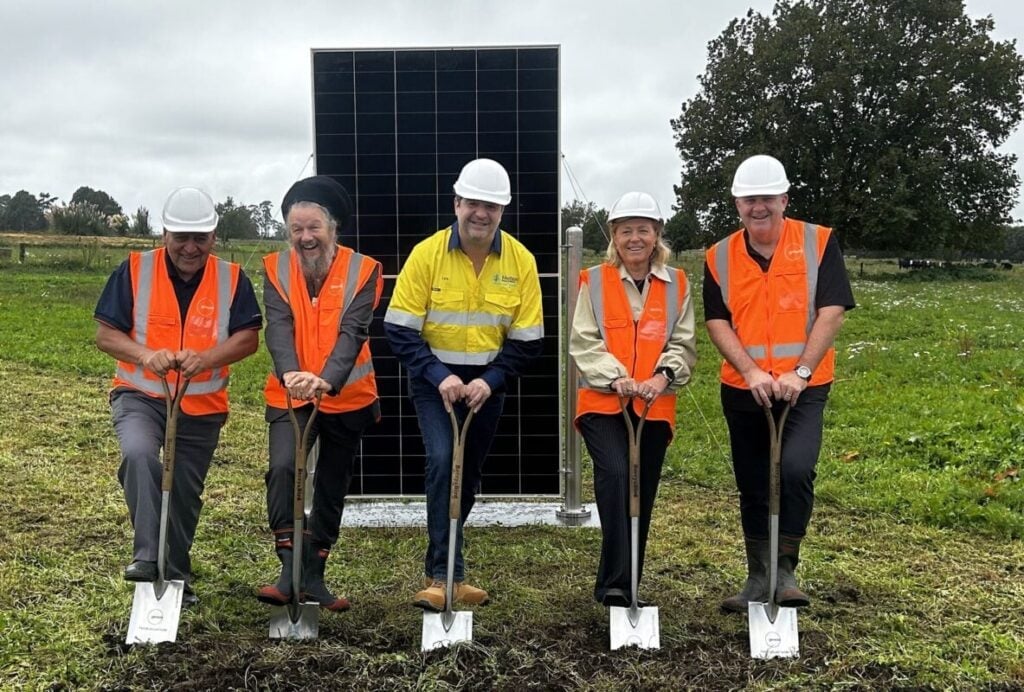
At a sod-turning ceremony held on Friday (13 March), Genesis chief executive Malcolm Johns joined local kaumātua and community leaders to bless the 209-hectare site and formally commence construction on the NZ$236 million (US$132 million) project.
Try Premium for just $1
- Full premium access for the first month at only $1
- Converts to an annual rate after 30 days unless cancelled
- Cancel anytime during the trial period
Premium Benefits
- Expert industry analysis and interviews
- Digital access to PV Tech Power journal
- Exclusive event discounts
Or get the full Premium subscription right away
Or continue reading this article for free
The solar PV power plant, previously known as Edgecumbe Solar Farm, has been renamed Tihori in honour of a Ngāti Awa chief who lived near Pūtauaki (Mount Edgecumbe). The name was gifted by the Rangitāiki Hapū Coalition.
Once operational in mid-2027, the facility will generate approximately 238GWh of electricity annually whilst creating over 100 construction jobs and several permanent roles.
It forms a central component of Genesis Energy’s ambition to build 500MWp of solar capacity across New Zealand, supporting the country’s pathway to a net zero energy system by 2050.
The construction commencement follows Genesis Energy’s final investment decision on the project, which the company announced last year after securing grid connection approval and appointing Metlen as the engineering, procurement and construction (EPC) contractor.
Horizon Networks will design and build the overhead grid connection line linking the solar farm to the existing Transpower Edgecumbe substation via a new 33kV line.
Technical specifications and community benefits
The Tihori Solar Farm will be constructed on a private rural site approximately 2.5km northeast of Edgecumbe, within the Whakatāne District Council area.
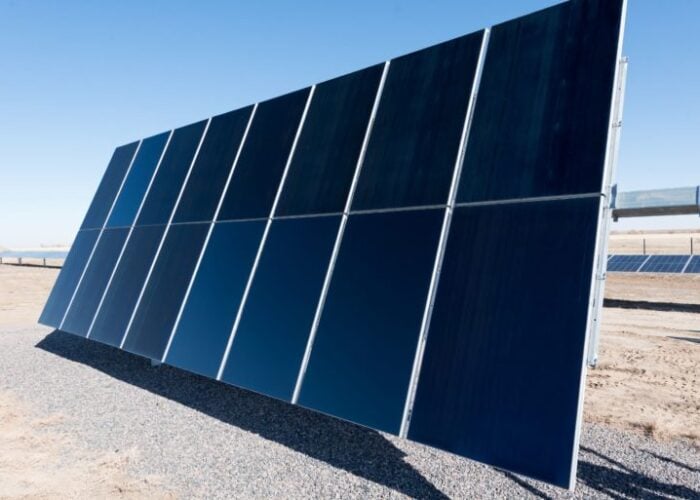
The facility will comprise approximately 220,000 solar PV modules mounted on a horizontal, single-axis tracking system that enables the panels to follow the sun throughout the day.
This technology operates efficiently in varying daylight conditions, including low light and cloudy weather, whilst generating clean electricity with minimal noise and water consumption.
The panels will be mounted on steel frames with a maximum height of 2.7 to 3.3 metres, designed to withstand potential flooding, and supported by driven piles that cause minimal disturbance to the land. Once complete, the solar PV power plant is expected to generate clean electricity for at least 35 years.
Beyond its environmental contribution, the project is anticipated to deliver significant socio-economic benefits to the Bay of Plenty region.
Genesis has encouraged all contractors working on its solar PV power plant developments to hire local subcontractors and utilise local suppliers wherever possible for activities such as module cleaning, fence repair, and vegetation management.
Advancing the Gen35 strategy
The Tihori project represents a major step in Genesis Energy’s Gen35 strategy, a NZ$1.1 billion programme designed to support New Zealand’s target of meeting 95% of electricity demand with renewables by 2050.
Genesis COO Tracey Hickman previously described reaching financial close on the project as progress that came “hot on the heels” of the company’s Rangiriri Solar announcement.
“The project will enhance the value of our three hydro generation sites and battery storage investments, providing flexible, renewable energy to meet growing demand,” Hickman said.
“It will also further displace gas generation, in particular over summer months, in support of New Zealand’s transition to a low-carbon future.”
Genesis has emerged as one of New Zealand’s leading solar developers, with approximately 700MWp of capacity in its project pipeline. In April 2024, the company opened New Zealand’s largest operational solar facility, the 63MWp Lauriston site near Christchurch, developed as a joint venture with FRV Australia and incorporating agrivoltaic elements on land historically used for agriculture.
However, Genesis and FRV Australia dissolved their solar development partnership in October 2025, citing diverging business plans, though the two companies maintain joint ownership of the Lauriston project.
Shortly thereafter, Genesis announced its acquisition of the 247MWp Waikato solar project for approximately NZ$487 million, with that facility expected online in 2029 and slated to integrate energy storage capacity.