In the wake of the US federal government’s withdrawal of support for renewable energy under the controversial 2025 “One Big Beautiful Bill” (OBBB) act, state and local governments have emerged as critical players in advancing solar energy deployment. With federal policy creating significant barriers to clean energy growth, states are stepping in to address affordability, reliability and resilience challenges while meeting the surging energy demands of America’s data centre boom.
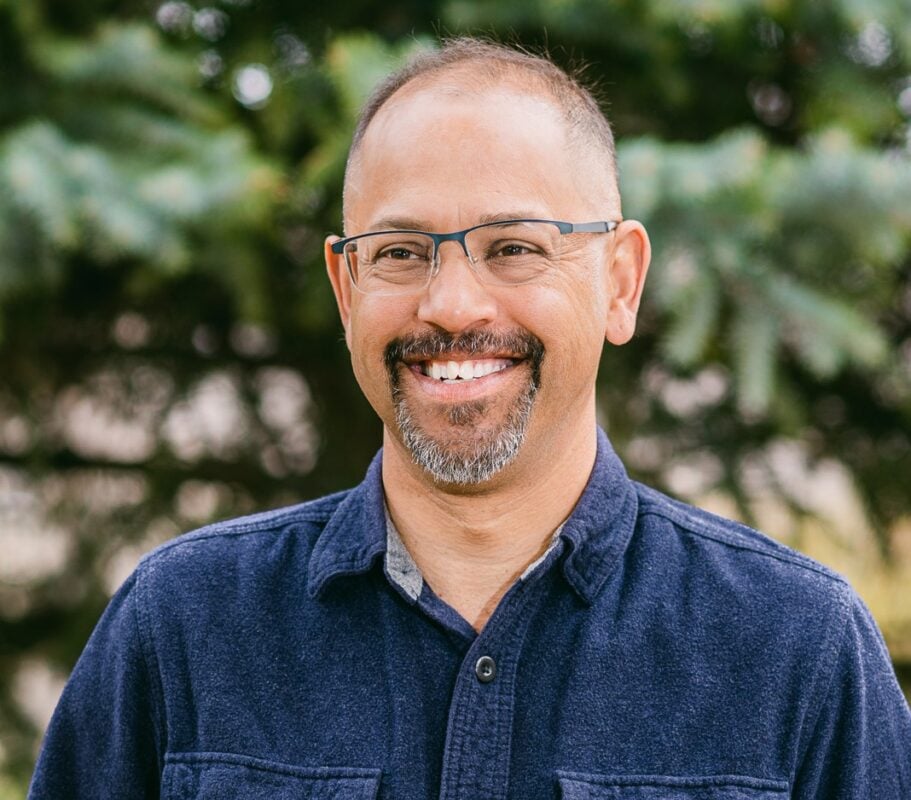
As executive director of leading advocacy body Vote Solar, Sachu Constantine has a front-row view of the lead role states and other non-federal institutions are increasingly taking in driving the clean energy transition forward and shaping the future of solar in the US.
Try Premium for just $1
- Full premium access for the first month at only $1
- Converts to an annual rate after 30 days unless cancelled
- Cancel anytime during the trial period
Premium Benefits
- Expert industry analysis and interviews
- Digital access to PV Tech Power journal
- Exclusive event discounts
Or get the full Premium subscription right away
Or continue reading this article for free
On last year’s legislative changes and subsequent rollback of support for clean energy by the Trump administration, Constantine is blunt, describing the OBBB act as “one big bollocks of a bill”. “The downward pressure on deployment of renewables from this bill and from the government’s actions more broadly – to hinder permitting, to constrain the space in which solar and other clean energy alternatives can operate – is having an effect,” he says.
Yet despite these challenges, Constanine believes “there is cause for hope”. “Solar is still being deployed robustly,” he says, noting that Q3 of last year marked the third-highest quarter for solar deployment on record, with multiple gigawatts installed across various scales.
State leaders
State governors and legislatures, in particular, are taking decisive action to counter federal opposition. Constantine highlights New Jersey and Virginia as examples of states where newly elected governors are prioritising energy affordability and grid resilience. In New Jersey, on her first day in office, Governor Mikie Sherrill issued executive orders to streamline permitting and interconnection processes for solar projects. Similarly, Virginia’s Governor Spanberger has taken steps to protect net metering policies, particularly in the western part of the state, ensuring that solar remains accessible to residents and businesses. In Maryland, Governor Wes Moore last week announced a funding package for new solar and storage projects.
“We’re seeing them take up this question of affordability, this question of transition, this question of reliability and resilience, questions over which they, as state leaders, have quite a bit of control,” Constanine notes.
Illinois has also emerged as a leader in clean energy policy. The passage of the Clean and Reliable Grid Affordability Act has paved the way for significant solar deployment at both local and utility scales. Constantine emphasises the importance of such legislative actions, stating: “These bills are moving the needle forward, addressing affordability and reliability while meeting the growing energy demand.”
Tackling energy affordability amid exploding demand
Such measures are born of necessity, given the pressing challenges that all parts of the US are confronting due to ballooning energy demand. “[All states] are facing a surge in energy demand from data centres, from electric vehicle conversion, from electrification of homes and businesses, and just in general, growth in the use of electricity as a modern power source in an unprecedented way,” says Constantine.
This unprecedented growth is straining the grid and driving up costs for ratepayers, but at the same time, creating the ideal conditions for solar to flourish, even in areas where it has traditionally not been favourably viewed.
“Even governors in purple and red states still feel the pressure from this affordability crisis,” Constantine says. “It is their constituents, their communities, that are having to pay these exorbitantly high and growing bills. They can’t ignore practical, real, affordable solutions that are on the ground, and that works in our favour, because solar is deployable now.”
Even if state governors are not always favourable to renewables, other institutions at lower levels are driving change. Notably, public utilities commissions (PUCs) are becoming active proponents of the value of solar and storage in addressing affordability and reliability concerns.
Constantine points to Georgia, a traditionally conservative state grappling with massive data centre deployments. “Georgia is a great example, because below the governor level, you have a PUC that is responsible for keeping these grids afloat, which has elected two very progressive commissioners, who are very favourable towards renewable energy. Georgia traditionally has very red state leadership, but now has two new voices to call for these solutions,” Constantine says.
Vote Solar’s role in advocacy and lobbying
Vote Solar is at the forefront of efforts to promote solar energy at the state level. The organisation employs a multi-pronged approach, focusing on legislative advocacy, regulatory reform and public engagement. It is involved in around 20 states “really actively”, including the more “progressive, forward-thinking” ones such as Massachusetts, California, New Jersey and New York, and has programmes in several more. It is also engaged with some of what Constantine calls the “transition states”, such as Arizona, Nevada and across the Midwest that have high solar and battery potential.
Constantine singles out several Midwest states – notably Illinois, Michigan, Minnesota and Wisconsin – for making big strides, describing them as a “shining light” on clean energy. “These are states with really strong public utilities commissions, with legislative champions, with governor leadership, with executive leadership, that are paving the way and exposing a real opportunity,” he says.
One of Vote Solar’s key initiatives is the promotion of virtual power plants (VPPs), which utilise distributed energy resources such as rooftop solar and batteries to enhance grid resilience and affordability. “The virtual power plant idea is really, really powerful – using assets that are already out there, and that we can add to very quickly, and using them in service of both driving rates down and driving resilience and reliability up and providing more useful dispatchable power,” Constantine explains.
The organisation is also pushing for streamlined permitting processes to accelerate solar deployment. Constantine emphasises the importance of creating safe, accessible pathways for solar and storage projects, stating: “We need to deploy faster to keep up with load growth, which is almost twice the rate of new generation capacity.”
Vote Solar’s efforts have yielded tangible results. In Illinois, the group played a key role in the passage of the Clean and Reliable Grid Affordability Act, which has delivered significant savings to ratepayers by reducing reliance on expensive peaker plants through a big rollout of battery energy storage and VPPs. Similarly, in New Jersey, Vote Solar has supported the governor’s push for permitting reform, ensuring that solar and storage are integral to the state’s energy mix.
Local solutions for resilience and affordability
Beyond state-level actions, local governments are embracing solar as a solution to community-specific challenges. Constantine highlights the Community Lighthouse Project in New Orleans, which uses local solar and battery systems to create resilience hubs capable of providing power during disasters. “Mayors and county boards are responsible for safety and recovery, and they’re chomping at the bit for these kinds of deployments,” he says.
In California, local aggregators, “quasi utilities”, are integrating solar and storage into their energy portfolios to strengthen communities: “These local aggregators, who are responsible, in a statutory and regulatory sense, for the delivery of power, are embracing these local solutions. They’re looking for ways to deploy battery and solar solutions in their territories that strengthen their communities.”
Constantine shares an example from his hometown of Berkeley, where electric school buses are being used as mobile power sources, both for emergency situations and for arbitrage of expensive peak-rate power.
“This is the future and it’s happening at the city level,” he says. “I know that school bus could power my entire neighbourhood for multiple days, should an earthquake happen. And those local mayors and county governors, they’re the ones that are the ones that have the dollars to spend on this. And the more that we can make it worthwhile, the more those dollars will be available. That is a key element going forward.”
Critical midterms
Looking ahead, Constantine acknowledges the challenges posed by federal opposition but remains optimistic about the future of solar in the US. He sees 2030 as a critical milestone for the clean energy transition, with the potential to deploy 250GW of solar under current market conditions. “We need to nearly double that to 500GW, with at least 200GW on the distributed side,” he says. “Between now and 2030, we could easily build between 180 and 250GW of distributed solar. These systems go up quickly. We’ve seen it in Australia. We’re seeing it in Germany.”
The midterm elections later this year will be a key moment in meeting such goals, he says. “We need to see a return to solutions-oriented government; that’s why the midterms are a big deal. I don’t want to be too political. My job at Vote Solar is to continue to push an understanding of the virtual power plant paradigm, to check that into the regulatory proceedings and to really spend time educating legislators, really spend time developing thoughtful legislation, so that when we have a chance to act, this year, hopefully, but certainly after the midterms and leading into the next presidential cycle. This is going to be our opportunity.”
While the path forward is fraught with challenges, Constantine believes that state and local governments have the tools and determination to drive the clean energy transition, and also the incentive to make the logical choice of backing clean energy regardless of political persuasion. “Governors and legislatures are solutions-oriented,” he says. “They can’t just play politics [and] retreat into partisan corners – because the lights have to stay on.”