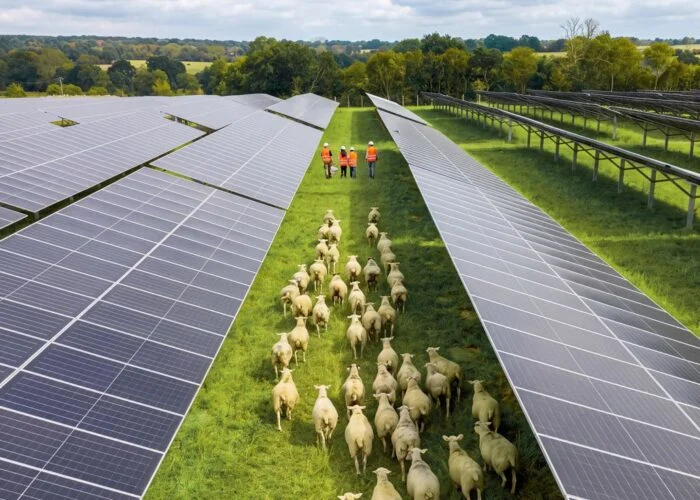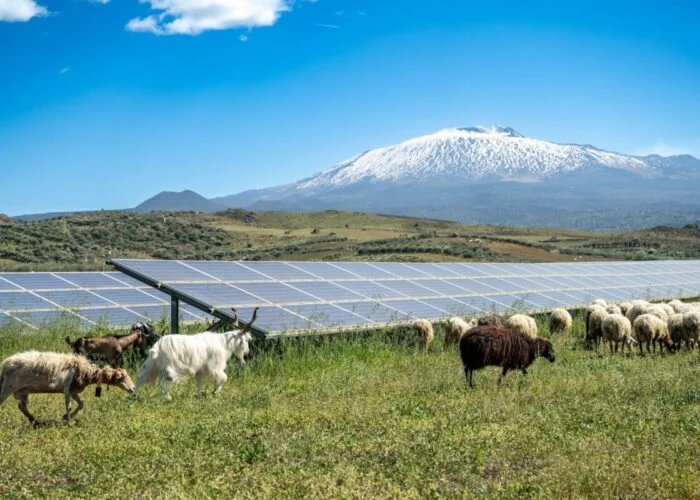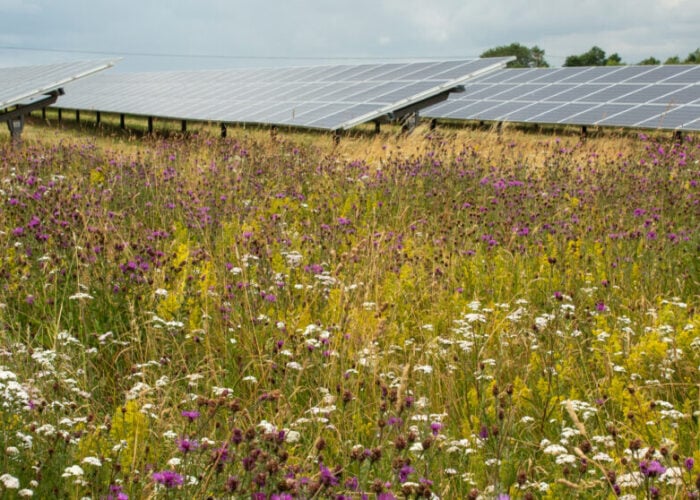
In general, the conversation around agrivoltaics (agriPV) centres how to implement solar PV with agricultural land. Another aspect to take into account is how these projects can help attract the support of local communities through job creation, or encouraging young people to remain in the area instead of leaving the countryside for cities.
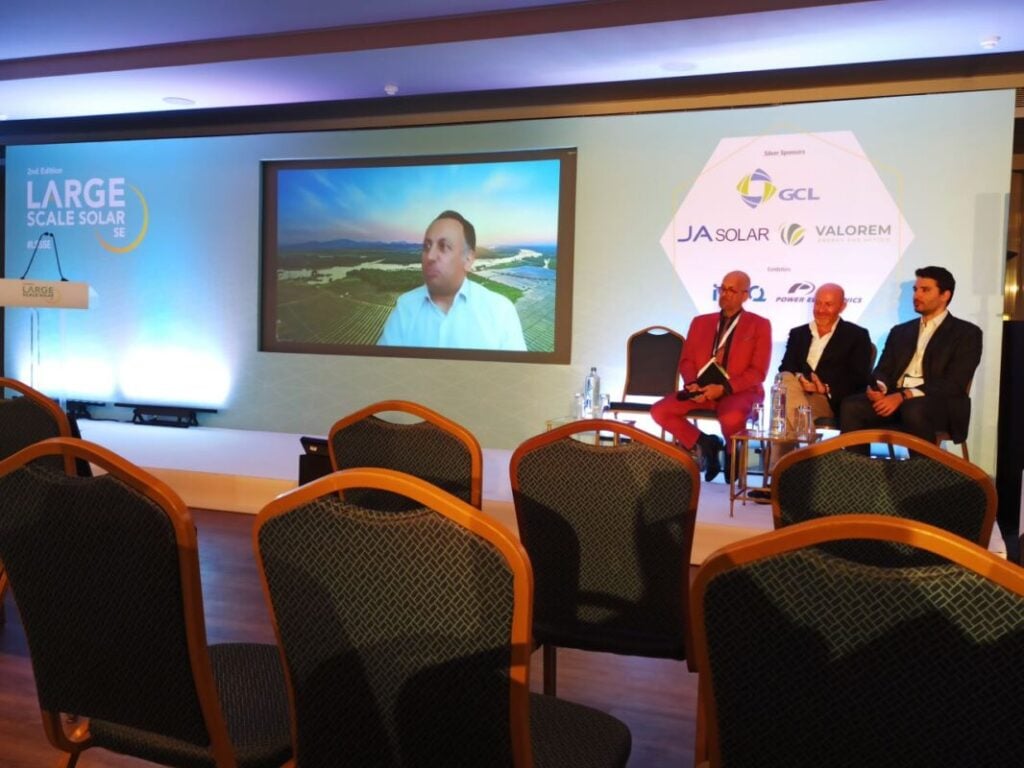
These were some of the thoughts of Thomas Stavrou, country manager in Greece at French renewables developer Valorem, who spoke at a panel on agriPV at Solar Media’s Large Scale Solar Southern Europe event in Athens, Greece last week.
Try Premium for just $1
- Full premium access for the first month at only $1
- Converts to an annual rate after 30 days unless cancelled
- Cancel anytime during the trial period
Premium Benefits
- Expert industry analysis and interviews
- Digital access to PV Tech Power journal
- Exclusive event discounts
Or get the full Premium subscription right away
Or continue reading this article for free
“It is very important to keep people in the area”, said Stavrou, who noted that the importance of agriPV does not only rely on developing the projects and adding capacity but also on keeping younger people in villages.
“It also goes into creating a whole ecosystem around allowing local youth and also older people to be employed locally, rather than moving into the cities,” agreed Patrick Donati, co-founder and managing director at independent power producer Terrawatt. “This is extremely important. This is one of the main benefits that we can get.”
However, this relies on “proper regulation for agrivoltaics” in Greece, added Stavrou, as the market for agriPV in the country is currently non-existent, although some projects are in the pipeline that would implement elements of agriPV.
Costas Caralis, country manager in Greece at solar developer Hive Energy, agreed, noting that “there’s no legal framework for it,” at present.
Italy’s ban on agriPV
Speaking of the current state of agriPV in Southern Europe, the main concern comes from Italy’s recent ban on the application of solar PV projects on agricultural land. “The issue that we find ourselves in now is that we are in a moment of great regulatory flux,” said Donati.
The new legislation only allows for advanced agriPV on agricultural land, with a series of restrictions – as required in the Italian Recovery and Resilience Plan (PNRR) – with an agricultural firm owning 51% of the company managing the solar farm, explains Donati. Given that, more often than not, Italian farmers have limited capital resources, this will limit the deployment of more agriPV capacity in Italy for the time being.
“At least for now, the market is stationary until this legislative issue gets resolved,” explained Donati, adding that nearly 700 simple agriPV projects have been awaiting an environmental assessment since 2020.
This is in contrast with the sentiment of Italian farmers, who Donati mentions are “very enthusiastic about giving away a portion of their land to put on solar panels. Because they really need that steady income, to be able to offset the irregularity of the income from agriculture.”
Aside from the Italian setback on agriPV – a ban that contains some “contradictions”, as covered last month (Premium access) – implementing the use of agricultural land with solar PV continues to be of interest within the industry. So much so, that last year, agriPV was the cover feature of PV Tech Power 34 (Premium access), with an article that looked at the combination of both industries across several countries.
Although most of the applications of agriPV might have potential for the utility-scale sector, the rooftop market can also be a key element in merging the production of electricity and food production in urban environments.
Faster authorisation process through agriPV
One of the key advantages of developing an agriPV project in Italy, up until recently, was the faster process by which developers could receive authorisation to build a project, explained Donati. He noted that a 20MW project could take between one and three years to receive authorisation, whereas an agriPV plant of the same size will be fast-tracked in six months.
Donati reiterated the initial sentiment that agriPV brings more than just solar PV plants in villages but can “have a much more positive impact on local communities.”
“To create a strong and positive relationship with local stakeholders, creating jobs for the local communities, that actually means that the benefit of these farms goes beyond just the economic for whoever is acquiring the energy,” said Donati.