Karnataka, Delhi, and Andhra Pradesh top decarbonisation, power ecosystem readiness, and market enablers, respectively, according to a joint report by the Institute for Energy Economics and Financial Analysis (IEEFA) and Ember.
The third edition of IEEFA and Ember’s Indian States’ Electricity Transition (SET) report evaluates 21 states, representing 95% of India’s power demand, across a three-dimensional framework covering decarbonisation, power ecosystem readiness and performance, and market enablers. Although some states continue to advance steadily in FY2025, others have built momentum and a stronger foundation for accelerated progress.
Try Premium for just $1
- Full premium access for the first month at only $1
- Converts to an annual rate after 30 days unless cancelled
- Cancel anytime during the trial period
Premium Benefits
- Expert industry analysis and interviews
- Digital access to PV Tech Power journal
- Exclusive event discounts
Or get the full Premium subscription right away
Or continue reading this article for free
“All the 21 states assessed have advanced on multiple fronts, even as the pace and areas of focus vary,” said Vibhuti Garg, director, South Asia, IEEFA.
“Such divergence is inevitable at the sub-national level given the structural and historical factors, including differences in resource endowment, development legacies, states’ fiscal and economic conditions, rural-urban composition, and institutional capacity within the power sector. Going forward, understanding these state-level differences and gaps in progress is essential for designing targeted policies and interventions,” she added.
Decarbonisation: Karnataka leads despite methodology changes
Despite a recalibration of the capacity addition parameter and the inclusion of hydro capacity in SET 2026, Karnataka remained a top performer in the decarbonisation dimension. Himachal Pradesh and Kerala also performed strongly, driven by higher renewable energy shares in their procurement mix and lower power sector emissions intensity.
Tamil Nadu, Maharashtra and Rajasthan improved in this dimension, supported by energy efficiency interventions reflected in their State Energy Efficiency Index (SEEI) 2024 scores.
The report highlighted that leading states can further strengthen their transition pathways by addressing gaps in grid readiness, improving the financial health of distribution companies (DISCOMs), and enhancing market-enabling conditions.
Power ecosystem readiness: Delhi and Haryana stay ahead
In the readiness and performance of the power ecosystem dimension – which assessed distributed solar adoption, supply reliability and DISCOM performance – Delhi and Haryana continued to rank strongly.
“For states with potential to improve on this dimension, targeted reforms could unlock faster progress. Strengthening DISCOM finances, ensuring timely subsidies, adopting cost-reflective tariffs, and enhancing billing and collection through digitisation and smart metering will help reduce risk perception and enable DISCOMs to scale renewable energy procurement effectively,” said Saloni Sachdeva Michael, clean energy specialist, IEEFA.
Moreover, Chhattisgarh emerged as a notable performer under this segment, recording a minimal power shortage of 0.07% in FY2025. Bihar also stood out, recording the highest percentage of progress in smart meter deployment at 78% of its sanctioned meters under the Revamped Distribution Sector Scheme (RDSS) as of March 2025. Meanwhile, Assam completed the installation of 46% of its sanctioned smart meters under RDSS.
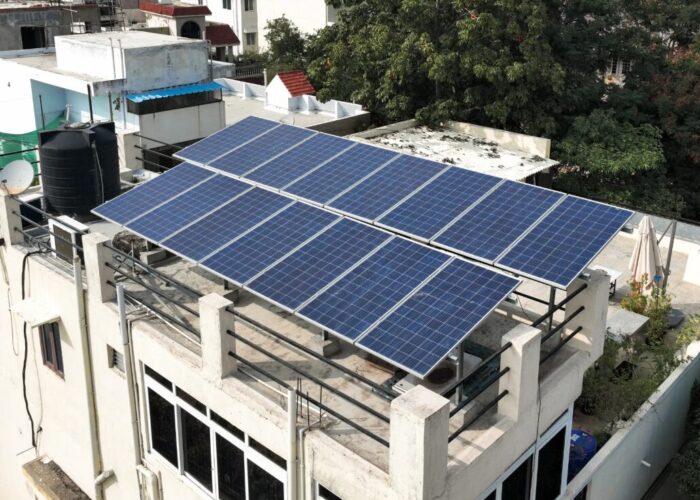
Despite ranking among the leading states for installed utility-scale solar PV capacity, Rajasthan and Maharashtra still need to improve in the readiness and performance of their power ecosystem, due to weaker DISCOM performance, limited short-term market participation and slower uptake of distributed solar, including off-grid systems and rooftop solar.
Market enablers: Andhra Pradesh, Uttar Pradesh and Rajasthan gain ground
The market enablers dimension, which examined initiatives such as EV adoption, green hydrogen policies, green tariffs, time-of-day (ToD) tariffs and energy storage measures, saw significant movement compared to SET 2024 due to parameter changes.
Andhra Pradesh, Uttar Pradesh and Rajasthan emerged as the strongest performers in this category, supported by updated renewable energy policies, green tariff adoption and solar-hour-aligned ToD tariffs. Uttar Pradesh demonstrated strong momentum in EV deployment, while Andhra Pradesh and Rajasthan also made moderate progress.
Rajasthan was highlighted for its well-established renewable policy landscape and the lowest green tariff premium. While Bihar introduced a green tariff provision for FY2026 and set a target of around 24GW of renewable capacity by FY2030, alongside EV adoption of 8.2% in FY2025.