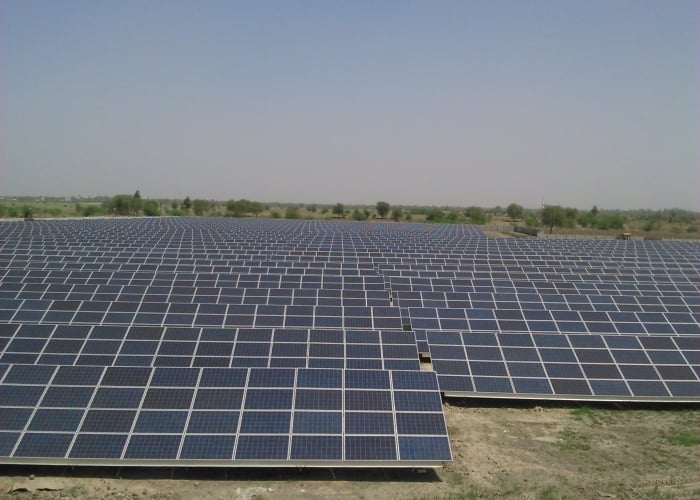
India’s first major large-scale solar-plus-storage tenders, tied with solar parks, have been cancelled by the Solar Energy Corporation of India (SECI).
Last month PV Tech reported that the tenders at Pavagada in Karnataka (200MW solar) and at Kadapa in Andhra Pradesh (100MW solar) had been delayed mainly due the sudden drop in solar prices across India, but last week the tenders were officially dropped altogether. In both cases, each 50MW of capacity was to be coupled with 5MW/2.5MWh of battery storage.
Try Premium for just $1
- Full premium access for the first month at only $1
- Converts to an annual rate after 30 days unless cancelled
- Cancel anytime during the trial period
Premium Benefits
- Expert industry analysis and interviews
- Digital access to PV Tech Power journal
- Exclusive event discounts
Or get the full Premium subscription right away
Or continue reading this article for free
Jasmeet Khurana, associate director, consulting at Bridge to India, told PV Tech: “The signing for these tenders was delayed and because solar tariffs fell in the meantime, SECI could not get states to sign back-to-back PPAs for these projects at the originally discovered tariffs. Therefore, they had to be cancelled.”
The benchmark tariff for the projects was INR4.43/kWh (US$0.069), but since the tenders were first announced, solar prices have plummeted across India, with extreme record lows of INR2.44/kWh and INR2.97kWh reached in Rajasthan and Madhya Pradesh respectively.
With the added costs of energy storage systems, the agencies at Karnataka and Andhra Pradesh were no longer willing to press ahead with the storage tenders, even though batteries can perform valuable grid balancing services for the variable energy generation from large-scale solar parks.
Bids were invited towards the end of last year, with a strong level of interest seen in the initial Andhra Pradesh offering, with at least 13 developers getting involved.
With two or more ‘Gigafactories’ expected to come up in India by 2019, and at least 1GWh of battery assembly this year, Rahul Walawalkar, India Energy Storage Alliance (IESA), has previously said that uncertainty and delays around these kinds of tenders were “very frustrating”.
In even worse news for the storage industry, the Goods and Services Tax (GST) looks likely to be set at 28% for primary batteries (i.e. non-rechargeable), although the IESA has recently written to energy minister Piyush Goyal asking for clarification on whether this high 28% tax will also apply to secondary batteries (i.e. rechargeable batteries/energy storage).