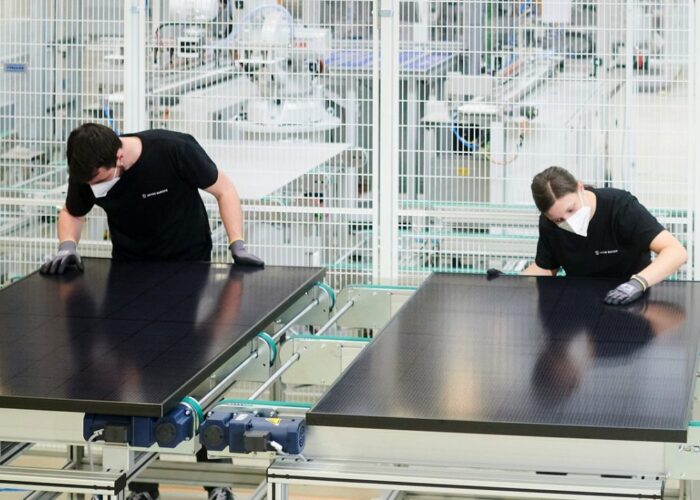
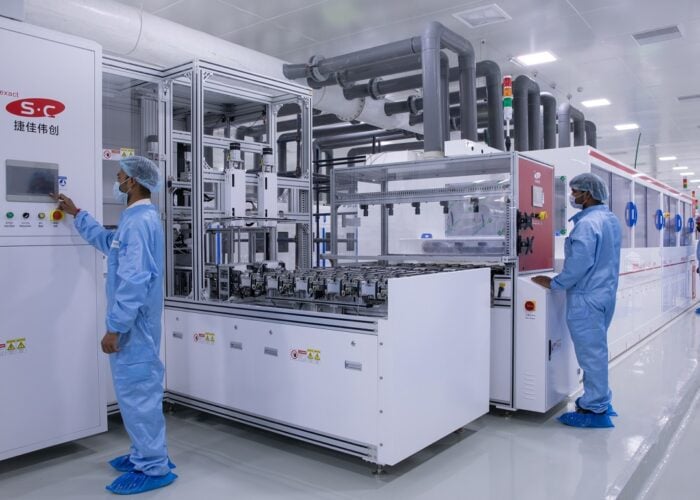
The desire to invoke a solar manufacturing renaissance in Europe was one of the key points of discussion at Intersolar Europe 2021, with much talk of heightened demand for ‘Made in Europe’ products. But how far away is Europe from establishing a complete value chain on the continent, and what are the hurdles that remain? Liam Stoker reports.
China’s solar module market has returned from its National Day festival to yet another surge in module prices, which are now standing at two-year highs. PV Tech’s Carrie Xiao analyses the impacts of this most recent price increase as the industry steadies itself once again.
A subsidiary of Indian conglomerate Reliance Industries has acquired solar module manufacturer REC Group and a 40% stake in EPC and O&M solutions provider Sterling and Wilson.
Thin film module and solar technology manufacturer NanoPV plans to invest over US$36 million in a manufacturing and distribution facility in Georgia, announced state Governor Brian Kemp as he praised Georgia’s “thriving solar environment”.
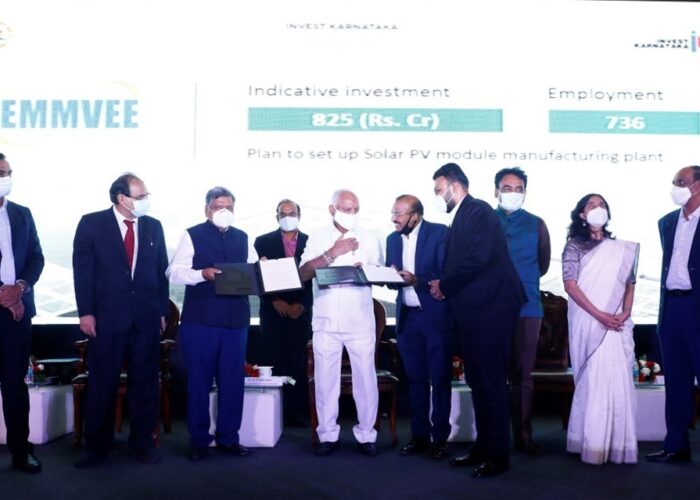
Indian solar manufacturer Emmvee has signed a memorandum of understanding with the government of Karnataka to set up a 3GW cell and module production plant in the state.
Several factors have overseen an increase in the price of modules. Some of them look sure to ease, while others may be more persistent. Sean Rai-Roche delineates the events behind the rise and speaks to industry experts about what businesses can expect moving forward.
Five of the solar industry’s leading module manufacturers have issued a joint statement warning of an impending “crisis” regarding module supplies, imploring developers to consider delaying projects and calling for greater collaboration between upstream and downstream players.
Heterojunction cell and module manufacturer Meyer Burger is planning to set up a module production plant in the US that is expected to be operational by the end of next year.
Indian solar manufacturer Premier Energies has secured an INR 2 billion (US$27 million) investment from private equity firm GEF Capital Partners to support its planned increases in cell and module production.