Indian solar manufacturer Premier Energies has secured an INR 2 billion (US$27 million) investment from private equity firm GEF Capital Partners to support its planned increases in cell and module production.
Canadian company Ubiquity Solar will construct a cell manufacturing plant in upstate New York that will have an initial 350MWp production line, according to state Governor Kathy Hochul.
Solar Module Super League’ (SMSL) member JinkoSolar is investing US$500 million to set up a monocrystalline ingot and wafer manufacturing facility in Vietnam that will supply its cell and module plants in the US and Malaysia.
A new support scheme from India’s government to boost the domestic manufacture of PV modules has seen 18 bidders submit 54.8GW of applications, according to consultancy JMK Research & Analytics.
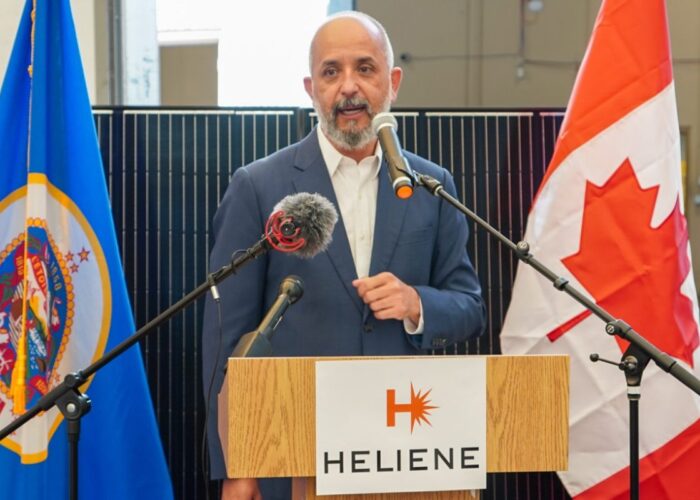
Backed by a new heterojunction module factory in Florida and the expansion of its production plant in Minnesota, solar manufacturer Heliene is looking to take advantage of US policy support to meet increasing demand for American-made PV equipment. Jules Scully discusses the company’s growth plans with CEO Martin Pochtaruk.
More than 190 US solar companies have warned that proposed duties on imports of modules and cells from three Southeast Asian countries represent an “immediate and serious threat” to America’s solar sector.
The US solar policy landscape is shifting at breakneck speed, with new incentives and trade tariffs promising to alter the shape of the industry for the coming decade. Luckily Andy Colthorpe and Liam Stoker are here to decipher the changes in the September 2021 episode of the Solar Media Podcast.
As much as 191GW of new solar PV is expected to be installed this year – up by a third on last year’s deployment figure – despite polysilicon and module prices remaining high into 2022, BloombergNEF has said.
North American module manufacturer Silfab Solar has received an investment led by private equity firm ARC Financial Corp to help scale up its US PV production footprint.