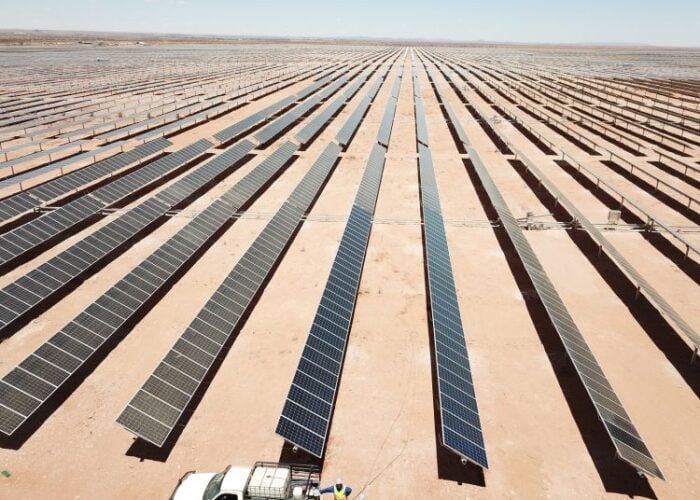
In January the South African government released an amendment to its energy action plan that lowered the local content requirements of solar modules deployed on government-backed schemes from 100% to 30%. The move was unsurprising to many, and may speak to the overwhelming rise of private projects in the country’s PV sector.
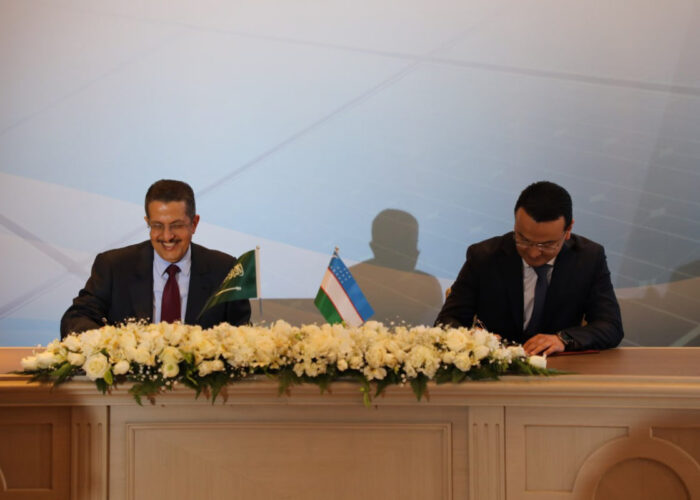
Saudi energy provider ACWA Power has signed agreements to develop 1.4GW of solar PV and 1.2GW of energy storage projects in Uzbekistan to be financed by the country’s Ministry of Investment, Industry and Trade.
The stage is set for the emergence of an ultra-low-cost PV industry based on epitaxial solar wafers and other highly scalable, high-efficiency technologies, writes Davor Sutija, CEO of NexWafe.
A number of solar module manufacturers have reportedly bid for financial incentives offered by the Indian government to expand domestic manufacturing of solar panels.
Energy company Avangrid, a US subsidiary of Spanish major Iberdrola, has partnered with solar tracker supplier Array Technologies with the intent to deploy more than US$30 million of its solar trackers.
The state government of Queensland has issued a draft proposal to ban the dumping of solar modules in landfill, instead encouraging a recycling programme to repurpose the materials.
A provision under the US Inflation Reduction Act allowing for federal tax credit transfers for solar projects is creating whole new market, giving developers flexibility to sell such credits to third parties to capture maximum value or reduce risk, says a legal and commercial advisor.