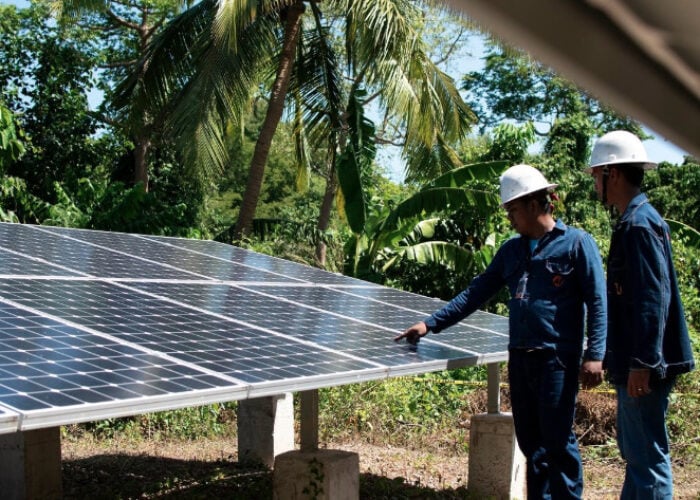
Global governments could divert massive amounts of public funds from cancelled, large-scale power generation projects, such as nuclear, towards solar and other renewables to deliver consumers more value for money.
The world will need to build five to six times as much solar and wind power per year as in 2019 if a carbon-zero economy is to be reached by the middle of the century, a study has said.
Three months of marginal job creation means nearly 500,000 clean energy workers in the US remain unemployed as the sector struggles to recover from the impact of COVID-19.
The Solar Energy Corporation of India (SECI) has invited bids for a 100MWac/200MWp solar project with a 50MW/150MWh battery energy storage system in the state of Chhattisgarh.
Aided by falling production costs and policies encouraging a shift to green energy, renewables’ share of the global energy mix could soar from 5% in 2018 to almost 60% by 2050, BP has said in its latest energy outlook.
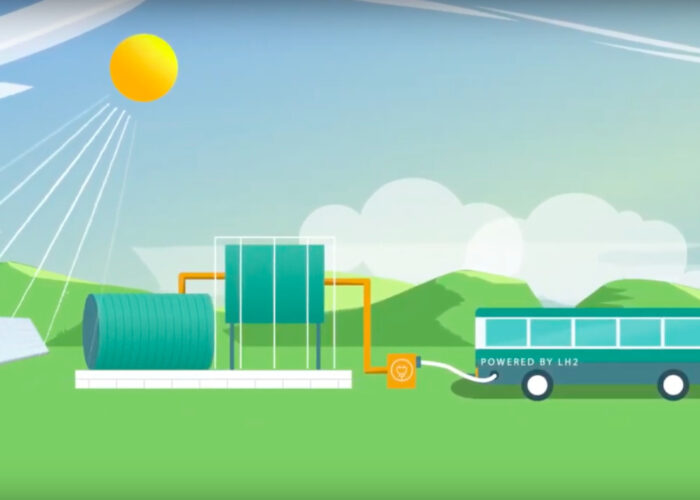
Australia and Germany have joined forces to fund a feasibility study into the production, storage, transport and use of hydrogen from renewable energy.
Solar parks with a total capacity of 2.3GW will be developed in Greece as part of a €5 billion (US$5.94 billion) roadmap to support the phase-out of coal generation by 2028.
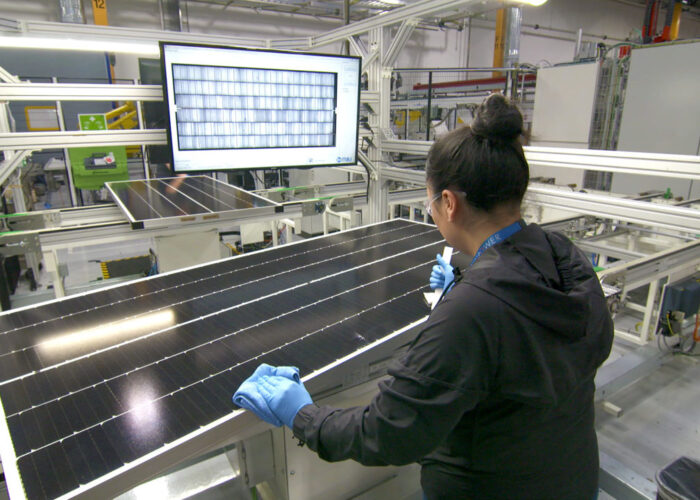
The US should aim for 100GW of annual domestic renewable energy manufacturing capacity by the end of the decade, with a focus on solar, wind and energy storage, the Solar Energy Industries Association (SEIA) has said in a new report.
Solar will dominate the power generation alongside wind in the coming decades as electrification rapidly escalates, but the energy transition is occurring “nowhere near fast enough” to deliver change compliant with the Paris Agreement.
Solar and wind power represent a US$1 trillion investment opportunity in Asia Pacific this decade, equivalent to two-thirds of the region’s power generation sector, as countries move away from fossil fuel generation in favour of greener alternatives.