Last year, Tongwei Solar published cell pricing information on its official website on a monthly basis. The day of release attracted attention from a number of companies from both the upstream and downstream supply chains. Media outlets and capital markets were also keeping a close eye on the information released.
As the largest solar cell manufacturer today, Tongwei Solar is having a far-reaching impact on the development of the PV industry.
Try Premium for just $1
- Full premium access for the first month at only $1
- Converts to an annual rate after 30 days unless cancelled
- Cancel anytime during the trial period
Premium Benefits
- Expert industry analysis and interviews
- Digital access to PV Tech Power journal
- Exclusive event discounts
Or get the full Premium subscription right away
Or continue reading this article for free
Six years ago, no one could have foreseen what’s happening today.
In 2013, Tongwei acquired the world's largest single solar cell facility in Hefei, China for RMB 870 million (US$125.3 million) and established Tongwei Solar (Hefei) Co., Ltd. The acquisition enabled Tongwei to further expand into the solar cell sector.
The number of Tongwei Solar employees has grown from 87 to over 8,700 in six years and its c-Si cell capacity, which was distributed among three cell production bases in Chengdu, Hefei and Meishan City, has jumped from 1.2GW to 20GW. By the end of 2019, Tongwei’s solar revenue exceeded RMB 10 billion (US$1.44 billion).
The production expansion plan released by Tongwei shows that its total solar cell capacity is expected to reach 30GW by 2020 and its global market share is to top 15% over the same period.
Cost control and intelligent manufacturing
Tongwei Solar’s rapid expansion, stringent cost control and strong profitability amid the current market downturn has caught the eye. Public data reveals that Tongwei has now ranked first in profitability for three consecutive years.
Michael Ao, head of marketing & sales, told PV Tech, “In terms of non-silicon costs, Tongwei Solar is already the lowest in the industry or even around the world. Every quarter we have a clear cost reduction target in place and we are working hard to get there.”
Tongwei's core competitiveness lies in its capability of maintaining extremely high capacity utilisation and yield rates through lean management to control costs. It’s reported that, since its first full production in September 2014, Tongwei has made a profit for 64 consecutive months, whilst maintaining a 100% operating rate in the same period.
Alan Xie, general manager of Tongwei’s Chengdu operation, explained: “We have great scale and supply chain advantages. For example, there is strong support for upstream polysilicon. In addition, we are also benefitting from the local talent pool, as Sichuan has numerous universities.
“It is very important for private companies to bring in talent. At the same time, we’ve adopted a lot of automated tools and processes on the cell line to enable efficient production management to deliver trustworthy products to our customers.”
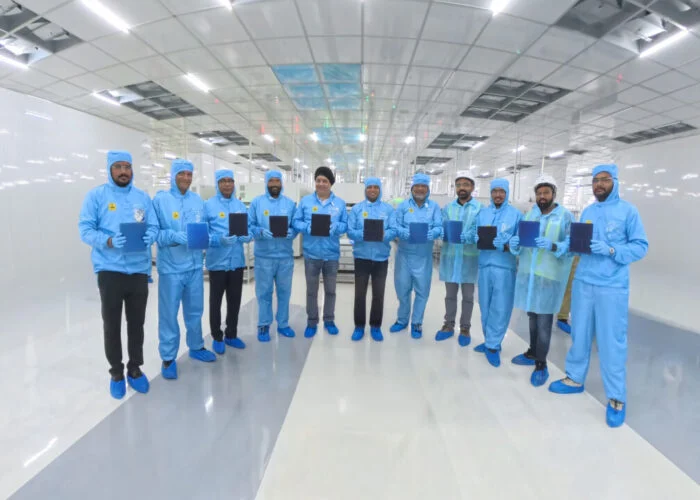
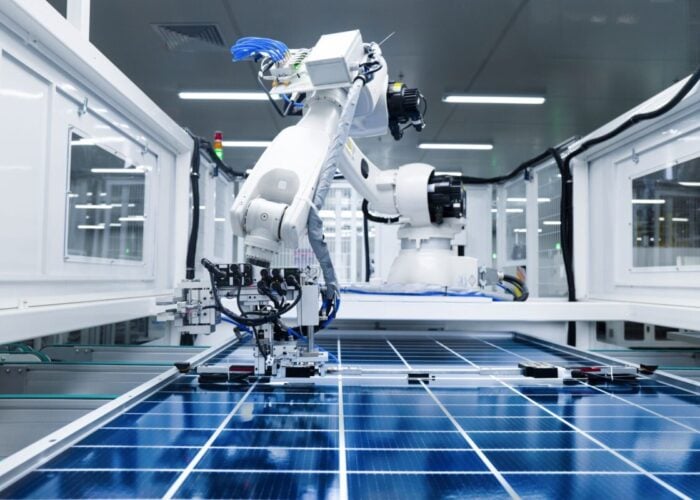
At its Chengdu plant, Tongwei Solar has set up a total of 16 fully-closed c-Si efficiency cell production lines. These automated and intelligent production lines have helped Tongwei become the first company to establish digital workshops and intelligent factories in the global PV industry. The latest Phase IV project was mainly comprised of more advanced unmanned production lines on a larger scale.
“Tongwei Solar is an early explorer of intelligent manufacturing and we have spared no effort in promoting automated production and intelligent manufacturing throughout the PV industry,” continued Alan Xie.
“Our exploration began with automation of some equipment and gradually we tried one single production line prior to the whole plant. In the process we were actively working with equipment suppliers and automation integrators to deliver an intelligent production workshop like this today.”
Accelerated globalisation
Because of its massive capacity and large scale, Tongwei Solar's every move has influenced the choices of other cell manufacturers and players along the upstream and downstream supply chain and has also indirectly guided mainstream solar cell product supply.
As China's mainstream module manufacturers have continued to go overseas, Tongwei has also accelerated its pace of globalisation. In 2019, its cumulative overseas shipments topped 1.5GW.
Tongwei's overseas business currently covers more than 30 countries and regions in the world, with Europe, the Middle East, India, Japan and South Korea being the main focus areas.
As stated by Michael Ao, “Tongwei Solar is a cell-based manufacturing company, so we are paying more attention to global cell markets. If we look at the big picture, the mainstream countries currently capable of producing modules locally are India and Vietnam. South American markets, such as Brazil and Mexico, are also growing fast. These are the emerging markets with growth potential for cells.”
Many companies were rushing overseas whereas Tongwei Solar was fully aware of its self-positioning. Michael Ao commented that, as module plants were mainly concentrated in China and its surrounding countries, Tongwei’s cell shipments remained at 80% in China and 20% overseas.
Cementing a leading position for the future PV industry
Solar cell manufacturing has traditionally been a sector featuring rapid technology change and use of heavy assets. Companies engaged in manufacturing have been required to take a leading role in technology, maintain cost advantages and continue to make profits.
Tongwei Solar has cooperated with a number of domestic and foreign academic institutions, such as the Institute of Microsystems of the Chinese Academy of Sciences and Southwest Petroleum University, to jointly develop the next generation of cell efficiency and storage technology. At present, Tongwei is actively promoting HJT SHJ cell efficiency ramp production research. In June 2019, the first HJT cell of R&D project Phase I was successfully rolled off and its conversion efficiency reached 23%. Tongwei subsequently succeeded in lifting this figure to 23.68% within around six months.
Alan Xie: “As a state-level high-tech enterprise, Tongwei Solar is investing heavily in R&D. The annual R&D investment accounts for 3%-5% of our total revenue. R&D investment is also being increased accordingly with the rise of sales.
“At the same time, we will launch some new products tailored to market demands in a timely manner. At present, thanks to our previous R&D investment and early planning for future markets, Tongwei Solar has already obtained a total of nearly 300 patents.
“China's PV industry is heading towards a specialised and technology-intensive market. While elimination and integration is inevitable, top companies will attract more resources. Continued profitability is decisive in how far a company can go. Tongwei Solar is doing quite well in this regard for the time being.”
Representatives from Tongwei Solar will be among the speakers at PV CellTech 2020, one of the must-attend events for the upstream solar industry. Now in its fifth year, PV CellTech 2020 will be held at Hotel Equatorial, Penang, Malaysia, from 10 – 11 March 2020. Early bird tickets are still available. Details on how to attend the conference can be found here.