Financial commitments for utility-scale renewables projects in Australia have slowed to the lowest level in the past five years, according to the Clean Energy Council (CEC), which revealed investment in large-scale batteries in the country is booming.
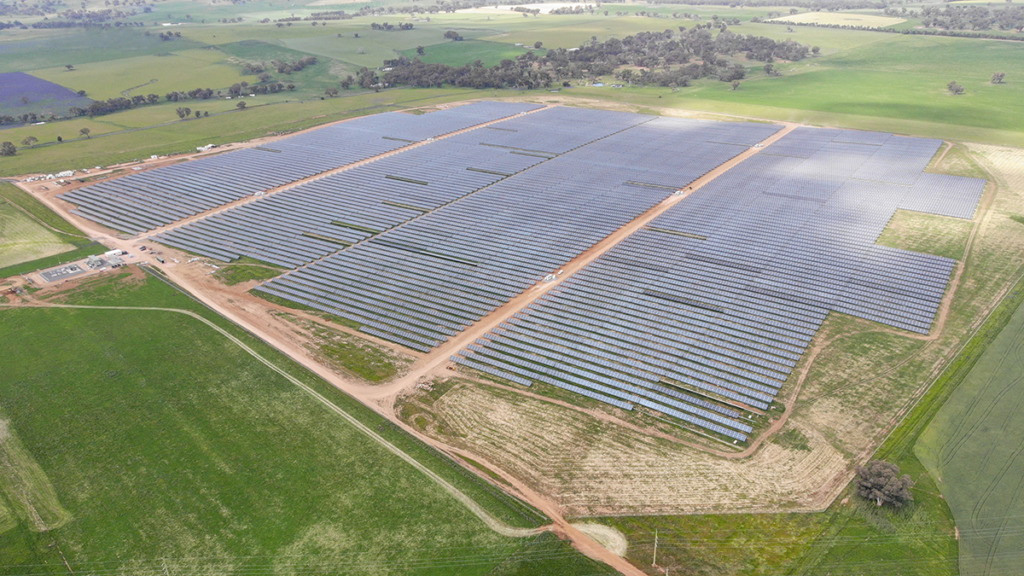
Just one large-scale renewable energy project was financially committed in Q1 2021 – the New England Solar Farm in New South Wales – with the 400MW of new capacity down 45% on the previous quarter and 30% lower than the 2020 quarterly average, the renewables association said.
Try Premium for just $1
- Full premium access for the first month at only $1
- Converts to an annual rate after 30 days unless cancelled
- Cancel anytime during the trial period
Premium Benefits
- Expert industry analysis and interviews
- Digital access to PV Tech Power journal
- Exclusive event discounts
Or get the full Premium subscription right away
Or continue reading this article for free
The slowdown means Q1 2021 saw the lowest number of new renewables projects to reach financial close in a single quarter in the past four years.
“This is a deeply concerning trend when, in light of the speed of the clean energy transition worldwide, the brakes are being put on Australia’s promise as a renewable energy superpower,” said Kane Thornton, CEC chief executive.
Thornton said that confidence for new investment in the sector is “really in limbo at the moment”, with projects experiencing “significant and often unanticipated delays” through the grid connection process, adding that government intervention in the energy market – such as last week’s announcement that it will fund a 660MW gas-peaking plant at Kurri Kurri, New South Wales – is adding to investor uncertainty.
The fall in renewables investment comes as financial commitments in utility-scale batteries in Australia surges, increasing from 150MW of capacity in the fourth quarter of 2020 to 600MW in Q1 2021.
According to the CEC, Australian large-scale batteries reaching financial close in the first quarter of 2021 were the 300MW / 450MWh Victorian Big Battery, the 250MW / 1,000MWh Torrens Island Battery in South Australia and a 50MW / 50MWh battery energy storage system at the first stage of the New England Solar Farm.
The positive storage figures follow the publication of a recent CEC study that found batteries are cheaper than open-cycle gas turbine plants for providing electricity peaking services in Australia. Comparing a 250MW gas peaker with a 250MW four-hour grid-scale battery, the paper said the battery provides cost savings of more than 30% while offering greater flexibility and significantly reducing emissions intensity.
The CEC said last month that 15 large-scale battery storage projects have so far been announced in Australia this year, representing 6.6GW of capacity and AU$4.3 billion (US$3.3 billion) in investment.
Kane Thornton added: “Big batteries have come of age, with investors recognising the increasing cost competitiveness as well as the role they play in providing energy security and supporting renewable energy across Australia.”