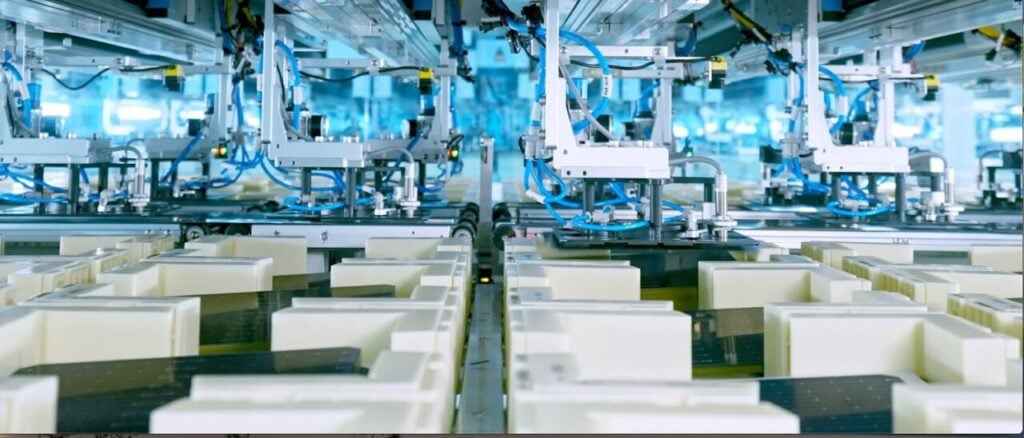
Japanese solar cell and module manufacturer Toyo shipped 4.5GW of cells in FY2025, surpassing its full-year target, while module shipments reached 249MW.
The manufacturer reported revenue of US$427.4 million in FY2025, up 142% year-on-year, driven primarily by a US$241.6 million increase in solar cell sales and a US$7.6 million rise in module revenues.
Try Premium for just $1
- Full premium access for the first month at only $1
- Converts to an annual rate after 30 days unless cancelled
- Cancel anytime during the trial period
Premium Benefits
- Expert industry analysis and interviews
- Digital access to PV Tech Power journal
- Exclusive event discounts
Or get the full Premium subscription right away
Or continue reading this article for free
Toyo had set a solar cell shipment target of 4.2GW-4.4 GW. According to the firm, the exceeded target was driven by the ramp-up of its 4GW manufacturing facility in Ethiopia, which reached nameplate capacity in October 2025.
The company also reported an increase in gross profit to US$96.3 million, with margins expanding to 22.5%, compared with US$21.9 million in 2024. Meanwhile, the net income came in at US$37.2 million, slightly down from US$40.5 million in the previous year.
Toyo’s CEO Takahiko Onozuka said: “Our record revenues were underpinned by the rapid ramp-up of our 4GW cell facility, which is now operating at full capacity to serve our US utility-scale partners with high-efficiency, policy-compliant solar technology.”
“Our production at our Houston module facility is expected to scale fast over the course of 2026 and we are evaluating additional strategic initiatives to create a robust onshore supply chain for US customers using advanced technology and performance standards,” he added.
For 2026, Toyo has set shipment targets of 5.5GW-5.8 GW for solar cells and 1GW-1.3 GW for modules. The company forecasts adjusted net income of US$90-US$100 million for the full year.
The CEO said Toyo will focus on establishing itself as a supplier of compliant solar solutions aligned with evolving US customer requirements. He added that solar remains a highly viable option for rapidly scaling energy production in a cost-effective manner.
He also noted that the company had secured new polysilicon sourcing relationships and was advancing plans to onshore cell manufacturing in the US to support customers seeking integrated domestic content. Recently, Toyo secured a one-year supply agreement with an undisclosed firm for US-made polysilicon.
As trade and tax-credit policy in the US tightens around the provenance of solar hardware, with non-domestically produced content facing closer scrutiny, Toyo said it was benefitting from having a transparent supply chain.
Toyo’s chief strategy officer, Rhone Resch, said: “Our outperformance this year is a direct result of our ability to navigate a complex global trade landscape. TOYO has built a resilient, traceable supply chain that the market trusts. As solar continues to drive the majority of new US electricity demand, TOYO is now well positioned with the domestic capacity and policy expertise to contribute to the next phase of the energy transition.”