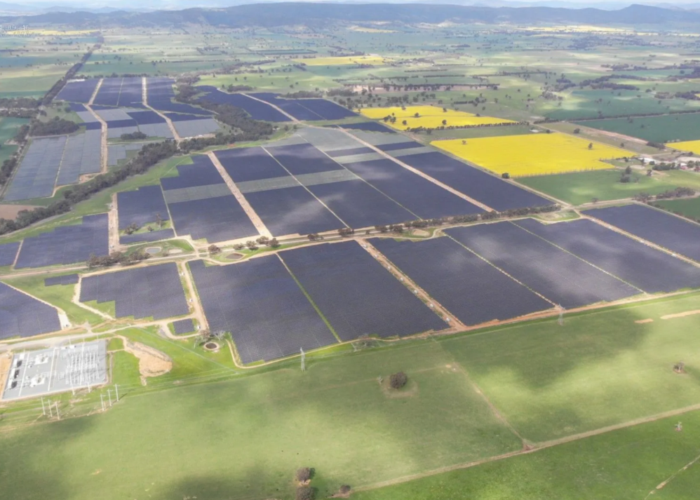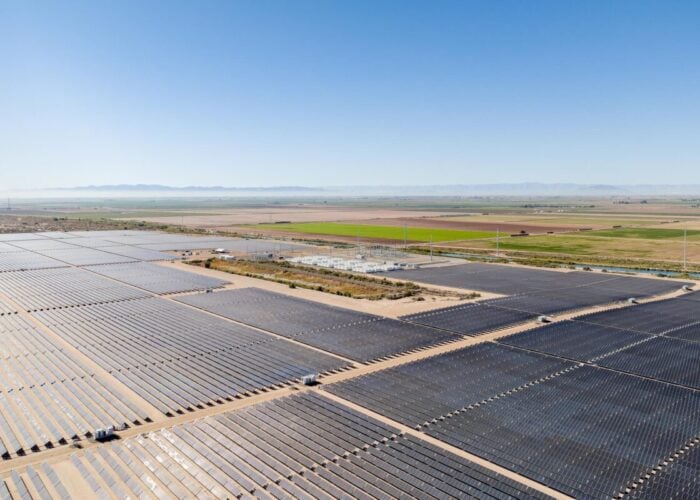
New Zealand Prime Minister Christopher Luxon has opened Kōwhai Park, the 168MWdc solar PV plant at Christchurch Airport that is now the largest on the country’s South Island.
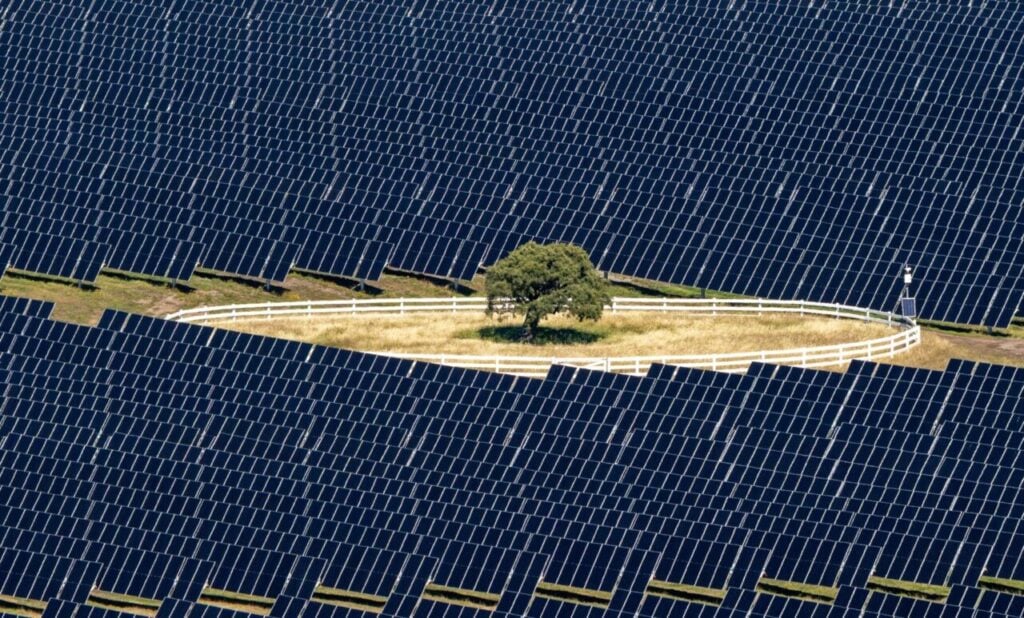
The plant has an AC capacity of 150MW and is expected to generate 275GWh a year. Around 300,000 solar modules cover the 230-hectare site, which represents an NZ$273 million (US$160 million) investment.
Try Premium for just $1
- Full premium access for the first month at only $1
- Converts to an annual rate after 30 days unless cancelled
- Cancel anytime during the trial period
Premium Benefits
- Expert industry analysis and interviews
- Digital access to PV Tech Power journal
- Exclusive event discounts
Or get the full Premium subscription right away
Or continue reading this article for free
Two local users have contracted its output. Christchurch Airport and dairy processor Synlait will buy electricity from Kōwhai Park under long-term power purchase agreements (PPAs), with Synlait taking 25% of generation to supply its Dunsandel and Dairyworks sites.
Kōwhai Park is the first completed solar PV power plant for both of its developers. Contact Energy, which runs geothermal, hydro, battery storage and thermal generation across 37 sites in New Zealand, joined bp-owned developer Lightsource bp on the project in February 2023, just over a year after Christchurch Airport announced plans for a 150MW first phase.
“Kōwhai Park is an important milestone for Lightsource bp as our first completed project in New Zealand,” said Adam Pegg, the company’s chief operating officer for Asia-Pacific.
Lightsource bp secured NZ$267 million in green financing from Westpac New Zealand, Mizuho, China Construction Bank and Intesa Sanpaolo in August 2024, and broke ground days later. CHINTEC served as engineering, procurement and construction (EPC) contractor, while Ventia built the connection to Orion New Zealand’s 66kV distribution network.
Construction employed 235 people at its peak and involved 66 Canterbury businesses. Commissioning began in August.
The plant forms the first phase of a wider development on around 400 hectares beside the airport’s runways.
“Kōwhai Park shows what can happen when you think differently about how airport land can be used,” said Christchurch Airport chief executive Justin Watson, adding that the airport aims to create a renewable energy precinct at the site.
Kōwhai Park joins Tauhei as New Zealand’s utility-scale solar fleet grows
Kōwhai Park is New Zealand’s second-largest solar plant, behind Harmony Energy’s 202MWp Tauhei project in Waikato, which was energised in July.
Tauhei took the national title from Genesis Energy and FRV Australia’s 63MWp Lauriston plant in Canterbury.
The new capacity arrives as solar takes a larger role in a system dominated by hydropower. Data from the Ministry of Business, Innovation and Employment (MBIE) showed solar generation rose 56% year-on-year to a record 242GWh in the second quarter of 2026.
Over a rolling 12-month period, New Zealand generated more electricity from solar than from coal for the first time. Renewables supplied 92% of the country’s electricity in the quarter.
Interest in solar grew after a dry year in 2024 drained hydro storage and pushed wholesale prices sharply higher.
Contact chief executive Mike Fuge said building new generation at scale “gives businesses the confidence to electrify and strengthens our security of supply”.
The two partners are already working on their next project. In June, they reached financial close on the 171MWdc Glorit solar PV plant on the Kaipara Coast north of Auckland.
Glorit is targeting commercial operations in the second half of 2028. Fuge said the joint venture holds two further consented sites, in Taranaki and Northland.