New Zealand’s solar generation rose 56.2% year-on-year to a record 242GWh in Q2 2026, according to the latest New Zealand Energy Quarterly from the Ministry of Business, Innovation and Employment (MBIE).
According to the government, the country generated more electricity from solar than coal over a rolling 12-month period for the first time on record.
Try Premium for just $1
- Full premium access for the first month at only $1
- Converts to an annual rate after 30 days unless cancelled
- Cancel anytime during the trial period
Premium Benefits
- Expert industry analysis and interviews
- Digital access to PV Tech Power journal
- Exclusive event discounts
Or get the full Premium subscription right away
Or continue reading this article for free
The Q2 2026 quarter, covering April to June and released on 10 September, was marked by renewable energy sources supplying 92% of New Zealand’s electricity, the third consecutive quarter above 90% and the highest share recorded for a Q2 period.
Total electricity generation rose 1.9% (207GWh) year-on-year to 11,163GWh, while renewable energy generation as a whole increased 11.4% (1,052GWh).
Favourable hydro conditions drove much of that growth, with hydro generation up 14.7% (804GWh) to 6,283GWh following strong rainfall, while geothermal output reached a record 2,621GWh as new capacity came online. Wind generation held near record levels at 964GWh.
That renewable energy has sharply squeezed fossil generation. Gas-fired generation fell 37.2% year-on-year, and coal-fired generation fell 74.3%, contributing to a 95% reduction in coal use for electricity generation specifically.
Coal imports fell by 94% to their lowest level since December 2011, while coal consumption reached a record low, aided by continued fuel switching to biomass in the food processing sector.
Wholesale electricity prices fell by 66% compared with the same quarter last year, though residential electricity costs rose by 10%, driven mainly by higher network charges to support infrastructure investment.
Electricity consumption itself increased 3.0% (301GWh) to 10,211GWh, driven by higher irrigation demand during dry conditions and stronger industrial use.
A utility-scale pipeline advancing on multiple fronts
Solar’s record quarter and its milestone crossover with coal reflect a utility-scale pipeline that has accelerated markedly over the past two years.
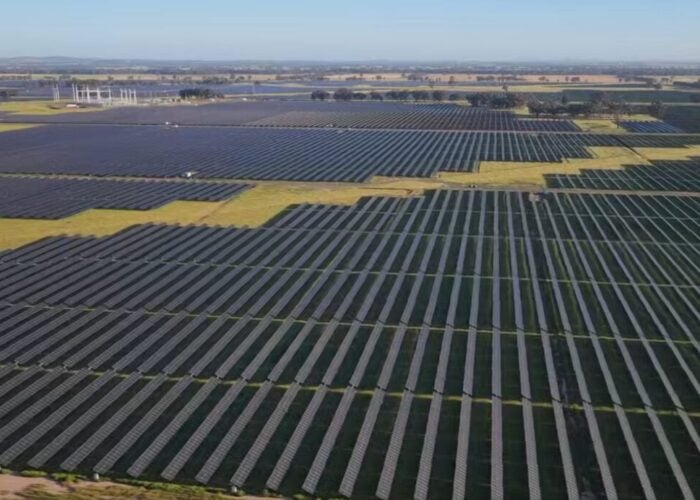
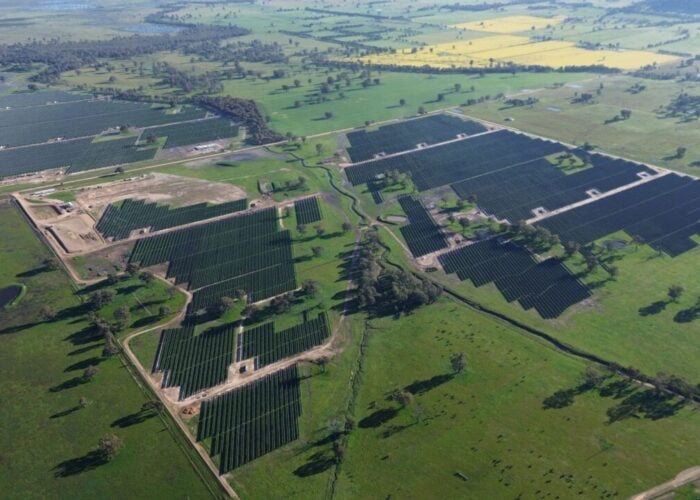
In July 2026, Harmony Energy New Zealand and Igneo Infrastructure Partners energised the 202MWp Tauhei solar plant near Te Aroha in the Waikato region, becoming the country’s largest operational solar installation.
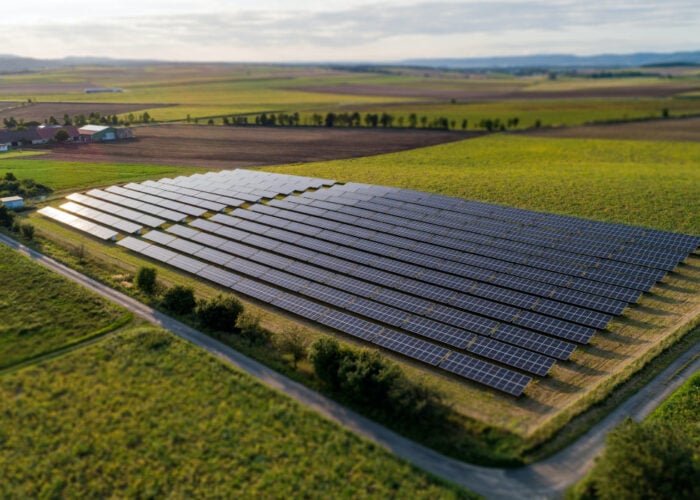
The agrivoltaics site, which incorporates sheep grazing beneath its modules across 182 hectares of former dairy farmland, has contracted all output from its first ten years of operation to gentailer Meridian Energy.
Tauhei’s position as the country’s largest plant is expected to be short-lived. Nova Energy and Meridian Energy are jointly developing the 400MW Te Rahui Solar Farm near Taupō, where construction crews installed the project’s first modules in May 2026, with the 200MW first phase due to reach full capacity by mid-2027.
Elsewhere, Lightsource bp and Contact Energy reached financial close in June 2026 on the 171MWdc Glorit solar plant north of Auckland, following resource consent that survived a High Court challenge from conservation group Forest and Bird over impacts on the endangered tara iti.
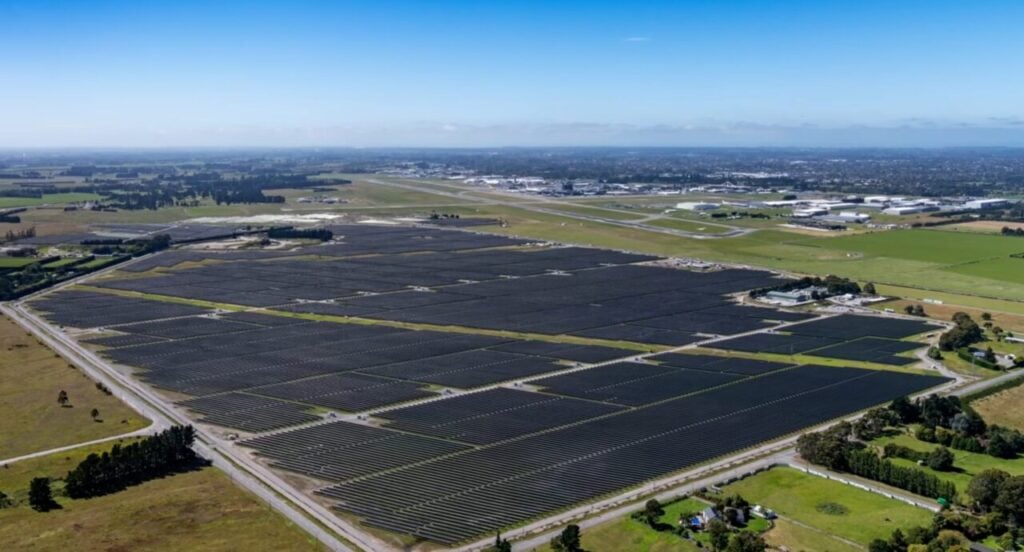
The same joint venture is separately nearing completion of the 168MWdc Kōwhai Park plant at Christchurch Airport, after completing solar module installation there ahead of commercial operations expected later this year.
That project activity traces back to New Zealand’s 2024 dry-year energy crisis, when depleted hydro storage and declining gas supply drove wholesale prices sharply higher and exposed the risks of a generation mix historically dependent on weather-sensitive hydropower.
MBIE’s own quarterly chart data shows coal-fired generation had climbed steadily between 2016 and 2021 before beginning a sustained decline, while solar and wind have both risen steadily over the same period, a shift Q2 2026’s figures now show crossing a symbolic threshold.
Utility-scale progress has not been matched at the residential level, where uptake remains comparatively low.
New Zealand’s Ministry for Regulation published a review in July 2026 finding that only 3-4% of New Zealand households have solar installed, compared with more than 30% in Australia, attributing part of that gap to a fragmented approval process spanning up to eight layers of sign-off and five site visits from four different entities.
The review recommended 15 changes it estimated could deliver between NZ$28 million (US$16.4 million) and NZ$50 million in net benefits over a decade, including faster distributor approval timeframes and the legalisation of small plug-in solar units.