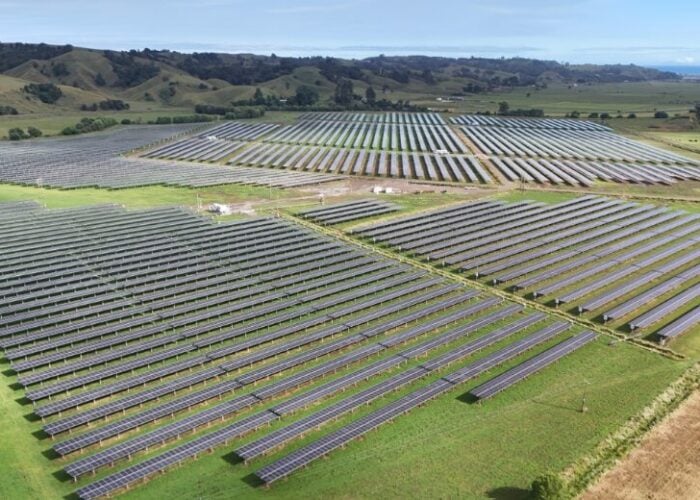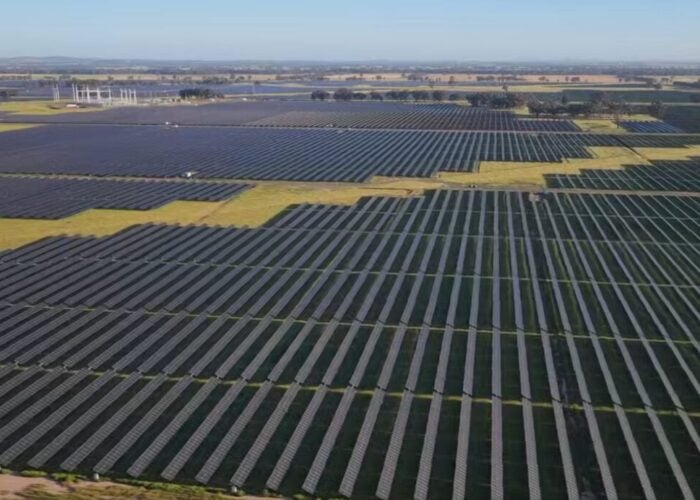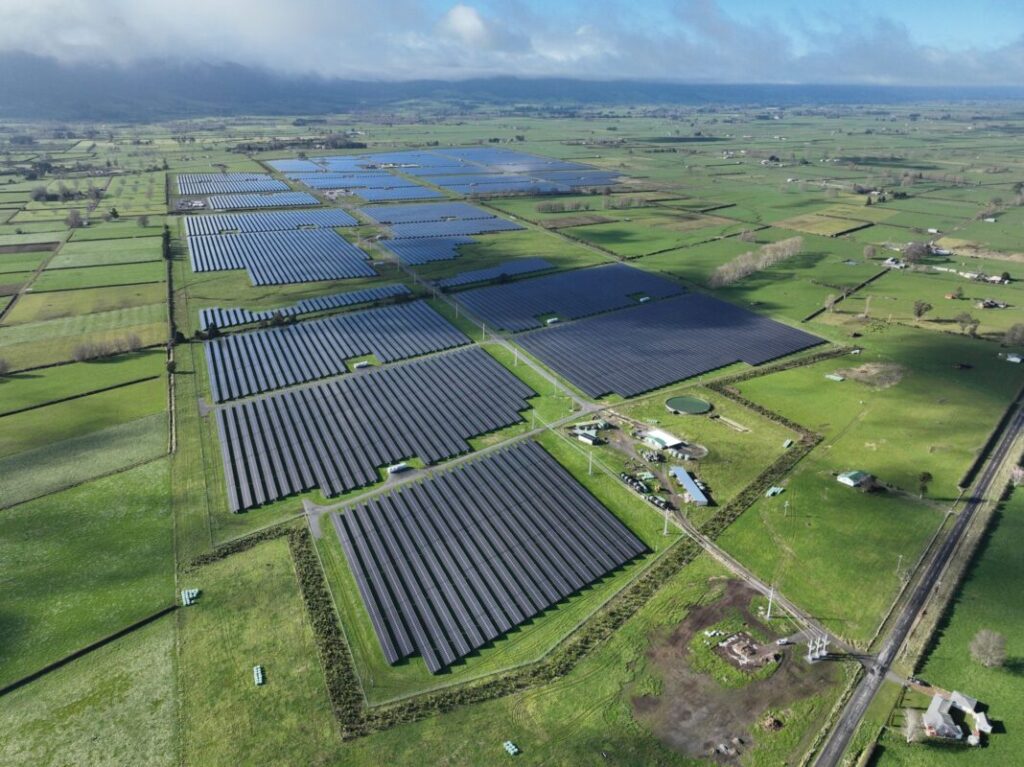
Renewable energy developer Harmony Energy New Zealand and joint venture partner Igneo Infrastructure Partners have energised the 202MWp Tauhei solar PV power plant near Te Aroha in the Waikato region.
The plant will now undergo several months of testing and commissioning as output is ramped up to full capacity, with full commercial operations targeted for September to October 2026.
Try Premium for just $1
- Full premium access for the first month at only $1
- Converts to an annual rate after 30 days unless cancelled
- Cancel anytime during the trial period
Premium Benefits
- Expert industry analysis and interviews
- Digital access to PV Tech Power journal
- Exclusive event discounts
Or get the full Premium subscription right away
Or continue reading this article for free
Once operational, Tauhei will generate approximately 280GWh of renewable energy per year. All output from the first ten years of operation has been contracted to gentailer Meridian Energy under a power purchase agreement, with a separate arrangement covering generation during the commissioning phase.
Harmony Energy New Zealand managing director Garth Elmes said: “We are excited to have reached this significant milestone. The Tauhei Solar Farm is an important project that will bolster the supply of affordable renewable energy. We are immensely proud to contribute to New Zealand’s domestic energy security at a time of high global uncertainty and increasing cost-of-living pressure.”
Built across 182 hectares of farmland, the agrivoltaics site switches from dairy to sheep farming, with the solar modules providing shade for the animals and helping retain soil moisture during dry periods.
Around 100,000 native plants have been planted along boundaries, riparian margins and biodiversity corridors as part of the project’s environmental commitments.
During the 18-month construction period, the project supported a peak workforce of around 350 full-time equivalent construction staff, with more than 1,000 workers inducted onto the site.
The project began as a joint venture between Harmony Energy and First Renewables, part of New Zealand energy group Clarus.
Harmony Energy announced its plan to co-develop the 202MWp plant with Clarus in January 2024, describing it as one of the most advanced large-scale solar projects in the New Zealand pipeline at the time.
The project secured fast-track consent under New Zealand’s Covid-19 Recovery (Fast-Track Consenting) Act in September 2022, enabling a streamlined approvals process given the project’s scale and its contribution to the country’s renewable energy targets.
The joint venture reached financial close in January 2025, with a syndicated debt facility provided by ANZ, ASB, BNZ and MUFG Bank. Construction began shortly after, with Spanish infrastructure contractor Elecnor New Zealand appointed as the EPC contractor.
Igneo Infrastructure Partners entered as a joint venture partner alongside Harmony Energy, replacing the original Clarus/First Renewables structure, at some point prior to the energisation announcement.
Tauhei replaces the 63MWp Lauriston solar PV plant opened by Genesis Energy and FRV Australia as New Zealand’s largest solar installation.
The Lauriston plant, which Genesis claimed was the country’s largest solar farm when it opened in April 2025, is now eclipsed by Tauhei’s 202MWp generation capacity.
New Zealand’s electricity system is predominantly hydropower-based, which has historically limited the urgency of large-scale solar development.
However, dry-year hydro risk and electrification demand growth have sharpened commercial interest in diversifying the generation mix.
In 2024, PV Tech reported on the New Zealand energy crisis, which was triggered by wholesale pricing spikes due to gas shortages and low rainfall affecting the country’s hydroelectric resources.
This crisis highlighted the need for diversification in New Zealand’s energy mix, creating opportunities for solar PV expansion.
Harmony has additional projects in the pipeline beyond Tauhei, with three further developments totalling approximately 300MW lodged with the Environmental Protection Authority under fast-track legislation at the end of 2023.