Swedish thin-film PV manufacturer Midsummer has abandoned from plans to build a new 200MW cell manufacturing facility in its home country.
Announcing plans to shelve the new facility, Midsummer said it would instead focus on an alternative “asset light” approach to expanding its international production footprint.
Try Premium for just $1
- Full premium access for the first month at only $1
- Converts to an annual rate after 30 days unless cancelled
- Cancel anytime during the trial period
Premium Benefits
- Expert industry analysis and interviews
- Digital access to PV Tech Power journal
- Exclusive event discounts
Or get the full Premium subscription right away
Or continue reading this article for free
The new facility was first announced in 2024, when Midsummer revealed plans to build a 200MW line to produce its copper indium gallium selenide (CIGS) cells in the Flen area of Sweden. The project attracted a €32 million (US$37 million) grant from the European Commission to finance the new line.
But in a statement yesterday, Midsummer said it would decline the EU grant and halt its plans for the facility.
It said the project’s financing had been adversely affected when Midsummer was denied financial support from the Swedish Energy Agency’s ‘Industriklivet’ programme, the country’s flagship initiative to cut industrial emissions.
“We are happy to establish a new factory in Sweden in the future when the commercial and financial conditions allow it, but it will not happen within the framework of the specific project we have been awarded time-limited EU support for. A major reason is that we have strategically decided to choose other financing models for new factories than self-financing,” said Midsummer’s CEO Eric Jaremalm.
Midsummer said it was now exploring “significantly less capital-intensive opportunities” for establishing manufacturing facilities abroad, in collaboration with established global and “very large industrial players”.
The company said this so-called “asset-light model was based on collaboration with large industrial partners.
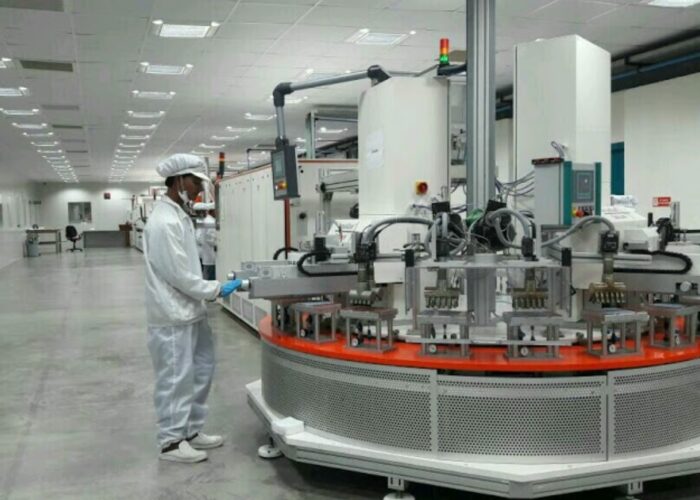
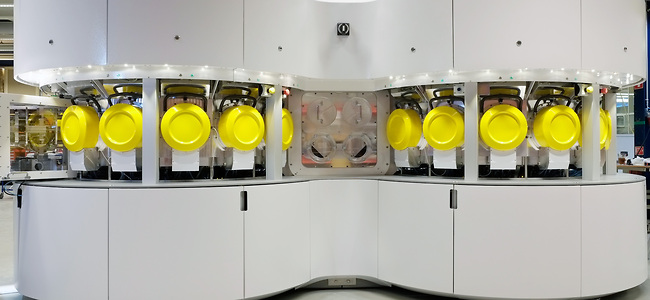
“Instead of owning and operating all the factories itself, the company supplies machinery, raw materials and know-how to enable local production of solar cells on different continents. This provides significant early income in the form of machine orders and also ongoing income after the factory is operational,” the company’s statement said.
This approach is reflected in Midsummer’s recent activities, which have included several significant turnkey orders from overseas customers for its CIGS production equipment.
Midsummer highlighted one of these deals to illustrate its change of tack—a contract last year to deliver machinery with operational responsibility to a solar cell factory in Colombia, with an annual production capacity of at least 100MW. Midsummer said that so far it had received machinery orders worth approximately SEK380 million (US$39.3 million) for this purpose. It said it would also continue to expand production in its own factory in Bari, Italy, which, fully operational, produces 50MW annually.
“Even with the EU grant, self-financing a completely new factory of this size in Flen would have cost us several hundred million SEK, and we do not find it responsible to take such large loans or ask our shareholders for such amounts when we have found other ways to finance our expansion, which in addition to being financially more advantageous are also geographically closer to the fastest growing markets today,” added Jaremalm.