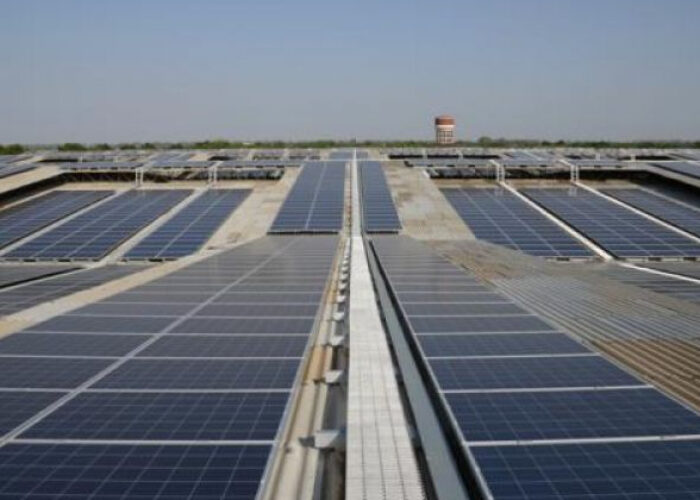
The Canadian International Trade Tribunal (ITT) has terminated anti-dumping (AD) and countervailing duties (CVD) on certain solar PV modules and laminates from China.
The Canada Border Services Agency will therefore no longer impose anti-dumping and countervailing duties on Chinese solar panels and laminates.
Try Premium for just $1
- Full premium access for the first month at only $1
- Converts to an annual rate after 30 days unless cancelled
- Cancel anytime during the trial period
Premium Benefits
- Expert industry analysis and interviews
- Digital access to PV Tech Power journal
- Exclusive event discounts
Or get the full Premium subscription right away
Or continue reading this article for free
The order was originally made on 25 March 2021 and the expiry review ( RR‑2020‑001) – continuing, without amendment, its finding made on 3 July 2015, in inquiry NQ‑2014‑003 – has not been renewed and used to cover PV modules consisting of crystalline silicon PV cells, thin-film PV products produced from amorphous silicon (a-Si), cadmium telluride (CdTe) or copper indium gallium selenide (CIGS). Modules with a power output not exceeding 100W were already excluded from the order.
According to the Canadian ITT, the expiry review lacked the support of domestic producers, and for this reason, it terminated the order.
The tribunal’s decision was published on 17 September 2026 and can be accessed here.
Canada’s decision contrasts with its southern neighbour, which has been implementing trade measures on PV modules and other parts of the supply chain against China and other Southeast Asian countries since 2012. Last month, Donald Trump went even further and introduced a 15% tariff on imports of products using polysilicon and set minimum prices for polysilicon and its derivatives under Section 232.
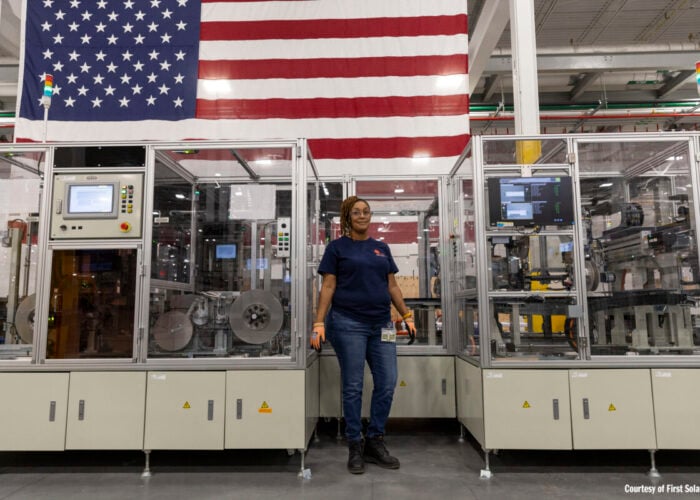
The other major difference between Canada and the US is that the US has, in a matter of years, grown its domestic solar supply chain from polysilicon to modules. Data from PV Tech Research forecasts that the US will reach 100GW of annual nameplate capacity for modules by 2027 – combining First Solar’s thin-film cadmium telluride modules and crystalline silicon (c-SI) modules – while C-SI solar cells are forecast to surpass 30GW of annual nameplate next year.