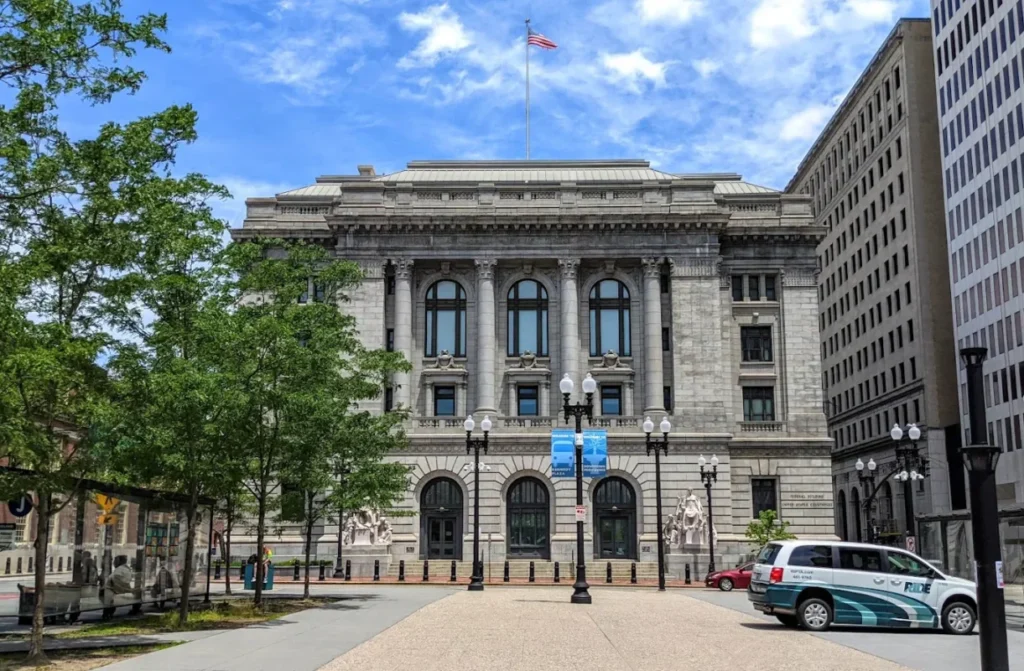
A federal judge in Rhode Island has ruled that the US Environmental Protection Agency (EPA) unlawfully terminated the US$7 billion Solar for All programme, which was designed to expand solar access and reduce electricity costs for low- and moderate-income households.
US District Judge Mary McElroy granted summary judgment to the plaintiffs and vacated the EPA’s termination of the programme. The court found that Congress intended the agency to continue administering grants that had already been obligated.
Try Premium for just $1
- Full premium access for the first month at only $1
- Converts to an annual rate after 30 days unless cancelled
- Cancel anytime during the trial period
Premium Benefits
- Expert industry analysis and interviews
- Digital access to PV Tech Power journal
- Exclusive event discounts
Or get the full Premium subscription right away
Or continue reading this article for free
“The court ruled the Trump Administration never should have terminated Solar for All because Congress intended it to continue, and EPA broke the law when it killed the programme and pocketed the money,” said Southern Environmental Law Center, senior attorney Nick Torrey.
“Electricity bills are skyrocketing, so low-cost solar projects — which guarantee big savings — are needed now more than ever. Today’s victory means EPA must stop sitting on the US$7 billion in funding for this programme and start getting it out into communities to provide hardworking American families much-needed relief.”
The Solar For All fund was established under the Inflation Reduction Act (IRA) in 2024. The EPA had estimated that Solar for All would reach more than 900,000 households, while supporting an estimated 200,000 jobs and workforce training opportunities.
The EPA cancelled Solar for All in August 2025 following the passage of the One Big Beautiful Bill Act [subscription required]. The Solar Energy Industries Association (SEIA) has also estimated that the One Big, Beautiful Bill could put 330,000 clean-energy jobs at risk, highlighting the potential employment impact of changes to federal clean-energy policy.
The ruling came amid broader changes to US solar policy under the Trump administration, including executive orders targeting key Inflation Reduction Act provisions.
The legal challenge was brought by labour unions, solar businesses, nonprofits and other groups, including Solar United Neighbors and the Rhode Island AFL-CIO. The plaintiffs argued that the EPA lacked authority to terminate grants that had already been awarded.
The EPA said it is reviewing the ruling and considering whether to appeal. The ruling restores the Solar for All programme, although further legal proceedings could affect its implementation.
The ruling follows a broader series of legal challenges to the Trump administration’s efforts to withdraw previously awarded clean-energy funding. A US court ruled in January 2026 that the Department of Energy’s cancellation of US$7.5 billion in clean-energy grants was unlawful.
The federal policy shift has also prompted states to take a greater role in supporting renewable energy deployment [subscription required].
Despite the changing policy environment, the US added 43.2GW of solar PV capacity in 2025, while community solar capacity surpassed 10GW despite a slowdown in annual additions in March 2026.
Meanwhile, in September 2026, the American Clean Power Association reported that US clean power added 17.1GW of utility-scale solar, battery storage and land-based wind capacity in Q2 2026, taking the project pipeline to a record 204.6GW.