Solar EPCs have detailed how social distancing measures and other work practices have been put into place to ensure developments can continue amidst the COVID-19 pandemic.
With numerous markets beset by lockdown measures, the solar industry has turned to remote working practices, socially distanced construction clusters and so-called ‘Toolbox Talks’ to ensure project development can continue in a safe fashion.
Try Premium for just $1
- Full premium access for the first month at only $1
- Converts to an annual rate after 30 days unless cancelled
- Cancel anytime during the trial period
Premium Benefits
- Expert industry analysis and interviews
- Digital access to PV Tech Power journal
- Exclusive event discounts
Or get the full Premium subscription right away
Or continue reading this article for free
International engineering firm Worley is currently working alongside Shanghai Electric on the NoorEnergy1 CSP-plus-PV project in Dubai, providing engineering, technology and technical review support as it continues to progress towards completion.
The site had previously seen contractors from as far flung as Spain, China, Denmark and the US, however global travel restrictions put into place to tackle the pandemic’s spread have seen them replaced with workers more local to the project.
Meanwhile, Worley has migrated most of its processes to the online domain, holding regular videoconference calls to ensure the site’s progression remains on track.
Speaking to PV Tech, a spokesperson for Worley explained that its engineering review team in Madrid already had many of the required systems in place, meaning the transition to remote working was conducted smoothly.
Meeting length and frequency remains unchanged, as has the nature of support offered to teams on site. It’s business as usual, albeit business conducted remotely, Worley said.
“It’s a credit to every stakeholder involved that this strategically important project has progressed minimising schedule impacts despite facing significant logistical, staffing and supply chain challenges,” Gilein Steensma, vice president EMEA for energy transition at Worley, said.
And it’s a similar story for international solar developer Solarcentury, who remain on-site in the Netherlands and Spain. A spokesperson for the company told PV Tech that there are currently no tasks that the firm is unable to perform, except in a few isolated cases where specialist teams have not been permitted to travel internationally.
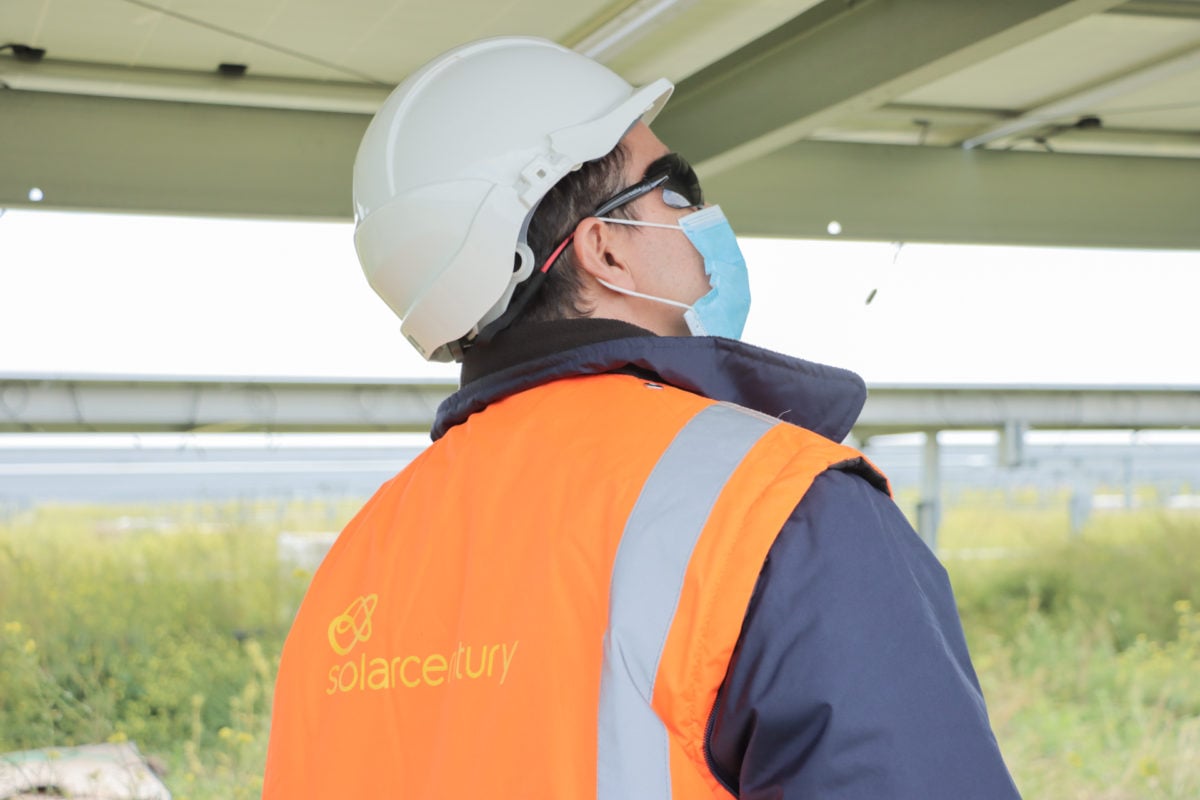
Solarcentury’s teams now operate adhering to strict social distancing measures and, where this cannot be maintained, appropriate PPE is given to employees.
These measures have, however, required some additional facilities to be placed on worksites.
“For example, where we had a new team coming onto site, we ensured there were separate welfare facilities in place beforehand, and the welfare facilities have been modified,” the spokesperson said, providing the example of some toilet facilities being closed off so people are not standing too close together.
Breaks have also been staggered, and additional marquees hired so that breaks and lunchbreaks can be held while adhering to social distancing.
Site safety information was relayed to personnel early on via so-called ‘Toolbox Talks’, where all guidance and safety protocols were explained to staff as and when necessary. Independent health and safety inspectors have been on site to ensure all measures are adhered to.
Those measures build on other examples adopted by the solar industry in recent weeks, with the likes of Repsol and Ibox Energy also explaining how they have returned to build-out.
The solar industry’s response to the COVID-19 pandemic – detailing specifically how developments have continued and what role solar can play in a green recovery – is the cover feature of the forthcoming PV Tech Power volume 23. The journal is to be released digitally on 28 May 2020.