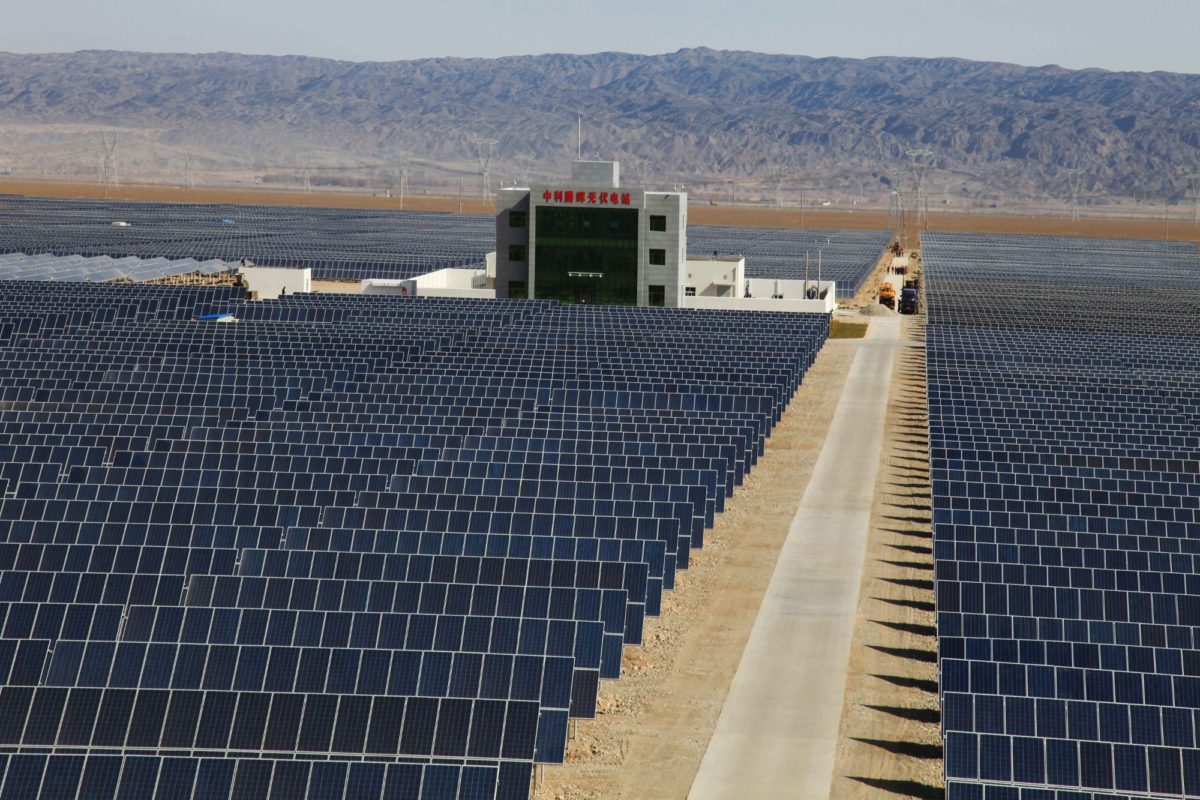
China’s Ministry of Finance has handed completed solar projects in the country a major boon by approving all completed renewables generators to its subsidy catalogue.
In a statement issued last week, the ministry proposed to review its backlog of renewables projects and incorporate them into the catalogue in batches. All compliant renewable projects – those deemed to have completed all necessary filing procedure in or after 2006 – will be registered.
Try Premium for just $1
- Full premium access for the first month at only $1
- Converts to an annual rate after 30 days unless cancelled
- Cancel anytime during the trial period
Premium Benefits
- Expert industry analysis and interviews
- Digital access to PV Tech Power journal
- Exclusive event discounts
Or get the full Premium subscription right away
Or continue reading this article for free
All compliant projects would then by confirmed to qualify for subsidy, representing a major boon to China’s solar investment companies, especially those with projects connected to the grid after the end of July 2017, when subsidies became more lucrative.
The final subsidy catalogue will then be published by the country’s grid operator in the following steps:
- The renewable generation company is required to submit a subsidy application for initial review by the grid operator;
- The grid operator will collect the project applications received and submit them to the provincial energy authorities for approval and confirmation;
- The National Renewable Information Management Center verifies the applied projects and provides feedback to the grid operator;
- Announcement and release of the subsidy catalogue
A further document published by the ministry, titled ‘Methods for Determining the Full-Capacity Grid Connection Time of Renewable Power Projects’, states the feed-in tariff for full-capacity connected projects is to be determined by local energy regulators and grid operators.
For projects connected in batches, the tariff will be determined separately based on the actual connection time of each batch, rather than collectively awarding the entire project a single rate of subsidy, and projects can only be added to the subsidy catalogue when full supporting documentation is submitted.
Insufficient or incorrect information will result in penalties being imposed, raising in scale with the severity of the information breach.