Global technology giant Huawei is tapping into its telecoms-led, AI and 5G technologies to bolster the levelised cost of electricity (LCOE) in utility-scale solar projects.
Speaking to PV Tech, Rizwan Razaq, Channel CTO for Huawei’s Middle East and Africa smart PV business, said the firm is leveraging technological developments from its telecoms business – including work in artificial intelligence – to boost the performance of solar arrays equipped with its inverter technology.
Try Premium for just $1
- Full premium access for the first month at only $1
- Converts to an annual rate after 30 days unless cancelled
- Cancel anytime during the trial period
Premium Benefits
- Expert industry analysis and interviews
- Digital access to PV Tech Power journal
- Exclusive event discounts
Or get the full Premium subscription right away
Or continue reading this article for free
While wireless connectivity is aiding remote diagnostics and communication over AP power lines, Huawei’s AI chipset is enabling the collection of data that can then be processed and run through algorithms to determine exactly how plants are performing and integrating the findings into its solutions and products.
“It’s not just an inverter, it’s a product which is self-learning,” Razaq said, praising its particular potential for integration alongside trackers to identify the most beneficial tilt angles at particular times of the day.
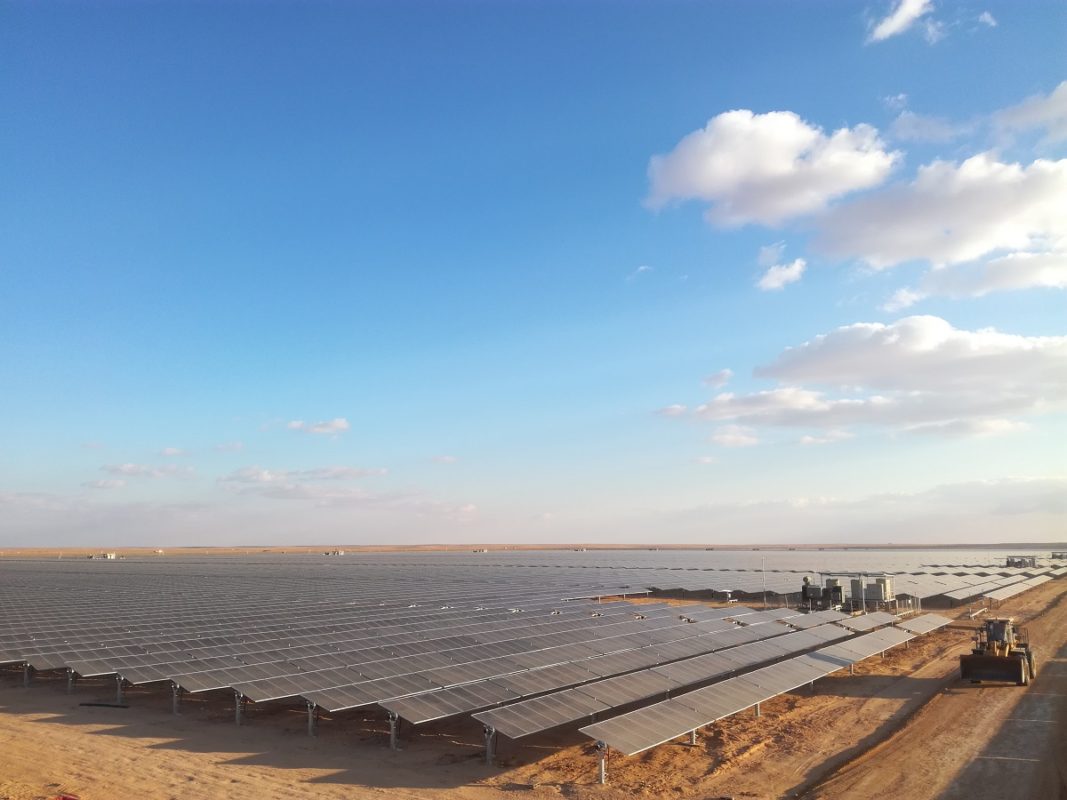
The technology is already proving successful. Huawei’s 1500V FusionSolar Smart PV Solution has been used within the 300MW Sakaka solar farm in Al Jouf, Saudi Arabia. Prolific developer ACWA Power took the project forward, bringing it on stream late last year.
Initial performance data collated by Huawei from the inverter indicates that the project’s yield is tracking ahead of estimates using PVsyst, providing a timely boost for the project’s LCOE.
Razaq said such a boost would be vital in tariff-led tender environments where bids have become increasingly competitive among the industry’s leading players.
Huawei shipped around 118GW of inverters on a global basis throughout 2019 and is aiming to grow its market share further in the year ahead.