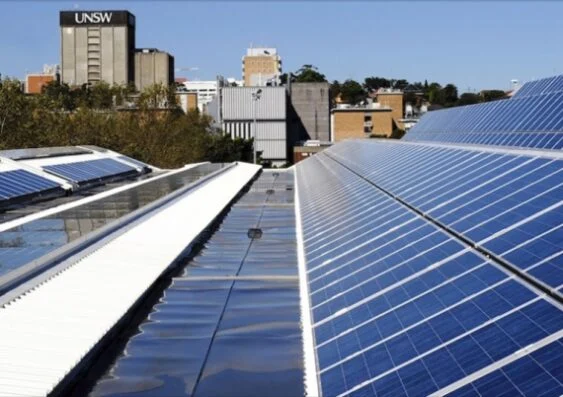
Researchers at the University of New South Wales (UNSW) have developed the world’s first comprehensive map of ultraviolet (UV) radiation for solar modules.
UNSW said that the research reveals that current industry testing standards may be dramatically underestimating real-world UV exposure and potentially shortening the lifespan of next-generation solar technologies by up to a decade.
Try Premium for just $1
- Full premium access for the first month at only $1
- Converts to an annual rate after 30 days unless cancelled
- Cancel anytime during the trial period
Premium Benefits
- Expert industry analysis and interviews
- Digital access to PV Tech Power journal
- Exclusive event discounts
Or get the full Premium subscription right away
Or continue reading this article for free
The high-precision model, led by Dr Shukla Poddar and supervised by Professor Bram Hoex and Associate Professor Merlinde Kay, with contributions from Dr Phillip Hamer and Mr Shuo Liu, calculates how much UV radiation solar modules receive across different parts of the world depending on climate, atmospheric conditions and mounting configuration.
Published in the IEEE Journal of Photovoltaics, the work provides the first global-scale comparison of UV exposure for fixed-tilt and sun-tracking solar systems, offering the industry a new way to predict long-term performance and durability that accounts for location-specific environmental factors.
Until now, there has been no comprehensive method for estimating the amount of UV radiation a solar panel receives at a given location, particularly when modules are tilted or mounted on tracking systems.
Most global UV data is measured on horizontal surfaces, which does not reflect how modules are actually installed in the field. The UNSW modelling approach addresses this gap by incorporating local atmospheric inputs such as clouds, water vapour and aerosols, allowing developers to tailor assessments to specific sites.
The model was validated using high-precision UV-measuring instruments in Europe and compared with long-term climate datasets spanning 2004 to 2024.
“We’ve basically developed a method to quantify the amount of ultraviolet radiation based on different spectral wavelengths, and we’ve produced a global map that shows what you could expect depending on your location,” corresponding author Dr Poddar said.
“It gives a holistic overview for manufacturers or developers who want to install panels somewhere, without having to do all the background calculations themselves.”
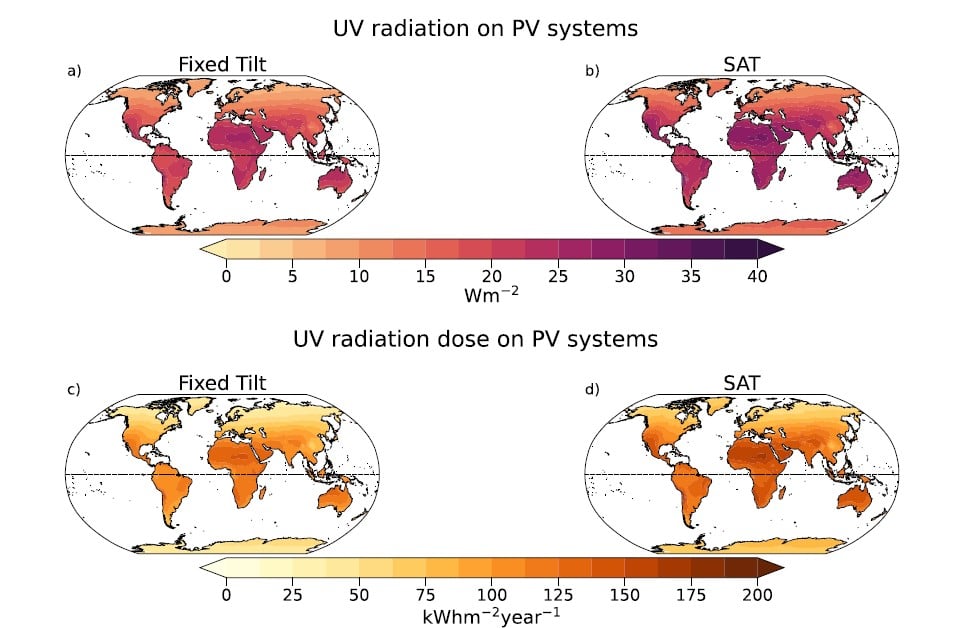
The findings carry particular significance as the solar industry rapidly deploys advanced high-efficiency technologies designed to capture a broader portion of the solar spectrum, including ultraviolet light.
While traditional silicon solar modules primarily rely on visible and infrared light to generate electricity, newer cell architectures such as TOPCon and heterojunction are engineered to harness UV radiation for improved conversion efficiency.
That improvement, however, may come with unintended consequences for long-term reliability, with recent research documenting notable UV sensitivity in certain next-generation designs.
“Our results highlight that modules with similar technology and orientation can still exhibit region-specific degradation,” the researchers state in the paper.
“This is due to the influence of local weather and climate when exposed to outdoor conditions. This underscores the need for climate-specific indoor testing and accelerated tests for reliability and better lifetime predictions.
“Notably, UV photodegradation alone can account for nearly a quarter of the total annual degradation in monocrystalline silicon modules in regions with high UV dose, potentially reducing system lifetime by seven to ten years.”
Tracking systems face amplified exposure
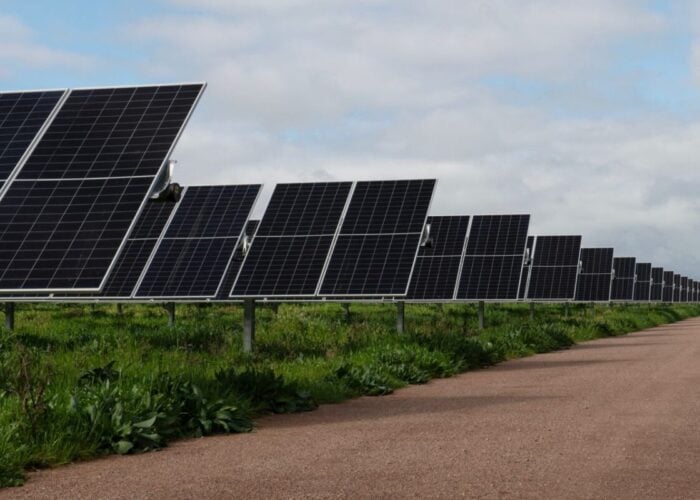
Perhaps one of the study’s most significant findings concerns solar modules mounted on tracking systems, which move throughout the day to follow the sun’s path and maximise energy capture.
The research demonstrates that these installations are exposed to substantially more UV radiation than fixed-tilt systems, creating accelerated degradation pathways that current testing standards fail to capture adequately.
“For single-axis or double-axis trackers, it’s worse,” Dr Poddar said.
“They’re always trying to track the sun to catch the maximum amount of sunlight. That means they’re also getting the maximum UV on top of them, which makes those panels more susceptible and vulnerable.”
In high-irradiance regions, the research indicates that UV-related degradation for single-axis tracking systems could reach around 0.35 per cent per year from UV exposure alone, a figure that accumulates significantly over typical project lifespans.
Manufacturers typically quote overall degradation rates of around 0.5 per cent per year, often assuming a steady, linear decline in performance.
However, the UNSW study suggests that degradation may not follow a strictly linear pattern and that UV exposure could account for a significant fraction of total performance loss, particularly in high-irradiance environments where atmospheric conditions concentrate ultraviolet radiation on panel surfaces.
“That number might not sound dramatic at first,” Dr Poddar said. “But when you quantify it over 20 years, it accumulates quite quickly.”
The implications extend directly to project economics and warranty structures, particularly as previous UNSW research has shown that up to one-fifth of solar PV modules degrade 1.5 times faster than average.
The team’s global UV mapping provides a mechanism to identify which geographic regions and mounting configurations face the highest risk of accelerated degradation, enabling more accurate financial modelling and warranty risk assessment before deployment.
Testing standards lag behind field conditions
Current international standards require solar modules to pass a UV test equivalent to 15 kilowatt-hours per square metre before receiving certification for deployment. This reaffirms some of the key messages UNSW scientists recently told PV Tech Premium regarding UV testing protocols for TOPCon cells.
The UNSW research reveals a disconnect between this testing threshold and actual field conditions, particularly in high-irradiance regions where modules may receive that cumulative UV dose in little more than a month of operation.
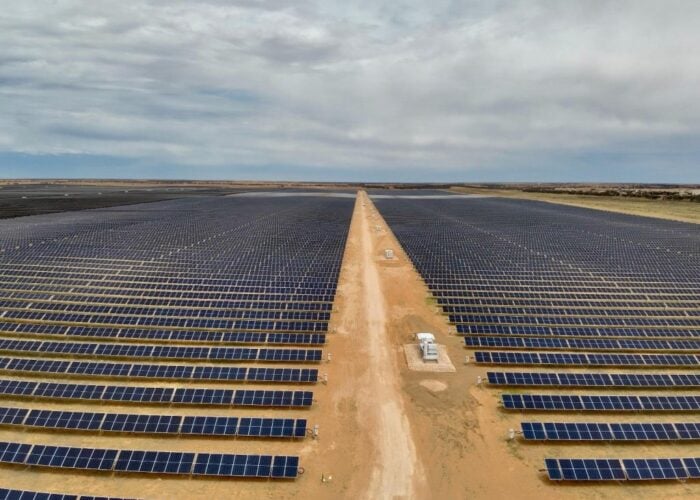
In Alice Springs, Australia, for example, modules experience the entire standard UV test dose within approximately 30 to 40 days of outdoor exposure.
“It is a significant underestimation of the amount of UV radiation the panels may be exposed to,” Dr Poddar said.
“So a module can pass the UV test, but in reality, it could perform much worse because we don’t have sufficiently stringent tests.”
The findings are particularly relevant as modern high-efficiency technologies become more widespread, with industry reports documenting UV sensitivity in certain designs that may not be adequately screened by existing certification protocols.
The challenge is compounded by the fundamental physics of advanced solar cell technologies, which become increasingly vulnerable to degradation as they approach theoretical performance limits.
UNSW research has previously revealed atomic-scale self-repair mechanisms in silicon solar cells that can partially offset UV-induced damage, but these mechanisms may be insufficient to counteract the elevated UV doses delivered by tracking systems and high-irradiance locations to next-generation cell architectures over multi-decade operational periods.
“One of the key messages from our paper is that the UV testing standards need to be amplified or changed,” Dr Poddar added.
“With new high-efficiency PV technologies being rolled out so quickly, we need to ensure the standards reflect real-world conditions.”
The researchers emphasise that the new modelling tool is designed to help manufacturers, developers and asset owners make better-informed decisions throughout the project lifecycle.
UNSW believes that, before installation, developers could use the global UV map data to conduct more rigorous accelerated UV stress testing on candidate modules, selecting products that demonstrate resilience to the specific UV exposure profile of the deployment location and mounting configuration they intend to use.