The New South Wales (NSW) government has opened a consultation on what it describes as Australia’s first mandatory solar module recycling scheme, releasing a draft regulation and issues paper designed to keep end-of-life modules out of landfill.
The proposed mandatory product stewardship scheme would require solar module brand owners to take financial and logistical responsibility for their products at end of life, funding collection, recycling and resource recovery infrastructure across the state.
Try Premium for just $1
- Full premium access for the first month at only $1
- Converts to an annual rate after 30 days unless cancelled
- Cancel anytime during the trial period
Premium Benefits
- Expert industry analysis and interviews
- Digital access to PV Tech Power journal
- Exclusive event discounts
Or get the full Premium subscription right away
Or continue reading this article for free
NSW’s Environment Protection Authority is running the consultation, seeking input from unions, industry, recyclers, manufacturers, researchers, local government and the community on how to build recycling, remanufacturing and manufacturing capacity in the state.
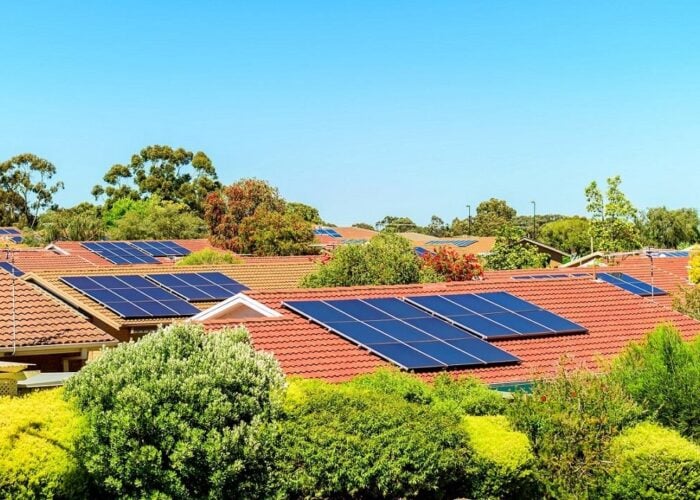
According to the government, NSW leads the country in solar uptake, with more than 1.18 million rooftop systems installed across homes, businesses, schools and community facilities.
The state generates around 14,000 tonnes of solar module waste annually, a figure the government projects will rise to 89,000 tonnes by 2045 as the state’s early wave of rooftop installations reaches end of life.
NSW Minister for the Environment Penny Sharpe said the scheme was designed to prevent that growth in waste while capturing the value locked inside retired modules.
“NSW has embraced rooftop solar, and now we’re making sure those panels don’t become tomorrow’s landfill problem,” Sharpe said. “Solar panels contain valuable materials that can be recovered and put back to work.”
Solar modules contain recoverable aluminium, glass, silicon, copper and silver. The government has framed the scheme as a way to build local supply chains and manufacturing capability around those recovered materials, rather than treating recycling purely as a waste management cost.
A resource problem as much as a waste problem
The case for treating solar module recycling as a material recovery opportunity rather than a disposal obligation has been building in Australian research circles for some time.
In an interview with PV Tech Premium, Professor Yansong Shen, who leads UNSW’s ARC Hub for Photovoltaic Solar Panel Recycling and Sustainability, warned that the solar industry could exhaust global silver reserves within five years at current production rates unless commercial-scale recycling infrastructure is developed.
Shen argued that module recycling should be treated as an “urban mining” challenge requiring metallurgical engineering expertise, rather than a reverse-manufacturing process, and that around 94% of the material in an end-of-life module can theoretically be recovered, though the extraction steps beyond basic sorting remain largely uncommercialised worldwide.
That resource case is playing out against the backdrop of low national recovery rates. The federal government has said only 17% of solar modules are currently recycled in Australia, despite estimating that improved recovery could unlock up to AU$7.3 billion (US$5.1 billion) in benefits through reduced waste and material reuse.
Global PV waste volumes are forecast to reach around 8 million tonnes by 2030 and 78 million tonnes by 2050, according to projections Shen cites, with Australia’s high per-capita solar installation rate making the problem more acute locally than in most other markets.
NSW’s mandate follows state and federal funding moves already under way
The NSW proposal is not the first Australian government intervention in PV module recycling, but it is the first to propose making participation mandatory rather than funding voluntary infrastructure.
Western Australia committed AU$17.8 million (US$12.7 million) in its 2026-27 state budget to its Remade in WA programme, split between establishing new collection and processing pathways for end-of-life modules, supporting local government battery collection and ongoing programme delivery.
WA’s approach has leaned on the state’s existing metals-processing industry, treating module recycling as an extension of established aluminium, copper and lithium processing capabilities rather than an entirely new sector.
At the federal level, the government has already committed AU$24.7 million to a national solar module recycling pilot, intended to establish up to 100 collection sites and build the logistics, transport and processing data needed before any national scheme is finalised.
Victoria has taken a different regulatory route, banning solar modules from landfill outright rather than mandating stewardship, a distinction Shen has said matters because a landfill ban addresses environmental protection directly, while a stewardship scheme is better suited to building the recycling industry itself.
NSW’s mandatory scheme sits between those approaches, combining a landfill-avoidance goal with an industry-building rationale similar to WA’s.