The Australian Renewable Energy Agency (ARENA) has unveiled Launchpad, an AU$30 million (US$20 million) funding programme aimed at early-stage clean energy startups.
Launchpad is split into two funding streams. The startup funding stream is a AU$15 million competitive round primarily targeting pre-seed to seed-stage startups aligned with ARENA’s mandate, offering grants of AU$500,000, with a further AU$500,000 available for projects with high capital expenditure requirements, up to AU$1 million per grant.
Try Premium for just $1
- Full premium access for the first month at only $1
- Converts to an annual rate after 30 days unless cancelled
- Cancel anytime during the trial period
Premium Benefits
- Expert industry analysis and interviews
- Digital access to PV Tech Power journal
- Exclusive event discounts
Or get the full Premium subscription right away
Or continue reading this article for free
The round is expected to support between 15 and 30 companies, with applications closing in late October 2026.
The ecosystem funding stream is a separate AU$15 million round for Australian organisations such as accelerators that run multi-year programs supporting early-stage renewable energy and climate businesses.
Grants of up to AU$5 million are available through an open, non-competitive process, which will remain open until funding is exhausted.
ARENA CEO Darren Miller said the programme was designed to address a funding gap that can prevent promising innovations from progressing beyond early development.
“Australia has no shortage of talented founders and ambitious ideas, but early-stage funding can be difficult to secure for technologies that take time and capital to develop, particularly for energy and climate startups,” Miller said.
“We have heard from startups that they need a simpler and faster pathway to smaller amounts of funding that will help them reach their next technical or commercial milestone.”
Launchpad sits alongside larger, more established ARENA funding programmes
Launchpad is considerably smaller than other funding rounds ARENA has run in 2026, reflecting its focus on the earliest stage of company development rather than commercial-scale deployment.
ARENA committed up to AU$105.6 million to 20 research and development projects aimed at reducing the cost of large-scale solar in August 2026, describing it as the agency’s largest single investment in solar PV research and development to date, split between projects improving cell and module technology and projects targeting balance-of-system and operations costs.
ARENA has also extended its longer-running research infrastructure. The agency committed a further AU$95.4 million in June 2026 to extend the Australian Centre for Advanced Photovoltaics (ACAP) through to 2033, a UNSW-led consortium established in 2012 that has been credited with a series of globally recognised advances in cell efficiency, durability, and tandem-cell technology.
Both programs are oriented around ARENA’s “30-30-30” vision, targeting 30% module efficiency, an installed solar cost of 30 cents per watt, and a levelised cost of electricity (LCOE) below AU$20 per megawatt-hour, all by 2030.
Progress toward that target has been uneven. An ARENA white paper published in July 2026 found that Australia’s weighted-average installed cost for utility-scale solar had stalled at AU$1.52 per watt, with balance-of-system costs, covering labour, civil works, grid connection and project delivery, now the dominant component of total project costs and largely resistant to reduction even as module prices continue to fall.
ARENA general manager for solar, Dan Sturrock, has said cost pressures are a barrier to the pace of deployment the agency judges necessary.
Speaking at the Smart Energy Conference 2026, Sturrock said Australia needs utility-scale solar generation costs to roughly halve, to around AU$25-30/MWh on an LCOE basis, to unlock 10GW of annual capacity additions, compared with the 2-3GW currently reaching financial close each year.
Launchpad’s emphasis on early-stage founders reflects ARENA’s stated view that the balance-of-system cost problem cannot be solved by module technology alone.
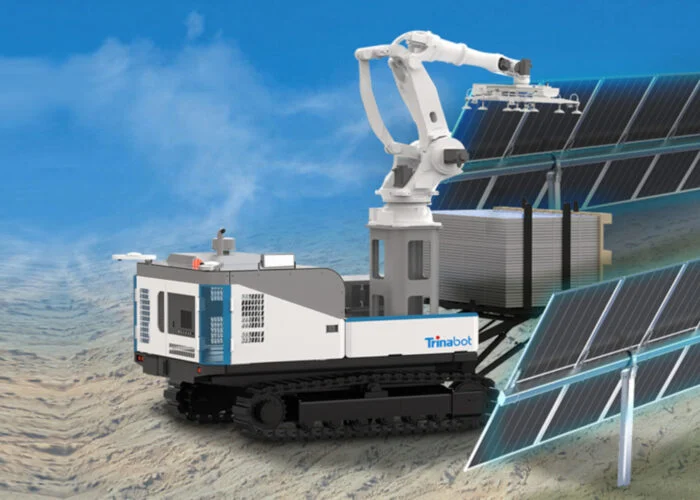
ARENA has previously pointed to companies including 5B, which produces prefabricated modular solar systems, and Built Robotics, which has developed autonomous piling equipment, as examples of startups already working on innovations in construction and deployment rather than cell-level research.
By offering smaller grants through a faster application process than ARENA’s larger competitive rounds, Launchpad is intended to reach companies at a stage where the agency’s existing funding mechanisms, oriented toward research consortia and commercial-scale projects, may not be well-suited to their capital needs.