Perovskite PV innovators Oxford PV and Caelux are among the founding members of a new AI-enabled research network set up to accelerate breakthroughs in materials science.
‘AI Materials Foundry’ is being launched by UK-based venture, CuspAI, to research and design new materials relevant to the fields of semiconductors, clean energy and advanced manufacturing.
Try Premium for just $1
- Full premium access for the first month at only $1
- Converts to an annual rate after 30 days unless cancelled
- Cancel anytime during the trial period
Premium Benefits
- Expert industry analysis and interviews
- Digital access to PV Tech Power journal
- Exclusive event discounts
Or get the full Premium subscription right away
Or continue reading this article for free
The 45-strong network features big hitters from the technology and research worlds, including NVIDIA, Meta, Samsung, Hyundai, IMEC and Applied Materials, among others.
The aim of the initiative is to marry the network’s varied expertise in materials science with CuspAI’s agentic AI platform, MIRA. Leveraging the platform will enable the partners to run full discovery cycles – from generative materials design through simulation, synthesis route planning and coordinated experimental validation.
CuspAI said the collaboration aims to end the materials bottleneck constraining progress in critical domains such as clean energy and semiconductors.
“If we don’t make progress fast, the next 50 years of industrial progress will be constrained by a single challenge: the world needs materials that don’t yet exist,” said Chad Edwards, CuspAI’s CEO and co-founder.
“That’s what we’re on a mission to solve – combining frontier agentic AI with deep domain expertise, exclusive data access and close customer partnerships. We’re delighted to be joined by more than 45 leaders in their fields to advance materials discovery.”
CuspAI said AI Materials Foundry overcomes the constraints of a single lab or research programme operating in isolation by bringing together the key attributes for accelerated materials discovery: high-quality training data; high-powered computing; “synthesis infrastructure” to move from digital to physical reality; and specialist expertise to interpret the AI’s findings.
One Foundry project already underway is a new multi-year partnership between CuspAI and the Agency for Science, Technology and Research (A*STAR), Singapore’s lead public sector R&D agency, exploring semiconductors, carbon capture and advanced electronics.
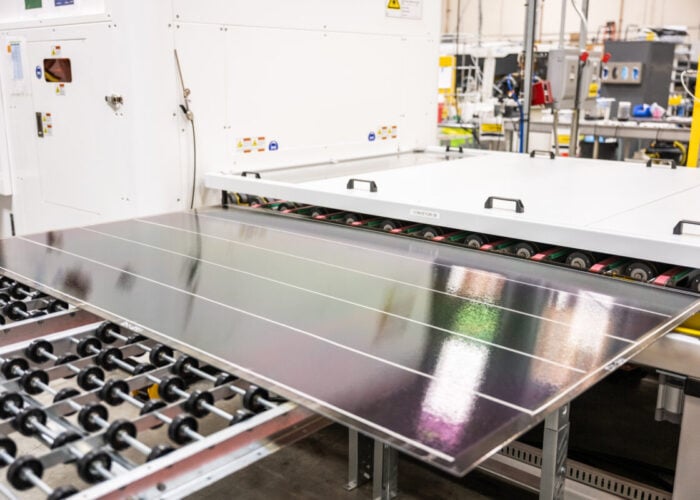
Scott Graybeal, CEO of Caelux, said membership of the network would enable his company to accelerate its development of new perovskite technologies.
“As we continue to develop the lowest-cost form of power generation with our perovskite solar technology, access to the world’s leading data set will accelerate our efforts. Our own R&D has shown how different material combinations can improve perovskite’s performance. As we enter product commercialisation this will further increase our technology advancement, delivering on our promise to provide more power, more energy and lower LCOEs for our customers.”