Perovskite solar cell developer Oxford Photovoltaics (PV) has reported a new perovskite tandem solar cell record, certified by Fraunhofer ISE at a conversion efficiency of 27.3%.
Oxford PV’s latest record for a 1 cm2 perovskite-silicon tandem solar, exceeds the 26.7% efficiency world record for a single-junction silicon solar cell.
Try Premium for just $1
- Full premium access for the first month at only $1
- Converts to an annual rate after 30 days unless cancelled
- Cancel anytime during the trial period
Premium Benefits
- Expert industry analysis and interviews
- Digital access to PV Tech Power journal
- Exclusive event discounts
Or get the full Premium subscription right away
Or continue reading this article for free
Recently, the company highlighted that it had produced a 1 cm2 perovskite-silicon two-terminal tandem solar cell with a verified conversion efficiency of 25.2%, through an ongoing collaboration with Helmholtz-Zentrum Berlin (HZB) and the Photovoltaics and Optoelectronics Device Group at the University of Oxford, led by Professor Snaith.
Frank P. Averdung, Chief Executive Officer at Oxford PV commented, “This result further validates the ability of perovskite to enhance the performance of silicon based photovoltaics. Continuing to improve the performance of photovoltaics is fundamental for sustaining the growth of solar generated electricity.”
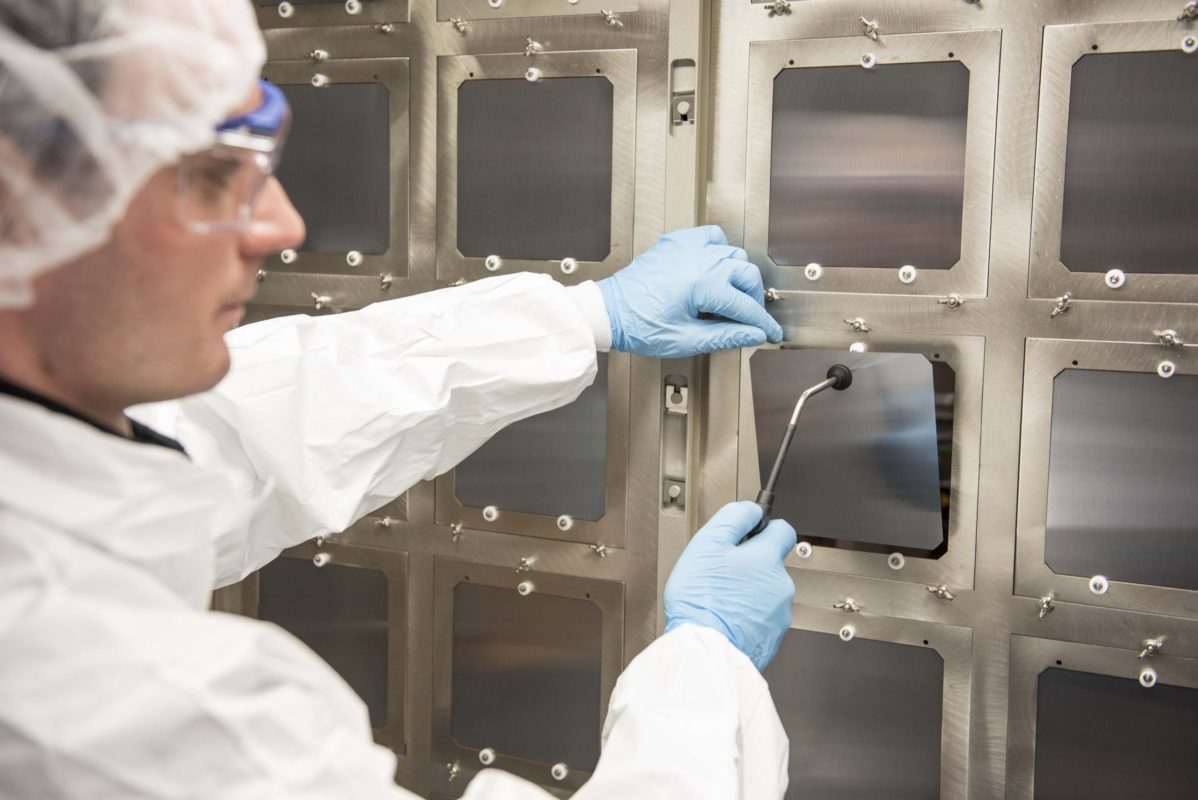
Oxford PV is currently scaling its perovskite-silicon solar cell technology from the lab to high-volume manufacturing capability as it bids to licence the technology to mainstream PV cell manufacturers.
The company is producing commercial sized 156 mm x 156 mm perovskite-silicon solar cells, at its 17,000 m2 industrial pilot line in Germany.
Dr Chris Case, Chief Technology Officer at Oxford PV added, “We are continuing to push our perovskite-silicon solar cell technology with a roadmap that extends beyond 30% efficiency, driving the world towards an all-electric future. Oxford PV counts on the support of development partners, suppliers and customers to deliver its perovskite solar technology.”