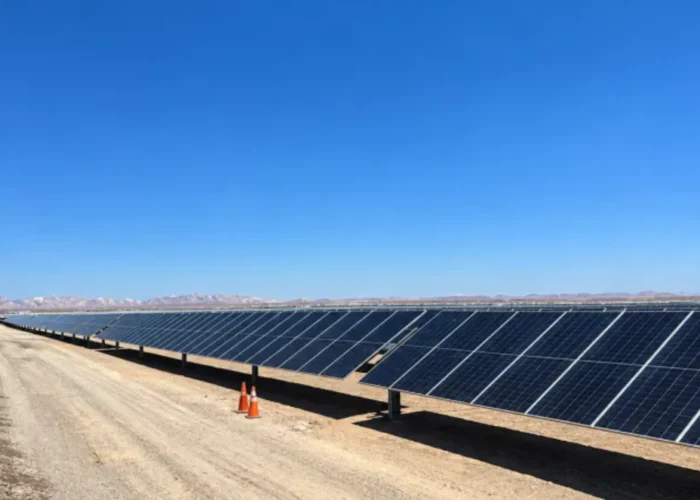
The Philippines will launch a number of annual competitive renewable energy auctions between 2027 and 2035, which will make at least 25GW of renewable energy capacity available each year.
The auctions, announced last Friday by the Department of Energy (DOE), will focus on a number of renewable energy technologies, with solar leading the way in many of the auction rounds. The next round, to be held in 2027, will be the sixth round of the country’s Green Energy Auction programme (GEA-6) and will aim to deliver 3.2GW of new large-scale solar capacity across all three island groups that make up the country’s power grid—Luzon, Visayas and Mindanao—plus an additional 85MW of rooftop solar in the latter two island groups.
Try Premium for just $1
- Full premium access for the first month at only $1
- Converts to an annual rate after 30 days unless cancelled
- Cancel anytime during the trial period
Premium Benefits
- Expert industry analysis and interviews
- Digital access to PV Tech Power journal
- Exclusive event discounts
Or get the full Premium subscription right away
Or continue reading this article for free
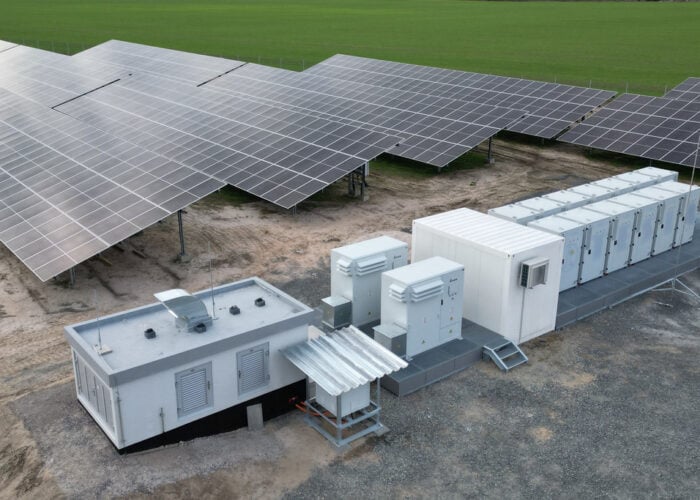
The DOE also noted that GEA-7 would focus on rooftop solar, plus solar projects co-located with battery energy storage systems (BESS); while GEA-8 would focus on “solar on stilts” and canal-top solar; and GEA-9 would include a range of technologies, including biomass, geothermal, solar, hydropower and onshore wind. The government said that a further 5.6GW of new renewable energy capacity through “additional technologies” would be part of the GEA rounds held between 2028 and 2035.
The announcement follows the completion of last year’s GEA-4 and GEA-5 rounds, the former of which focused on a number of technologies, while the latter was the first auction round to focus exclusively on offshore wind. GEA-4, which was the first GEA round to include solar-plus-storage projects, saw the awarding of over 6GW of solar capacity and 1GW of batteries, and energy secretary Sharon S. Garin said the GEA programme offers “market visibility” to potential investors.
“By preparing a clear, auction-backed pipeline, we are giving developers and financial institutions the market visibility they need to plan, mobilise capital and deliver projects on schedule,” said Garin. “Our objective is simple: translate investor interest into reliable, affordable and cleaner power that Filipinos can feel—through projects that are real, buildable and delivered on time.”
These auctions include a number of provisions to incentivise private investment and insulate investments from fluctuations in renewable energy financial matters, such as varying power prices.
The GEA includes a Renewable Energy Payment Agreement (REPA) with fixed-price 20-year offtake contracts. These mean offtake prices are not exposed to variations in power prices or line rental costs, which can undermine offtake stability in the Philippines’ energy market, which uses locational marginal pricing.
Aurora Energy Research dubbed the REPA model “one of the most attractive” route-to-market options for renewable energy investors in the Philippines precisely because it can sidestep some of these undermining elements in the Philippines renewable energy market.
“For lenders, the predictability from the REPA translates into stronger debt service coverage ratios and lower perceived risk, particularly when compared to merchant or contract-for-difference (CfD) arrangements where revenue is partially exposed to market or delivery uncertainty,” explained Patrick Tan, Aurora’s head of wider Asia, in a blog post.
However, Tan wrote that the REPA structure is “not without risk”, as generators are only paid for energy that is actually delivered, exposing investors and offtakers to significant curtailment risk. Developers must also meet their stated Delivery Commencement Date (DCD) or can lose a portion of their bid security, meaning that execution risk, such as delays in permitting or obtaining grid connections, remains a significant concern.