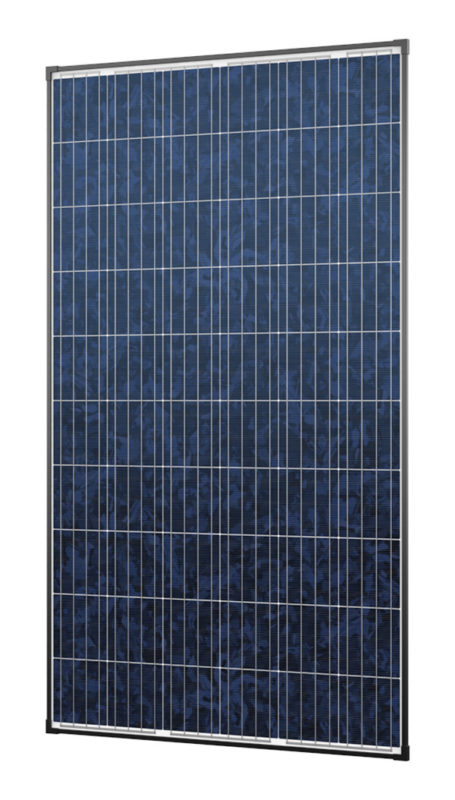
Canadian Solar is introducing a 72-cell, 1500V ‘Diamond’ CS6X-P-FG PV module with heat-strengthened double glass configuration for commercial and utility-scale applications and is designed for high voltage systems of up to 1500 VDC, saving BOS costs.
Problem
Try Premium for just $1
- Full premium access for the first month at only $1
- Converts to an annual rate after 30 days unless cancelled
- Cancel anytime during the trial period
Premium Benefits
- Expert industry analysis and interviews
- Digital access to PV Tech Power journal
- Exclusive event discounts
Or get the full Premium subscription right away
Or continue reading this article for free
Providing high voltage PV modules up to 1500 VDC are claimed to lower BOS costs by reducing product count requirements. However, longevity needs to be met with glass/glass configurations and reductions in annual degradation levels.
Solution
Canadian Solar‘s Diamond CS6X-P-FG module is a 72-cell double-glass module. By replacing the traditional polymer backsheet with heat-strengthened glass, the Diamond module has a lower annual power degradation than a traditional module and better protection against the elements, making it more reliable and durable during its lifetime. The company said the module had a first year annual degradation of 2.5%, each subsequent year 0.5% and an 85.5% power output at year 25 and 83% power output at year 30.
Applications
Commercial and utility-scale PV power plants.
Platform
Diamond CS6X-P-FG module is designed for high voltage systems of up to 1500 VDC, saving BOS costs. The module retains 5400 Pa snow load and 2400 Pa wind load due to strengthened frame. It also employs anti-PID cell and anti-PID encapsulation technology. The glass backside blocks moisture permeability and is said not to be affected by module-level corrosion.
Availability
September, 2015 onwards.