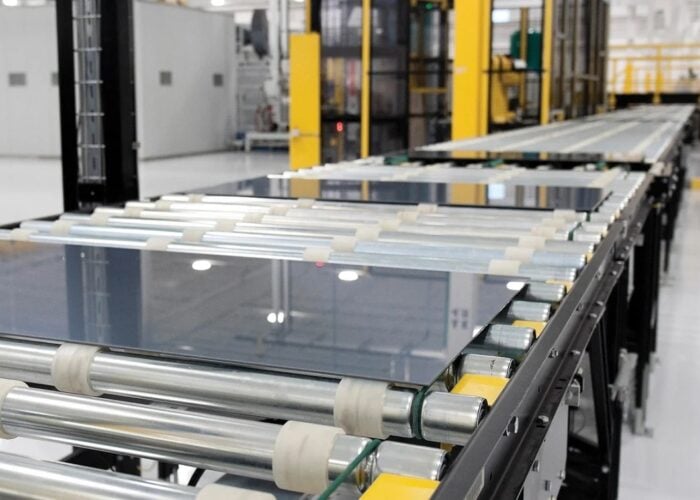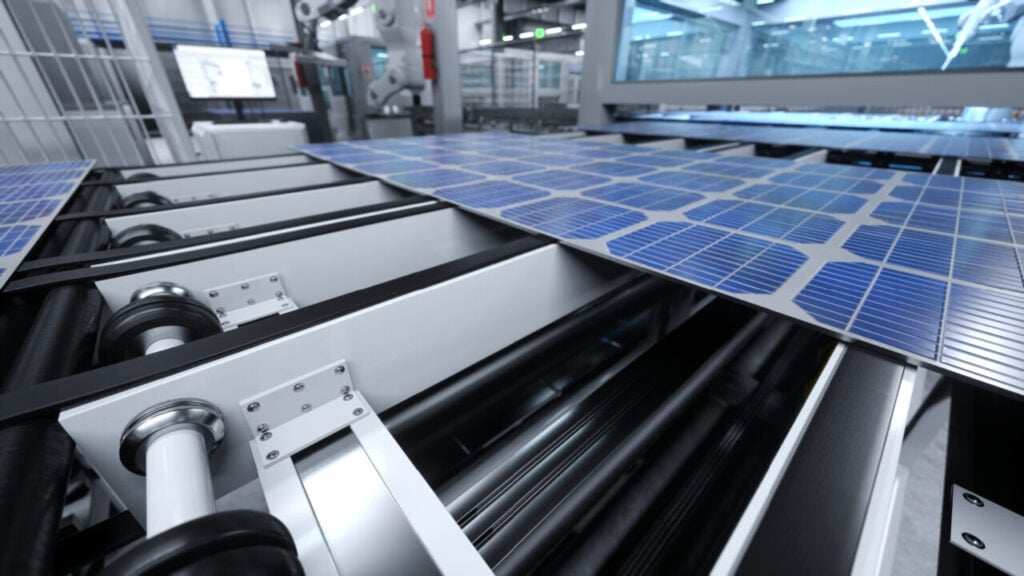
US solar cell manufacturer Suniva has raised US$835 million in debt and equity finance to support the development of a new 4.5GW passivated emitter rear contact (PERC) cell manufacturing facility in Laurens County, South Carolina.
The company first announced the project in April, which will significantly expand its operational cell manufacturing capacity from 1GW to 5.5GW. At the time, Suniva said it would invest US$350 million in the facility, but this week said that the project would represent an approximately US$600 million investment.
Try Premium for just $1
- Full premium access for the first month at only $1
- Converts to an annual rate after 30 days unless cancelled
- Cancel anytime during the trial period
Premium Benefits
- Expert industry analysis and interviews
- Digital access to PV Tech Power journal
- Exclusive event discounts
Or get the full Premium subscription right away
Or continue reading this article for free
Suniva is currently building the facility, having already completed work on the shell of the building, and the company expects to complete work in 2027 ahead of starting commercial operations in 2028.
“We look forward to helping the United States and the administration achieve its important goal of US energy independence,” said Suniva CEO Tony Etnyre. “With our second state-of-the-art high-efficiency solar cell manufacturing facility, we expect to be able to meet the growing needs for a US-based source.”
The company’s latest announcement also names a plethora of investors in the project, including Lion Point Capital, which is Suniva’s largest shareholder, and notes that funds were delivered from I Squared Capital and Goldman Sachs Alternatives. The latter company invested in the US project deployment space earlier this year, acquiring the US distributed clean energy generation arm of German energy company RWE.
Building a robust US supply chain
Building a more robust US solar supply chain has been a priority for the industry, and the state of the supply chain was examined in great detail last week in a five-part blog series from PV Tech Research. Among the key takeaways from the second part of the series was that US cell manufacturing capacity significantly lags behind module capacity, with just 26.5GW of cell capacity in operation, compared to 77.3GW of modules.
Suniva also said that had secured “long-term product offtake agreements with leading US solar players” for the “majority” of the new facility’s output. PV Tech spoke exclusively to Suniva president and COO Matt Card about the news, and while he was unable to confirm the identities of these offtakers, he highlighted that these kinds of deals are an important part of any new projects, describing them as “a contributing factor to the value of our business case”.
Indeed, Joe Hennessy, a PV Tech Research analyst and contributor to last week’s blog series, told PV Tech that Suniva’s offtake deals demonstrates strong demand to close this supply gap across the US solar industry.
“The amount of funding that Suniva was able to access shows that these facilities are desirable in the financial world as well as the PV manufacturing one,” Hennessy told PV Tech today. “It is a statement of intent in the industry post-Section 232 as it mentions ‘long-term product offtake agreements’ for the majority of its planned future production.”
“Also, having the facility fully funded at this stage allows them to focus entirely on the build out and avoid certain delays in the construction phase,” he added.
Cell technology
Card also confirmed to PV Tech overnight that the new facility would produce PERC cells, describing the technology as a “workhorse” in the US.
“Suniva will continue to produce PERC cells,” Card told PV Tech exclusively. “What this announcement validates is that PERC remains a workhorse product, particularly in the US market.”
This follows Suniva’s longstanding commitment to PERC, since its return to cell production in 2024. Last year, the company announced a PERC research agreement with German research centre ISC Konstanz, and this commitment is notable, considering a number of other companies have moved away from the technology.
PERC was said to be “obsolete” in Europe last year by energy market analyst Clean Energy Associates (CEA), and US PERC cell manufacturer ES Foundry told PV Tech Premium earlier this year that “we will move to n-type technology” in the future.
However, a wave of legal disputes concerning patents for tunnel oxide passivated contact (TOPCon) technology in the US has shaken confidence in the technology.
Last week, PV Tech Premium spoke to Suniva president and COO Matt Card about the company’s work in the US, and he said that legal uncertainty over TOPCon was a key determining factor in the company’s decision to use PERC in 2024 when it restarted operations.
“When we relaunched the factory we made the decision to launch on the PERC platform, as opposed to TOPCon, and that’s probably one of the most-asked questions: why did you choose PERC?” said Card.
“It’s no secret that TOPCon has become one of the most litigated solar technologies on the planet,” he continued. “Multiple companies believe they own the patents to TOPCon, multiple companies are suing multiple other companies for patent violation of TOPCon.”
These disputes have embroiled a number of industry leaders, including T1 Energy, First Solar, which owns a number of US TOPCon patents, and overseas companies such as Trina Solar, improving the business case for PERC investments as there is less legal risk attached.
“When we relaunched the factory in 2024, it was a highly dynamic regulatory environment for the use of TOPCon,” said Card. “PERC was tried and true … and it was a much more clean path without the potential threat of legal or regulatory hurdles that you might have to overcome.”
The full interview will be published later this week on PV Tech Premium.
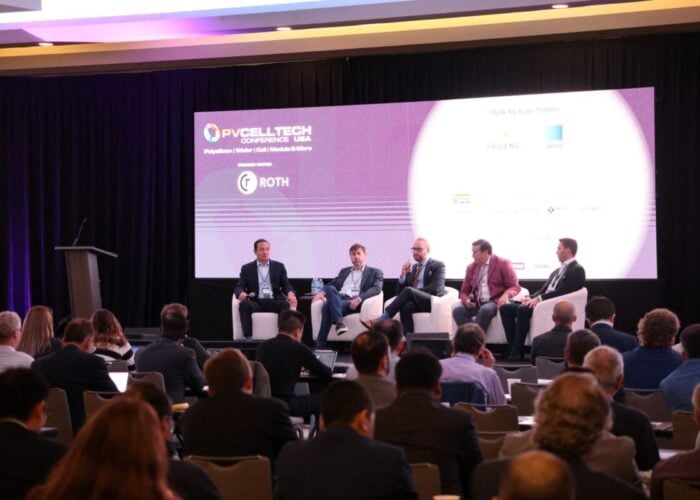
Matt Card will speak at our annual PV CellTech USA conference in San Francisco on 13-14 October. The event covers the full US solar supply chain, from polysilicon to modules, and will tackle topics including the current policy landscape and the opportunities for US cell manufacturers. For full details and booking, click here.