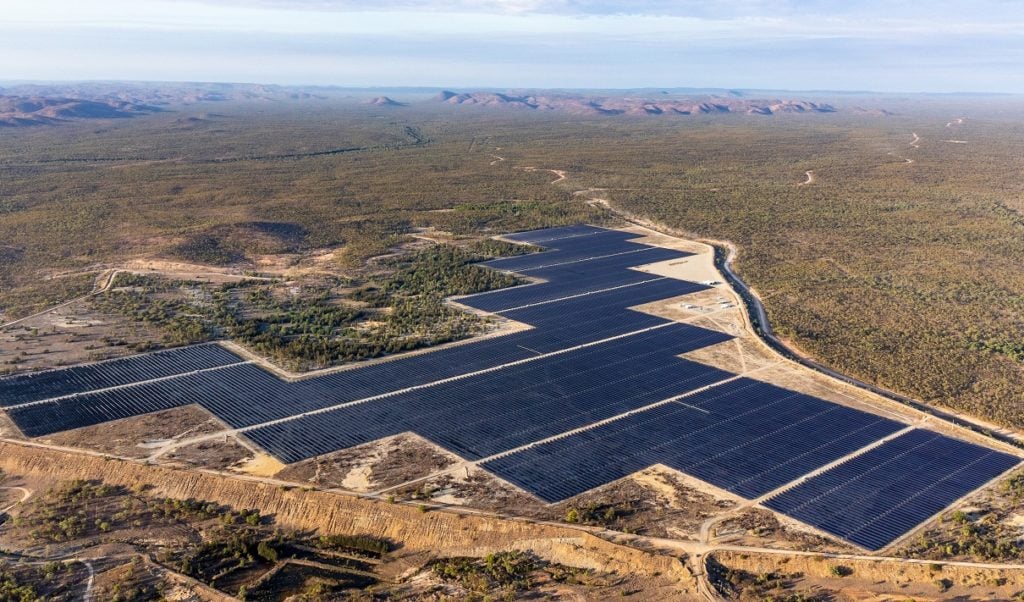
Queensland will invest AU$2 billion (US$1.55 billion) on renewables and hydrogen jobs to support the Australian state’s economic recovery from COVID-19 and help it deliver on its 50% clean energy target by 2030.
Announcement of the ‘Queensland Renewable Energy and Hydrogen Jobs Fund’ was described by Queensland’s premier, Annastacia Palaszczuk, as a “watershed moment” for the state’s economic development.
Try Premium for just $1
- Full premium access for the first month at only $1
- Converts to an annual rate after 30 days unless cancelled
- Cancel anytime during the trial period
Premium Benefits
- Expert industry analysis and interviews
- Digital access to PV Tech Power journal
- Exclusive event discounts
Or get the full Premium subscription right away
Or continue reading this article for free
As well as supporting employment in areas spanning clean energy, hydrogen and manufacturing, the fund is expected to “supercharge” more renewables projects.
The package includes a previously announced AU$500 million fund that aims to allow Queensland’s three state-owned energy generators – CS Energy, Stanwell Corporation and CleanCo Queensland – to build, own or operate renewables projects.
Queensland’s minister for energy, renewables and hydrogen, Mick de Brenni, said the fund will drive local manufacturing jobs in the renewables supply chain: “There is no reason why solar panels, electrolysers, batteries, wind farm components and new technology can’t be manufactured right here.”
The announcement was welcomed by Australian renewables association the Clean Energy Council, which said it looks forward to further details on how the funding will be used to deliver on Queensland’s renewable energy and hydrogen goals.
“With some of the best renewable energy and mineral resources on the planet, skilled workforces in the energy and resources sectors, and established energy trade links with Asia, the state is ideally placed to lean into the clean energy transition,” the association said in a statement.
By 2030, Queensland is aiming to cut emissions by 30% compared to 50% levels and have 50% of its energy generated from renewable sources – targets that “should be much stronger”, according to Jason Lyddieth, a climate change campaigner at environment organisation the Australian Conservation Foundation. Lyddieth, however, praised the latest funding announcement, which he said “is a significant investment in the move away from coal and positions Queensland to become a big clean energy exporter”.
Other efforts by the Queensland’s government to support renewables deployment have seen it earmark AU$145 million for three renewable energy zones and to fund new transmission infrastructure. The state has seen significant interest in the zones, with recent proposals recieved for projects featuring solar PV, wind, biomass and utility-scale battery storage.
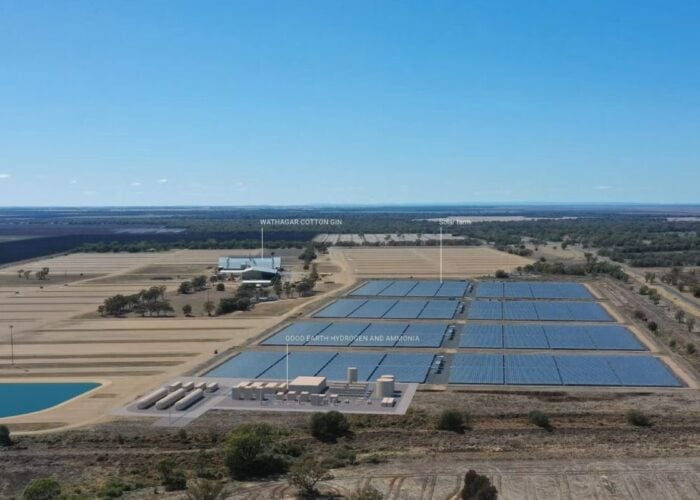
The state is also set to host a green hydrogen plant planned by UK-based Eco Energy World, which hopes to build a AU$500 million complex featuring a 200MW hydrogen facility, 300MW of solar PV and a 100MW energy storage system. The company aims to begin construction next year.