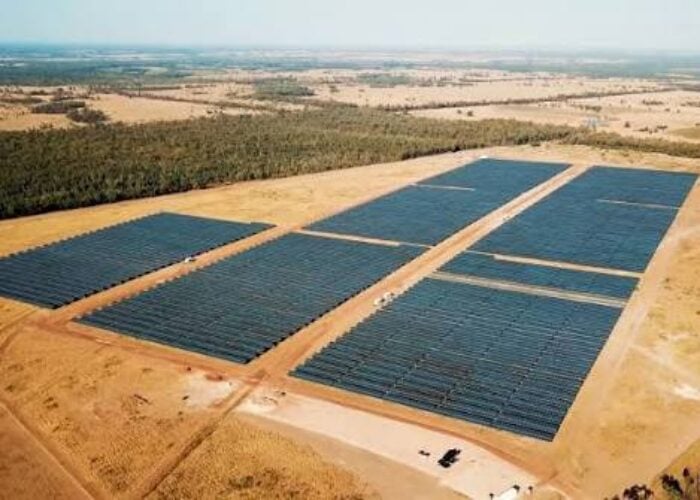
Yindjibarndi Energy Corporation (YEC) has reached financial close on the 150MW Jinbi solar PV power plant in Western Australia’s Pilbara region and signed a 30-year power purchase agreement (PPA) with mining giant Rio Tinto.
The project, which received environmental approval in June 2024 as the first development cleared under Western Australia’s Green Energy Approvals Initiative, will commence construction immediately with commercial operations expected in mid-2028.
Try Premium for just $1
- Full premium access for the first month at only $1
- Converts to an annual rate after 30 days unless cancelled
- Cancel anytime during the trial period
Premium Benefits
- Expert industry analysis and interviews
- Digital access to PV Tech Power journal
- Exclusive event discounts
Or get the full Premium subscription right away
Or continue reading this article for free
Stage 1 comprises a 75MWac solar facility with an option to expand to 150MWac, including the potential addition of battery energy storage systems (BESS), subject to regulatory approvals and future development decisions.
Under the PPA, YEC will supply 100% of the electricity generated by Jinbi to Rio Tinto, supporting the decarbonisation of Rio Tinto’s Iron Ore Pilbara operations.
The agreement continues Rio Tinto’s renewable energy procurement strategy in Australia, which has seen the company sign multiple large-scale PPAs in recent years.
In Queensland, Rio Tinto has contracted over 600MWac of solar capacity and 600MW/2,400MWh of battery storage from Edify Energy’s Smoky Creek and Guthrie’s Gap projects to supply its Gladstone aluminium and alumina operations, with construction targeting completion in 2028.
Construction partners and project timeline
Following financial close, YEC has issued notices to proceed to DT Infrastructure, its engineering, procurement and construction contractor, and Rapid Camps, its construction accommodation provider.
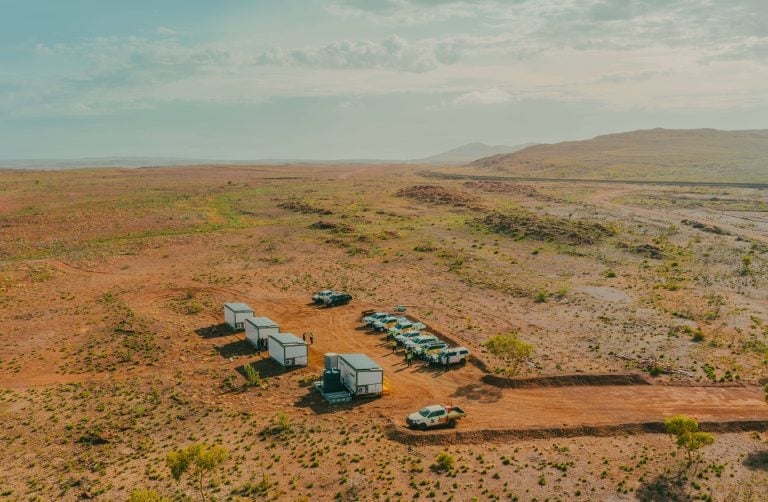
Early site works are already underway, with Yurra, a Yindjibarndi Nation enterprise and YEC’s preferred civil works partner, carrying out site preparation and mobilisation activities.
Yurra, which is majority-owned by the Yindjibarndi people through Yindjibarndi Wealth Pty, provides civil construction, building construction and maintenance, facilities maintenance and project management services across the Pilbara.
YEC CEO Craig Ricato said reaching financial close within three years of the partnership’s formation demonstrated the organisation’s capacity to deliver complex infrastructure projects while maintaining cultural foundations and accountability to shareholders.
“It confirms that a Yindjibarndi-led project, grounded in Country and culture, can meet the rigorous commercial requirements of the energy market while staying true to our values and governance responsibilities,” Ricato said.
Rio Tinto Iron Ore chief executive Matthew Holcz congratulated YEC and acknowledged the leadership of the Yindjibarndi People in achieving the milestone.
“Developing renewable energy on Yindjibarndi Country, in partnership with its Traditional Custodians, creates enduring value – supporting our operations while contributing to long-term economic opportunities on Country,” Holcz said.
YEC was established in 2023 as a partnership between Yindjibarndi Aboriginal Corporation and Philippines-based ACEN Corporation, with the goal of developing up to 3GW of wind, solar and energy storage projects across approximately 13,000 square kilometres within the Yindjibarndi Native Title Determination Areas.
The partnership structure ensures Yindjibarndi approval of all proposed project sites and provides for Yindjibarndi equity participation of 25% to 50% in all projects, alongside preferred contracting for Yindjibarndi-owned businesses and training and employment opportunities for Yindjibarndi people.
YEC’s broader development portfolio includes the Baru Marnda project, a hybrid wind-solar-battery development comprising up to 1GW of wind and 500MWac of solar capacity located 50km south of Karratha.
Rio Tinto’s expanding partnerships with Aboriginal communities
Rio Tinto has also significantly grown its engagement with Aboriginal communities on renewable energy developments across Australia.
For instance, the mining company previously signed agreements for two 5.25MW solar PV plants in the Gove Peninsula of the Northern Territory with the Gumatj and Rirratjingu Traditional Owner Groups, and announced plans to build an 80MW solar plant in collaboration with the Ngarluma Aboriginal Corporation near Karratha, with operations expected in 2027.
However, it should be noted that Rio Tinto has come under fire in the past for its mining practices in Western Australia, particularly around ancient Aboriginal sites.
In May 2020, the company legally destroyed two ancient rock shelters at Juukan Gorge in the Pilbara to expand an iron ore mine, devastating an archaeological site that dated back 46,000 years of continuous human occupation.
The blasts, which occurred on the traditional lands of the Puutu Kunti Kurrama and Pinikura people, sparked global outrage and forced the resignation of Rio Tinto’s CEO, Jean-Sébastien Jacques, two other senior executives, and, eventually, the chairman.
The incident precipitated widespread changes across the Australian mining sector and led to a landmark co-management agreement between Rio Tinto and the PKKP Aboriginal Corporation, establishing a new framework for how the company proposes and manages mining activities affecting cultural heritage.
PV Tech has previously explored how solar and energy storage can support the decarbonisation of Australia’s mining sector whilst also presenting economic benefits via green metals exports.