EU countries generated more power from solar PV and wind projects than from fossil fuels for the first time ever in 2025.
Data from energy think tank Ember Energy shows that solar and wind capacity generated 30% of EU electricity in 2025, surpassing all gas, coal and other fossil fuel generation (29%). Coal generation, in particular, continued its “terminal decline”, Ember said, falling to historic lows in the EU energy mix.
Try Premium for just $1
- Full premium access for the first month at only $1
- Converts to an annual rate after 30 days unless cancelled
- Cancel anytime during the trial period
Premium Benefits
- Expert industry analysis and interviews
- Digital access to PV Tech Power journal
- Exclusive event discounts
Or get the full Premium subscription right away
Or continue reading this article for free
The ascendence of Europe’s renewables has been driven by “record” solar PV generation, which grew by just over 20% in 2025 compared with 2024 – an increase which Ember said is equivalent to the annual production of three French nuclear power plants. This is despite the fact that overall solar capacity additions slowed for the first time in a decade last year.
Solar installations in the 27 EU member states generated 369TWh of power in 2025. In terms of energy mix, Hungary, Spain, Cyprus, Greece and the Netherlands all saw solar account for more than a 20% share in their generation, more than double the global average for the first half of 2025, which Ember said was 8.8%. Even traditionally coal-heavy countries in Southern and Eastern Europe, like Greece, Slovenia and Bulgaria, are “very close” to producing more power with solar and wind than fossil fuels, Ember said.
Of the top 10 countries with the highest share of solar power in the world, seven are now in the EU, the report said.
In fossil fuel terms, the “terminal” decline of EU coal generation saw coal power provide less than 10% of the EU’s power in 2025, which Ember called a “remarkable change” as coal accounted for just shy of one quarter of EU power generation in 2015. As of 2025, 19 EU countries have either zero or less than 5% coal generation in their power mix, and the phaseout of coal has not been replaced by gas or other fossil fuels, which have not risen in accordance with reductions in coal generation.
Gas power generation did rise slightly in 2025, up 8% compared with 2024, the first increase since the energy crisis of 2022. Combined with higher prices than 2024, this meant that the EU spent €32 billion on importing gas last year, Ember said, a 16% yearly increase.
The report said: “The stakes of the EU continuing to make progress on energy transition remain starkly clear. For the EU, risks of energy blackmail from fossil fuel exporters loomed large in 2025. Investing in homegrown renewables is a key strategy to lower that risk, as geopolitics continue to destabilise.”
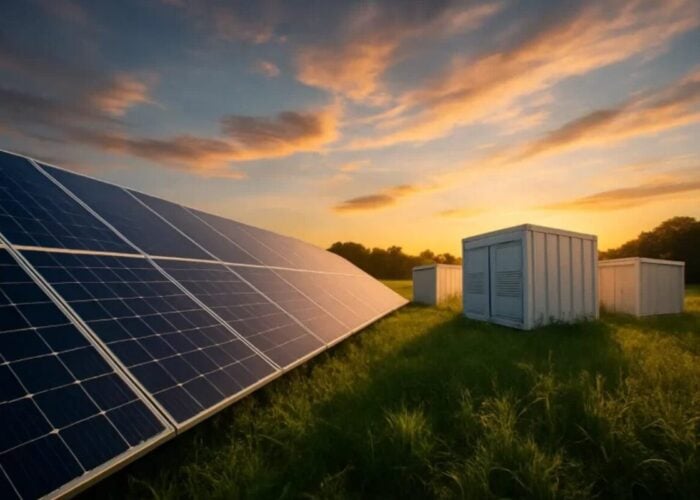
2025 also saw growing opportunities for grid-scale batteries. Energy prices rose in 2025, largely due to price spikes at times of greater gas usage in the morning and evening. Energy storage systems offer a way to smooth these spikes and store cheaper renewable energy for use at peak demand times.
The report said that energy storage systems “could be rapidly scaled up thanks to the favourable economics of battery projects” in Europe. This is already bearing fruit; around 10GW of large batteries were installed in Europe in 2025, more than double the roughly 4GW installed in 2023.
You can read Ember’s full European Electricity Review 2026 here.