Long-term solar project finance will need to be more reliant on flexible financing mechanisms, such as securitisation, as the European solar sector grows.
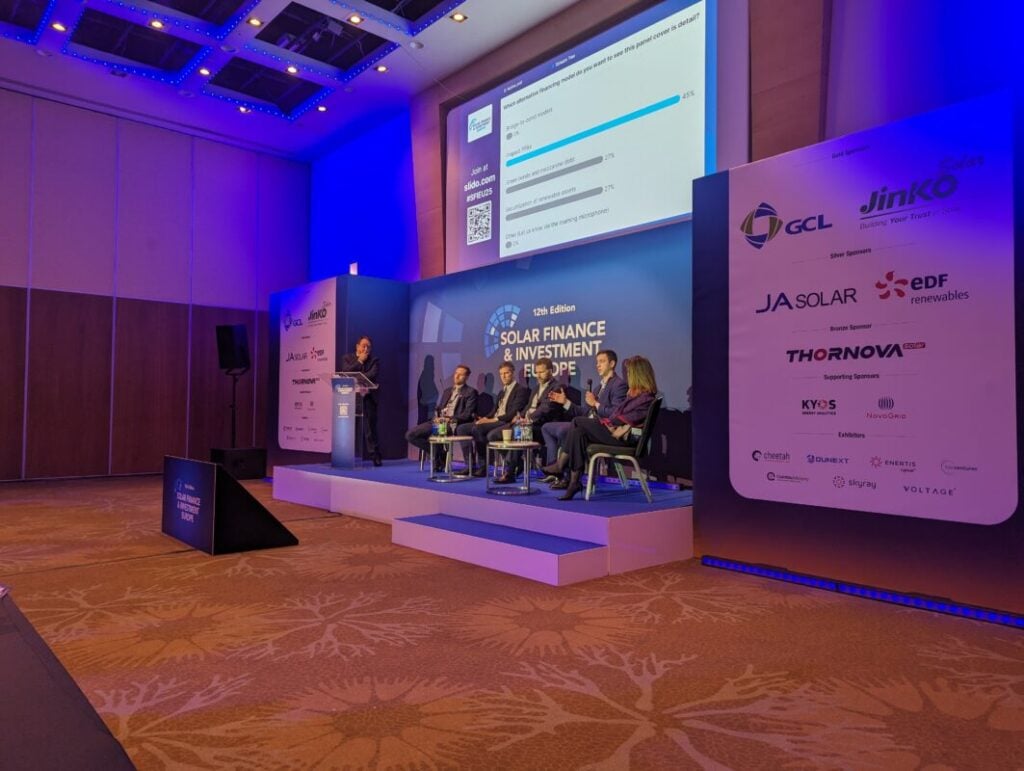
This was one of the key conclusions from a panel at Solar Media’s Solar Finance & Investment Europe event, held in London this afternoon. Securitisation, the process of pooling assets, such as solar projects, into interest-based securities, enables greater flexibility in investment and offtake agreements, by structuring individual portfolios differently.
Try Premium for just $1
- Full premium access for the first month at only $1
- Converts to an annual rate after 30 days unless cancelled
- Cancel anytime during the trial period
Premium Benefits
- Expert industry analysis and interviews
- Digital access to PV Tech Power journal
- Exclusive event discounts
Or get the full Premium subscription right away
Or continue reading this article for free
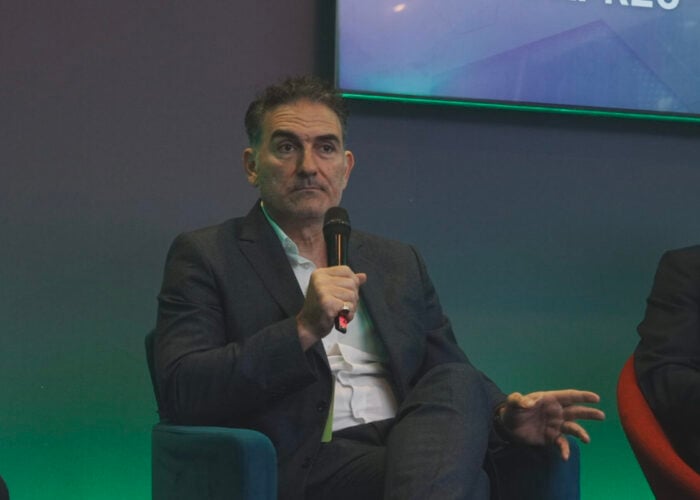
“[This] can be a very structured solution that fits the needs of the client,” said Jeremy Wessel, AVP of securitised products at Barclays. “We can structure it in a way that’s less onerous on the developer at the time, and finding the long-term solution for these assets – we’re conservatives in our approach as well – [involves] viewing each opportunity and each developer on a case-by-case basis.
“Securitisation can form a more flexible form of financing [than traditional investment] as it has the benefit of diversification,” Wessel continued. “You’re not tied to any specific exit option; so while you need to make sure you’re finding the right partners and you’re having an eye on what your exit will be … you’ll have 24-48 months to build up your portfolio [and make a decision].”
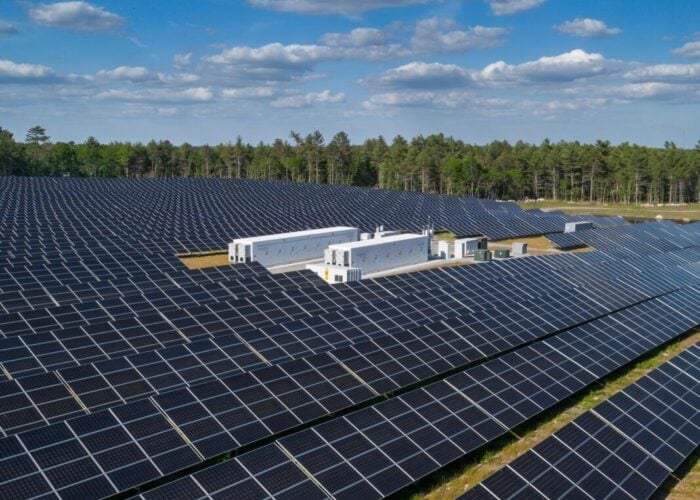
The growth of flexible financing solutions echoes greater variety in projects themselves, with speakers on earlier panels in the day discussing the growth of hybridised renewable power projects, and those that are co-located with storage systems.
Green bonds from the US
Other long-term financing solutions discussed included green bonds, which were a topic of conversation at last year’s Solar Finance & Investment Europe event. Tom Van Rijsewijk, managing director at Macquarie Asset Management, described sustainability-backed bonds as a “big topic” in asset management.
“It’s something that originates more from the US, where more and more of the wealth sits with the private individuals, and how can that money be used not only to invest in stocks and bonds but alternative asset classes,” said Van Rijsewijk. “It’s going to be interesting, because if you talk to any of those experts, the big market is the US … but I do think it’s going to be very important, and in Europe it’ll be an increasingly important source of capital.”
As with securitisation, the flexibility of green bonds is an important attraction for potential investors; Christoph Glanzer, CFO at PV-Invest, noted that such investments are often not tied to a single project.
“Green bonds are a very important pillar in our financing strategy, in particular for a medium-sized enterprise like ours,” said Glanzer. “It’s a good option to give us room to maneuver on the holding level, because the bonds are not secured to a particular project, and it’s a good combination for particular project finance.
“Still you have some equity needs, of course, and green bonds can cover part of these equity needs. There is limited room, but still room, to address private investors and be attractive to them.”
Flexible offtake agreements
The flexibility discussed at the panel extends too to offtake agreements, with Wessel suggesting that multiple offtakers can come together to secure an agreement that, individually, they would struggle to secure.
“We look at it from a portfolio basis,” said Wessel. “You can ultimately get to a place where you have a pool of offtakers – some of whom are investment-grade offtakers, some shadow-grade offtakers and some ungraded offtakers – and still get to a place where you’re issuing investment-grade bonds and getting investment-grade pricing on the bonds that you’re issuing.”
“You want to have a mix,” added Van Rijsewijk, speaking about green bonds and other investment strategies, but surmising the overall mood of the panel. “When I run my business I want to have a mix of institutions.”
Solar Media is hosting its annual Solar Finance & Investment Europe event in London on 4 – 5 February 2025. This event annually attracts infrastructure funds, institutional investors, asset managers, banks and development platforms at the forefront of European renewables; the vast majority of which are responsible for billions in active and prospective investments in the Europe’s energy transition. For more details, visit the website.