US electrical balance-of-system (eBOS) manufacturer Shoals has received a favourable verdict and US$96 million in damages from a North Carolina court in its intellectual property dispute with fellow US manufacturer Voltage.
Shoals said the jury at the US District Court for the Middle District of North Carolina yesterday found that Voltage “willfully” infringed on Shoals’ patents and rejected the former’s arguments over their validity, awarding the damages in what Shoals called a “decisive win”. Voltage rejected that characterisation of the ruling, arguing that “willfully” had not appeared in any documentation on the ruling.
Try Premium for just $1
- Full premium access for the first month at only $1
- Converts to an annual rate after 30 days unless cancelled
- Cancel anytime during the trial period
Premium Benefits
- Expert industry analysis and interviews
- Digital access to PV Tech Power journal
- Exclusive event discounts
Or get the full Premium subscription right away
Or continue reading this article for free
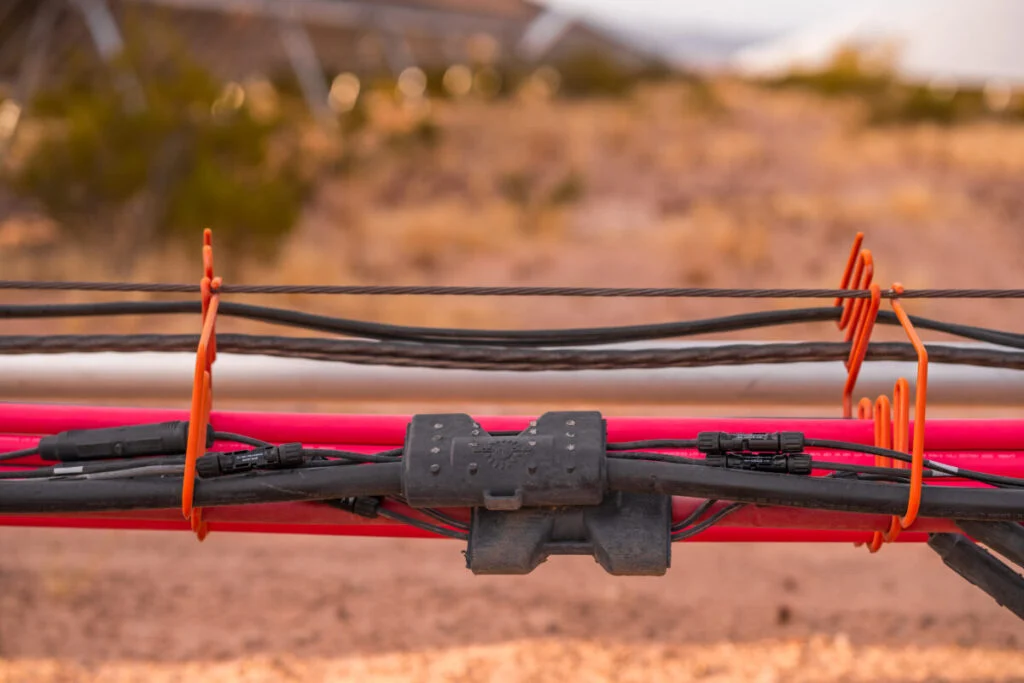
The dispute refers to Shoals’ Big Lead Assembly (BLA) aluminium trunk bus system and Voltage’s LYNX trunk bus system. The North Carolina court also said it would issue a preliminary injunction preventing the manufacture, distribution or sale of the Voltage LYNX product in the US “with immediate effect”, Shoals said.
The US International Trade Commission (ITC) found in June that Voltage was in violation of two patents relating to the BLA product and issued it with a limited exclusion order (LEO), preventing future imports of the LYNK product to the US under Section 337 legislation.
“Shoals’ patented BLA solution helped revolutionise the solar industry,” said Brandon Moss, chief executive officer of Shoals.
“These outcomes affirm the strength of our intellectual property and the importance of protecting the innovations behind our differentiated solutions. We are grateful to the Court and jury for their time, attention, and careful consideration. Shoals will continue to compete aggressively, invest in American manufacturing and defend the technology that supports our long-term growth.”
Voltage brings new case
On the same day as the North Carolina verdict, Voltage announced that it will seek a new trial on the case, claiming the judgement is “not supported by legally sufficient evidence.”
“Voltage Energy strongly disagrees with the jury’s verdict and believes the judgment is not supported by legally sufficient evidence or the law. The Company will pursue all available post-trial remedies,” it said in a statement.
Voltage chief executive officer, Li Wang, said: “Voltage independently developed LYNX in 2021 through its own engineering efforts, three years before the patents asserted by Shoals were issued. Our focus remains on proudly powering the renewable energy industry.”
Voltage added that its LYNX PLUS trunk bus product, a separate product from the disputed one, “remains in full production and continues to ship to customers as scheduled.”
The decision to continue litigation is unsurprising given the history of the dispute. In February, when the ITC gave its initial determination on the case, both companies claimed victory, despite, on the surface, the ITC ruling that Voltage had infringed on Shoals’ patents. This followed a case that went back to 2024.
At the time of the February ruling, Voltage argued the initial decision would not prevent it from importing and selling its product in the US, largely hinging on “alternative designs” for the LYNX product which it argued had crucially different technical design components.
However, the two developments from the ITC and North Carolina since then have both gone against Voltage.
This article has been amended to clarify the difference between Voltage’s products.