After years of uncertainty, the US solar policy landscape includes “a lot of good news,” particularly for manufacturing.
This was the opinion of Crux head of policy Hasan Nazar, who spoke to PV Tech earlier this year in one of many interviews in the build-up to this year’s PV CellTech USA conference, to be held next week from 13-14 October in San Francisco, California.
Try Premium for just $1
- Full premium access for the first month at only $1
- Converts to an annual rate after 30 days unless cancelled
- Cancel anytime during the trial period
Premium Benefits
- Expert industry analysis and interviews
- Digital access to PV Tech Power journal
- Exclusive event discounts
Or get the full Premium subscription right away
Or continue reading this article for free
While much has been made of the Trump administration’s fondness for fossil fuels over renewable energy, and the general uncertainty surrounding the president’s unpredictable policy directions that dissuaded investments into the energy transition to the tune of hundreds of billions of dollars, his administration has been fairly consistent in its prioritisation of security and self-reliance.
Policy landscape has cause for optimism
For the energy industry, this means reducing the US’ reliance on solar materials and components made overseas, through a combination of sticks—most often taking the form of anti-dumping and countervailing duties (AD/CVDs) and tariffs—and carrots—in the form of tax breaks for investing in manufacturing.
“45X kept its original 2032 phaseout timeline in the One Big, Beautiful Bill Act (OBBBA) even as many of the tech-neutral demand-side credits wind down at the end of 2027,” Nasar told PV Tech Premium earlier this year. “That’s a strong signal that support for domestic clean energy manufacturing is durable and bipartisan and provides more certainty for manufacturers for site cell and module capacity than developers might have assumed a year ago.”
While PV Tech Premium heard from Intertek CEA earlier this year that the policy landscape is not universally to the benefit of US solar—Section 232 rules, in particular, would be unlikely to “incentivise additional US cell factories”—the overall picture includes causes for optimism; Anza president Aaron Hall told us that Section 232 is a “very strong domestic manufacturing policy”.
PV Tech Research head of market research Moustafa Ramadan commented at the time that, for wafer manufacturing in particular, the case for building more domestic wafer manufacturing has been strengthened by this year’s policy changes.
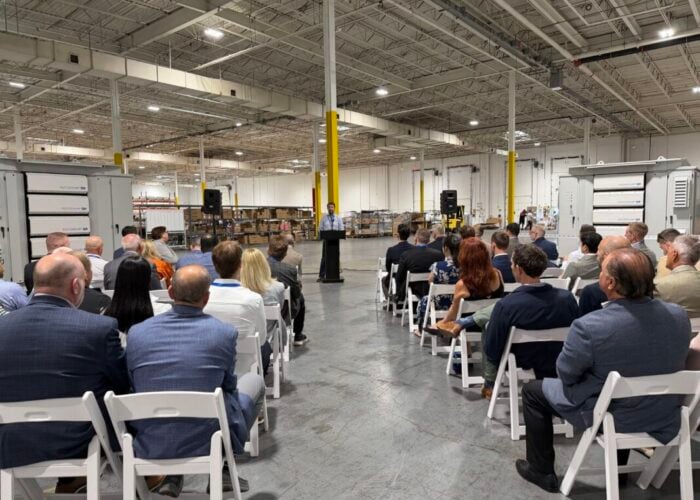
On the event’s first morning, ES Foundry’s CEO Alex Zhu and Canadian Solar Group of Companies CEO Thomas Koerner will both present on the opportunities for US manufacturers in the current policy environment. This discussion will be followed by a panel discussion on the next chapter for US solar policy, to be moderated by Roth’s Philip Shen and feature policy experts Tom Beline, Cassidy Levy Kent; Mike Carr, Solar Energy Manufacturers for America (SEMA); Nick Iacovella, Coalition for a Prosperous America; and Nate Picarsic, Horizon Advisory to give an insight into the future direction for US policy.
Expanding upstream manufacturing capacity
Building more upstream manufacturing capacity is particularly significant as, according to PV Tech Research figures, it is the upstream parts of the supply chain where the US is most reliant on overseas production; the US domestic wafer capacity sits at just 5GW, compared to over 77GW of modules.
Ramadan and his colleagues wrote a collection of blog posts for PV Tech on the current manufacturing landscape in the US ahead of next week’s event, which will cover the breadth of the domestic supply chain, including polysilicon, wafers, cells, modules, equipment and components.
Building strong partnerships across this supply chain is an essential part of the picture, and on the afternoon of the first day, Heliene president Martin Pochtaruk will moderate a panel discussion on just this topic. The panel’s speakers include experts from Hemlock Semiconductor, Highland Materials, Solarcycle and Suniva.
DYCM is another company that has sought to expand its US manufacturing footprint, focusing on cell and module production specifically. Co-founder Sriram Das told PV Tech Premium that there is a “pressing” need for a domestic supply of both components in the US.
TOPCon, PERC or HJT?
In the lead-up to the event, interviewees discussed the relative strengths and weaknesses of the leading cell technologies. With the ongoing lawsuits surrounding the use of TOPCon impeding the ability of manufacturers to build with the technology that has become the industry cornerstone, companies are experimenting with, or at least considering, alternative options.
“PERC was tried and true,” Matt Card, president and COO of Suniva, told PV Tech Premium last month, arguing that a technology that is reliable and straightforward to produce has particular benefits in this context. Meanwhile, Toyo chief strategy officer Rhone Resch told us that “we fully expect” the capital expenditure necessary to build HJT cells will come down, a move that would make the technology more commercially viable to deploy at scale. This optimism is reflected in the fact that, according to PV Tech Research, HJT is forecast to be the fastest-growing technology among domestically-produced modules, with over 15GW of new module manufacturing capacity already announced.
This TOPCon/PERC/HJT debate is something of a race to determine the technologies that will underpin US manufacturing, and not every company has publicly backed a particular technology; DYCM’s Das did not tell PV Tech Premium which cell technology the company plans to produce at its facility during our interview.
Instead, he noted that the choice of technology would be announced at next week’s event; the company’s CTO, Dr N M Ravindra, will present his technology insights alongside experts from LAPLACE and Nextnova on the second day of the event.
Perovskites are also a growing part of the cell picture and will be addressed in the Innovation Showcase on the second day of the event. Speakers include UNSW’s Brett Hallam on silver reduction strategies; Sofab’s Blake Martin and Tandem PV’s Scott Wharton, who told PV Tech Premium about his plans to “leapfrog” the technology to the forefront of the US solar sector this week; and Caelux’s Charlie Hasselbrink, who will speak after Caelux CEO Scott Graybeal told us that “every” solar module in the 2030s will contain perovskite.
Another key topic in the event’s agenda is space-based solar power, which has moved from scientific ambition towards commercial reality. On the event’s second day, RCT Solutions’ Markus Beck will moderate a panel discussion on the topic, and how the demand of space-based solar power is driving innovation in cells and materials that are relevant for projects to be deployed on Earth. Panellists include experts from the US Department of Energy (DOE), Solid State Solutions, NexWafe and the Aerospace Corporation.
With the US solar industry at a critical point in the development of its domestic manufacturing base, PV CellTech USA will bring together the companies and experts shaping the next phase of the country’s solar supply chain, many of whom have already spoken to PV Tech in the articles mentioned above. Read the full agenda and find ticket information on the event website.