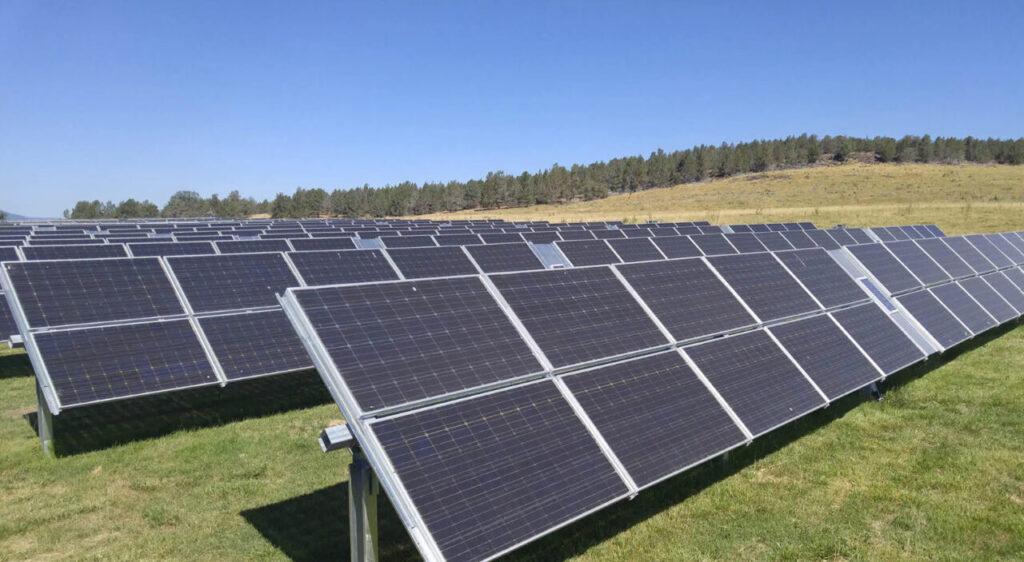
US module manufacturer Silfab Solar has launched its Utility NTC 620-640 XL series of n-type modules, which boast a power conversion efficiency of 23%.
The bifacial modules are designed for use in the utility-scale sector, and the company notes that they could be of particular use in “low-light” environments. In such environments, the NTC range of modules generates 2.3% more electricity than “industry standard” panels, and boasts a degradation rate seven percentage points better than the standard module after 25 years of operation.
Try Premium for just $1
- Full premium access for the first month at only $1
- Converts to an annual rate after 30 days unless cancelled
- Cancel anytime during the trial period
Premium Benefits
- Expert industry analysis and interviews
- Digital access to PV Tech Power journal
- Exclusive event discounts
Or get the full Premium subscription right away
Or continue reading this article for free
“Silfab Solar continues to expand and innovate to meet demands of customers who seek high-quality, high-efficiency PV solar panels that are made in America,” said Paolo Maccario, Silfab president and CEO, of the new product launch.
The company will showcase a number of its products at this week’s RE+ event in California, including a prototype panel that includes an interdigitated back-contact (IBC) cell, a technology that Radovan Kopecek called a potential “next big thing” in a paper published on PV Tech Premium last year. This focus on the US market follows growing attention being paid to the US sector, with a number of companies investing in US manufacturing in particular.
Silfab Solar itself has already announced plans to build a cell manufacturing plant in South Carolina, as it looks to scale up its US production capacity to 2GW of cells and 1.2GW of modules. More recently, Swiss manufacturer Meyer Burger has started operations at its 600MW module production facility in Arizona, as an increasing number of manufacturers look to take advantage of tax credits offered under the Inflation Reduction Act (IRA).
However, last month Meyer Burger scrapped cell production at a Colorado plant, claiming that the project was “no longer financially viable”, and demonstrating the challenges associated with scaling up solar product manufacturing in markets outside of China, where cells and modules can be produced at a much lower cost than in other jurisdictions.