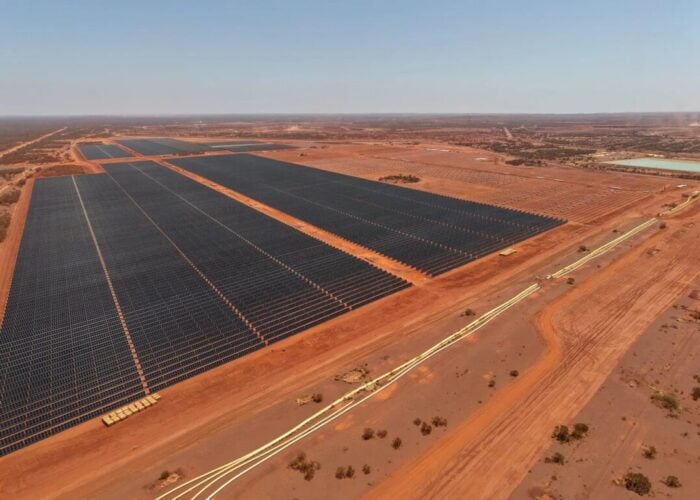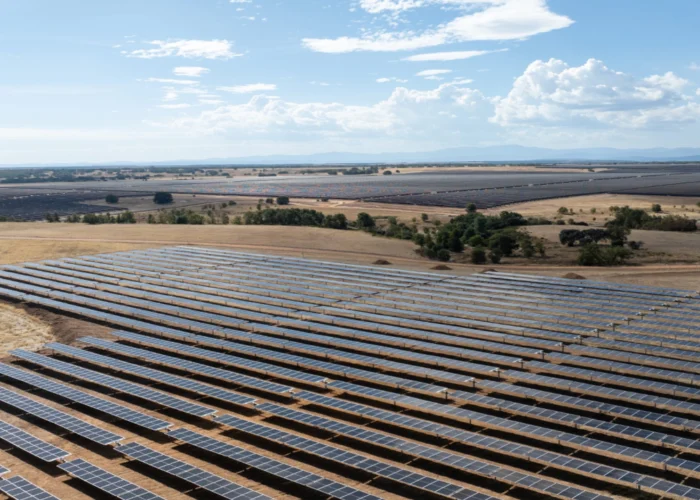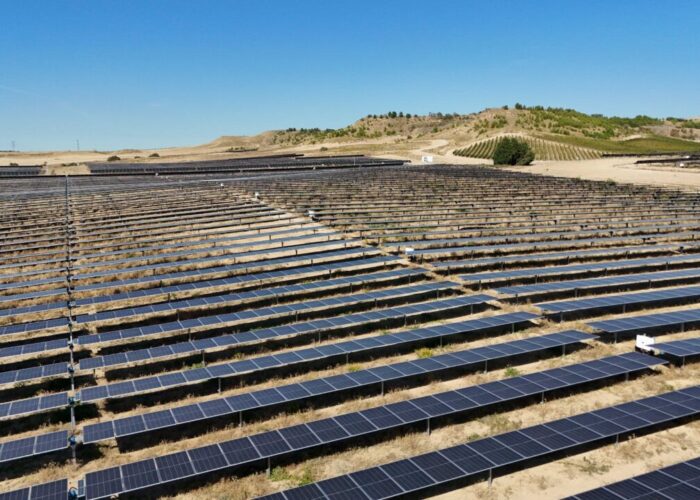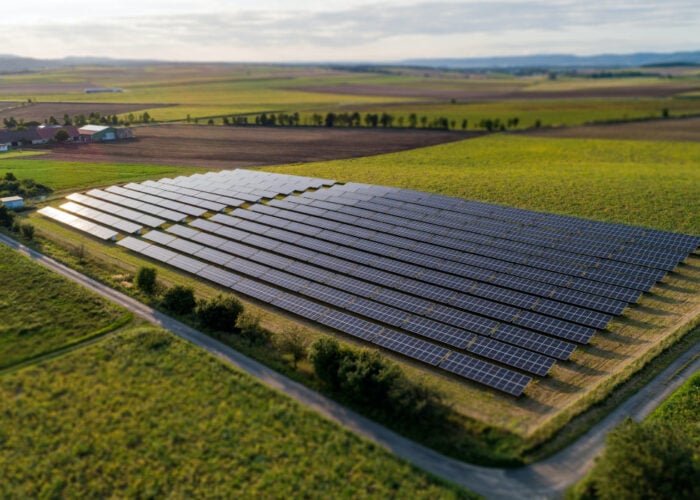
Solar PV is the world’s cheapest technology to generate electricity, according to a study from the University of Surrey, in the UK.
Cost reductions in utility-scale solar PV and energy storage systems have been “unprecedented” since 2021, the researchers said, to the point where PV is “now the key driver of the world’s transition to clean, renewable power”.
Try Premium for just $1
- Full premium access for the first month at only $1
- Converts to an annual rate after 30 days unless cancelled
- Cancel anytime during the trial period
Premium Benefits
- Expert industry analysis and interviews
- Digital access to PV Tech Power journal
- Exclusive event discounts
Or get the full Premium subscription right away
Or continue reading this article for free
On average, the research shows global average solar power prices between US $0.03–0.05 per kWh. In the sunniest parts of the world – those with the highest levels of solar irradiance – solar PV can produce power for as little as US $0.018 per kWh, cheaper than the lowest prices for coal, gas or wind generation.
“Even here in the UK, a country that sits 50 degrees north of the equator, solar is the cheapest option for large-scale energy generation,” said professor Ravi Silva, director of the Advanced Technology Institute at the University of Surrey.
“Globally, the total amount of solar power installed passed 1.5TW in 2024 – twice as much as in 2020 and enough to power millions of homes. Simply put, this technology is no longer a moonshot prospect but a foundational part of the resilient, low-carbon energy future that we all want to bring to reality. “
Moreover, the research found that the price of Lithium-ion batteries has fallen by 89% since 2010, which they claim has made solar-plus-storage systems as cost-effective as gas plants, without the carbon emissions.
The research accords with forecasts from the International Energy Agency (IEA), which said that solar PV would account for almost 80% of the renewable energy added between 2025 and 2030 due largely to its low cost and ease of deployment.

In combination with energy storage, “solar is now capable of delivering reliable, affordable and clean power at scale,” Silva said.
Recently, PV Tech published an exclusive blog by Radovan Kopecek, founder of solar research centre ISC Konstanz, who argued that solar PV, in combination with energy storage, would be the backbone of the global energy transition over the next decade. Kopecek and his co-author and ISC Konstanz colleague, Joris Libal, described the “sustained exponential growth” of global solar capacity, driven by the economics and deployability of the technology. They highlighted back contact (BC) solar tech, in particular, as the driving force of renewable energy.
However, the researchers at Surrey University said that integrating large amounts of solar PV capacity into global grids is a “challenge” for the sustained deployment of renewables. They gave the example of California, where the vast amounts of solar on the state grid has led to “wasted energy when supply exceeds demand” and triggered the infamous “duck curve” of low power prices in the middle of the day.
“Connecting growing levels of solar power to electricity networks is now one of the biggest challenges. Smart grids, artificial intelligence forecasting and stronger links between regions will be vital to keep power systems stable as renewable energy use rises,” said Dr Ehsan Rezaee, research fellow at the University of Surrey.