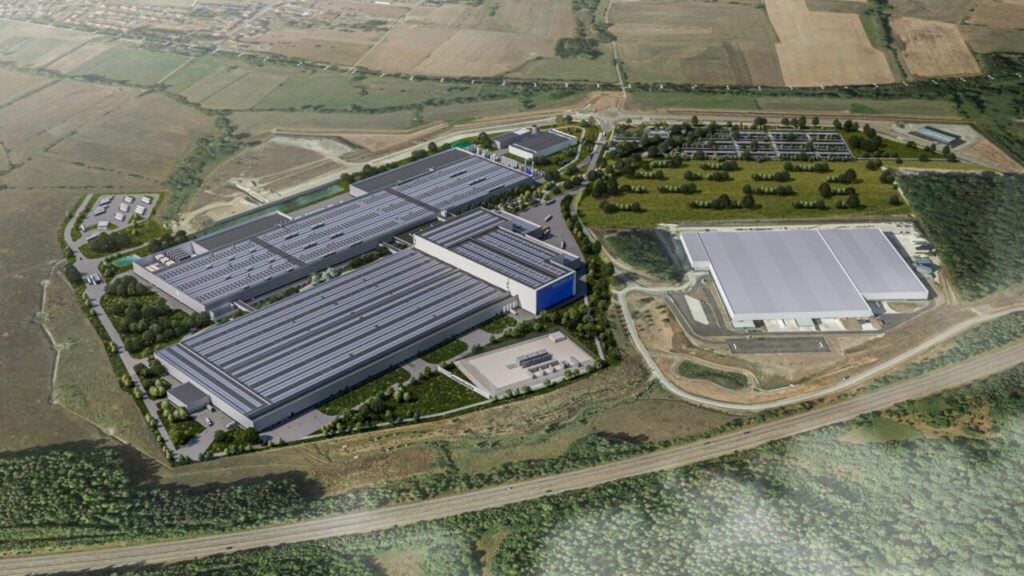
Chinese PV manufacturer Trina Solar is among four new shareholders investing €15 million (US$16.5 million) in the French start-up manufacturer HoloSolis planned 5GW module plant.
HoloSolis yesterday finalised a Series A financing round, with banking group Crédit Agricole Group, asset management firm Algebris and energy storage specialist StarCharge joining Trina as investors.
Try Premium for just $1
- Full premium access for the first month at only $1
- Converts to an annual rate after 30 days unless cancelled
- Cancel anytime during the trial period
Premium Benefits
- Expert industry analysis and interviews
- Digital access to PV Tech Power journal
- Exclusive event discounts
Or get the full Premium subscription right away
Or continue reading this article for free
HoloSolis and Trina are already strategic partners in the French firm’s planned module assembly facility, with the two signing a patent licence agreement last year covering Trina’s tunnel oxide passivated contact (TOPCon) cell technology. The two companies have also signed a broader cooperation agreement that will see Trina playing a key role as an investor and technical partner in the HoloSolis plant.
HoloSolis said the new financing round took the total public and private investment in its project to around €400 million. This includes potential support from the European Commission’s Innovation Fund, with the grant agreement currently being finalised.
In a statement on the new investment, HoloSolis restated its main goal of building a gigafactory in Sarreguemines, in France’s Grand Est region, thereby contributing to the reindustrialisation of Europe’s solar manufacturing sector.
HoloSolis said it would now focus on raising further financing for the €1 billion project, securing commercial opportunities to add to the more than 30GW of Letters of Intent from future customers the company said it already had, and undertaking detailed preparations for construction.
If HoloSolis is able to meet its stated goal of beginning construction in 2028 and module production in 2029, it would be a major win for Europe’s faltering efforts to reshore a large-scale PV manufacturing industry.
The EU has pursued various policy and legislative measures to revive PV manufacturing, notably the Net Zero Industries Act, which calls for public procurement programmes and capacity auctions to allocate a portion of their contracts to projects using non-Chinese products.
However, this has yet to happen at any significant scale, and in September industry body SolarPower Europe said the NZIA had been implemented too slowly to have any notable impact.
The difficulties facing PV manufacturers looking to set up operations in Europe were highlighted earlier this year when HoloSolis’ fellow French module manufacturing start-up Carbon abandoned its plans for a 5GW facility, citing policy uncertainty.