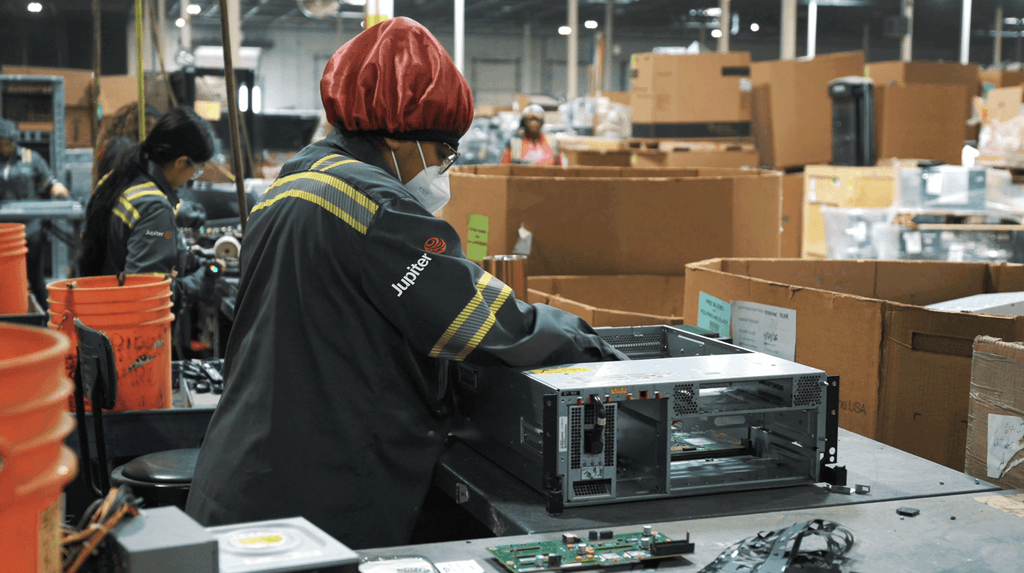
US-based recycling firm Solarcyle is expanding beyond solar with a new joint venture dubbed ‘Jupiter’ aimed at supplying recycled materials to the hyperscaler and data centre industries.
The company has merged with non-ferrous metal refiner Korea Zinc’s US recycling and metal business, PedalPoint Recycling, to form Jupiter, whose aim will be to transform retired IT and energy assets into reusable components and refined critical materials for hyperscalers, data centre operators and other enterprises managing large-scale digital and energy infrastructure.
Try Premium for just $1
- Full premium access for the first month at only $1
- Converts to an annual rate after 30 days unless cancelled
- Cancel anytime during the trial period
Premium Benefits
- Expert industry analysis and interviews
- Digital access to PV Tech Power journal
- Exclusive event discounts
Or get the full Premium subscription right away
Or continue reading this article for free
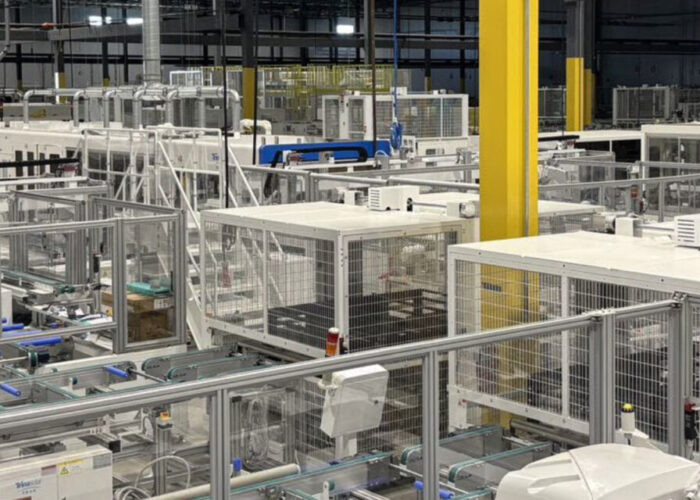
Jupiter will launch with eight certified advanced recycling facilities across the US and one million square feet of processing capacity.
Jupiter will be led by co-founder and CEO of Solarcycle, Suvi Sharma, and CFO Kevin Hahm, of PedalPoint. Korea Zinc will hold a majority stake in Jupiter, with Solarcycle and its existing investors and management, including Microsoft and Prologis Ventures, holding the remaining interest.
Jupiter’s vertically integrated recovery platform
Jupiter will combine PedalPoint’s network of recycling, IT asset disposition and supply chain management entities with Solarcycle’s solar panel recycling assets into a single, fully integrated operating company.
“We are facing critical material shortages just as demand for electrification and digital infrastructure is surging. Jupiter closes that gap, turning retired IT and energy assets into a domestic material supply at an unmatched scale,” said Suvi Sharma, CEO of Jupiter.
In a LinkedIn post, Pablo Dias, co-founder and chief technology officer at Solarcyle, reacted to the merger by saying that: “The expansion beyond solar also reflects what our customers have been asking for. AI and renewable energy infrastructure continue to grow, so will the need for services that manage retired IT and energy assets, keep critical materials in circulation, and divert valuable resources from landfill.”
Before the merger, Solarycle and Korea Zinc had partnered in the US to co-manage some of their facilities across the country, including Mesa, Arizona; San Antonio; Odessa; Chicago; and Atlanta. At the time, the partnership allowed Solarcycle to be within 500 miles of 80% of all solar sites in the US (subscription required).
The metals recovered materials at the eight locations will be refined through Korea Zinc’s global smelting and refining infrastructure, including Project Crucible, a US$7.4 billion critical metals smelting and refining facility in Clarksville, Tennessee in partnership with the US Department of War. Due to begin production in 2029, the facility will be able to process nearly 1.1 million tons of raw materials and produce a total of 540,000 tons of finished products annually.
“Retired IT and energy assets are some of the fastest growing sources of e-waste, and extremely rich in critical metals. Jupiter will play an important role in strengthening the supply chain by preparing this feedstock for final refinement by Korea Zinc. For the customer, our uniquely integrated relationship with a leading global metals company means having a single partner who can take retired assets from the field all the way through final refinement and return the critical materials to the supply chain. This provides traceability and economics no standalone recycler can offer,” said Mark Pope, CEO of PedalPoint.
“If it has a plug, if it has metal, we can now recycle it and provide end-to-end traceability all the way through pure silver bars, copper foil, lead ingots and more. This positions Jupiter to be the energy industry’s one-stop-comprehensive circularity partner for the wave of end-of-life projects heading our way,” wrote on LinkedIn Jesse Simons, co-founder and chief strategy officer.
Simons spoke earlier this year with PV Tech about the latest progress in solar panel recycling (subscription required), including recycled glass to reduce module prices and how the economics of recycling will be a regional thing with “a couple of big companies in the Americas that do it really well. There will probably be a couple of big companies in the EU that do it very well, and then there will be a couple or multiple Chinese companies handling a lot of Asia.”
The merger puts Jupiter as one of the companies in the Americas that can handle everything from decommissioning and triage, to reuse and resale, to recycling and refining across not only the solar industry but also other retired IT and energy assets.