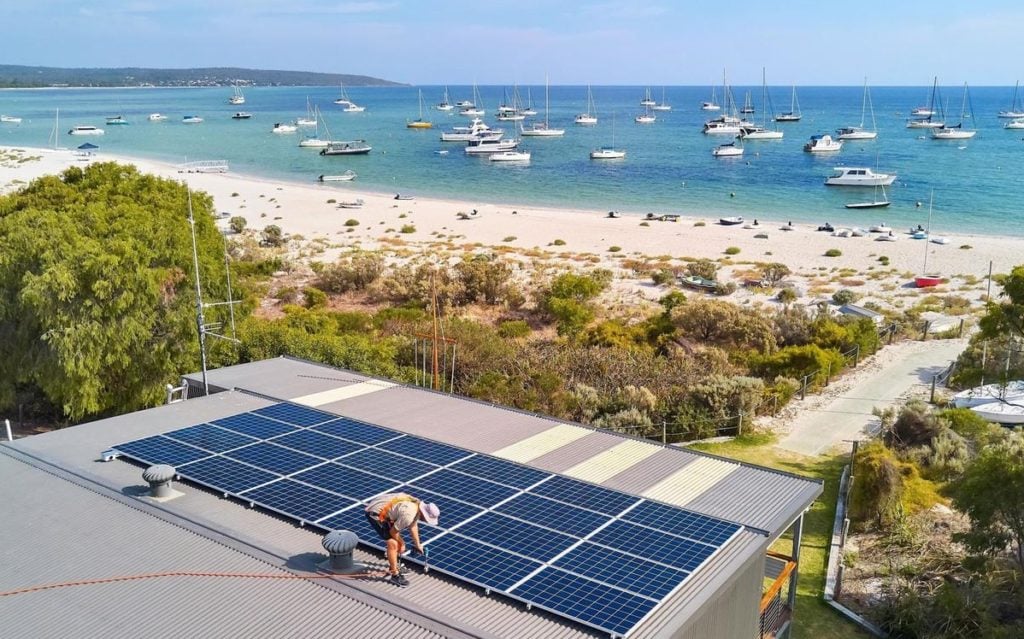
From 26 August to 1 September, Australia’s National Electricity Market (NEM) saw the highest rooftop and utility-scale solar PV contribution across the 2024 winter period.
According to OpenNEM, which grants the public information on the NEM, rooftop solar PV provided 13.2% of the total electricity generation in the last week of the official winter season, whereas utility-scale solar PV delivered 6.2%. This means that 19.4% of the electricity mix on the NEM came from solar PV during the last week.
Try Premium for just $1
- Full premium access for the first month at only $1
- Converts to an annual rate after 30 days unless cancelled
- Cancel anytime during the trial period
Premium Benefits
- Expert industry analysis and interviews
- Digital access to PV Tech Power journal
- Exclusive event discounts
Or get the full Premium subscription right away
Or continue reading this article for free
Across the NEM, rooftop solar PV generated 522GWh of energy, whereas utility-scale solar PV produced 245GWh. This means rooftop solar PV ranked third in all energy generated, only bettered by coal (black), which generated 1,436GWh, and wind energy, contributing 964GWh.
The average value of the rooftop solar PV per MWh was AUS-$33.34 (US-$22.57), with utility-scale solar achieving an average of AUS-$13.42.
August temperatures soared to record levels this winter, standing at 3C above average. The winter period has also been recognised as the second hottest since records began in 1910, with temperatures 1.48C above average, only trumped by 2023’s winter, which saw temperatures reach 1.54C above average.
The previous record for solar PV this winter was set just a week prior (19 August – 25 August), when rooftop solar PV produced 434GWh of energy, with utility-scale solar complementing this with a further 262GWh.
South Australia runs on 100% renewable energy

Elsewhere, South Australia reached a key milestone by running on over 100% renewable energy across the same week, showcasing its solar PV, wind and energy storage prowess.
Indeed, rooftop solar PV generated 21.1% of the 102.2% figure, around 56GWh generated over the week at an average price of AS-$52.02/MWh. On the other hand, utility-scale solar provided 3.9% of the overall mix, around 10.4GWh, at an average price of AUS-$30.96/MWh.
Although solar PV contributed to the overall landmark, wind energy produced most of the renewable energy across the week, with around 204GWh (77.1%).