There is “an emerging and significant compliance risk” for US solar manufacturers and buyers around the origin of solar wafers, according to new analysis from law firm Wiley Rein.
Historical rulings by US Customs and Border Protection (CBP) offer contradictory definitions of the precise role of solar wafers in defining the origin of PV cells and modules, which Wiley Rein said could cause issues for solar buyers and manufacturers looking to access tax credits and avoid the impacts of antidumping and countervailing duty (AD/CVD) tariffs.
Try Premium for just $1
- Full premium access for the first month at only $1
- Converts to an annual rate after 30 days unless cancelled
- Cancel anytime during the trial period
Premium Benefits
- Expert industry analysis and interviews
- Digital access to PV Tech Power journal
- Exclusive event discounts
Or get the full Premium subscription right away
Or continue reading this article for free
The lead author of the analysis, Tim Brightbill, has represented a group of US companies which brought AD/CVD cases to Commerce under the name the American Alliance for Solar Manufacturing Trade Committee.
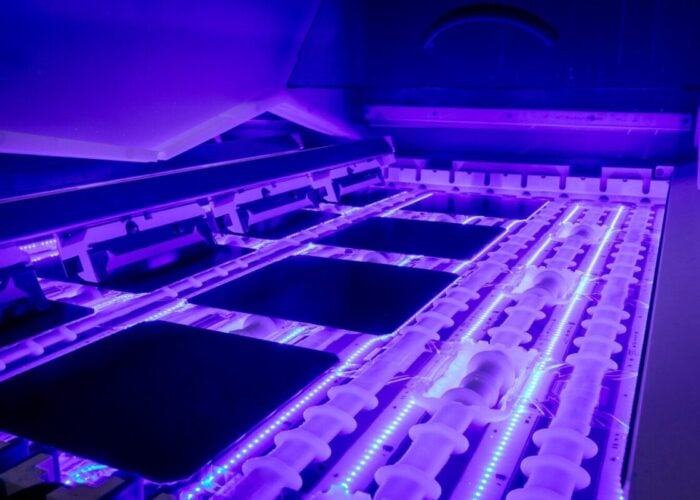
The issue focuses on the doping of solar wafers to create a P/N junction, which allows the silicon wafer to effectively conduct electricity.
“Grey wafers”, which have not yet been doped, cannot convert light into electricity, but the addition of a P/N junction and an anti-reflective coating allow them to convert electricity and turns them a distinctive blue colour. They are then known as “blue wafers”.
One CBP ruling from 2019—the “Merlin Solar Technologies Ruling”—concluded that transforming blue into solar cells did not count as a “substantial transformation”, while a later case in 2025—the “Cypress Creek ruling”—concluded that further processing can count as “substantial transformation”.
“Remarkably”, Wiley Rein said that the first case has not been revoked and was not referenced in the second.
“Further, most of the capital investment required for cell production is associated with the steps leading to, and including, formation of the P/N junction,” its analysis continued.
“In the absence of further clarity from CBP, a solar project developer who uses US modules containing cells produced from imported blue wafers is exposed to significant compliance risk if they rely on the Cypress Creek ruling to claim the cells or modules are of US origin.”
Tariff and tax credit risks
This unclear definition could affect exposure to tariffs and access to tax credits. The US currently has one operational wafer production facility, Corning’s site in Michigan.
US AD/CVD rulings have “consistently” used the country where the P/N junction is formed as the country of origin for solar cells and modules shipped to the US, Wiley Rein said. AD/CVD orders on solar cells define a “cell” as “a product with a P/N junction”, the firm said, “whether or not the cell has undergone other processing”.
That ruling currently applies to cells—or doped wafers—from Malaysia, Thailand, Vietnam, Cambodia and China, and will likely apply to products from India, Laos and Indonesia at the end of the current investigation.
Despite being “at odds” with the 2025 Cypress Creek ruling, the US Treasury is not bound by CBP definitions, Wiley Rein said, which means importers of solar products will be required to pay duties if the P/N junction was established in a target country, regardless of where the imported module itself was assembled.
The domestic content bonus—which adds 10% on top of the Investment Tax Credit (ITC) and Production Tax Credit (PTC) for solar project development—relies on solar cells as a key cost factor for projects to meet its domestic content threshold.
There is not clarity over whether a doped solar wafer will count as a “subcomponent” or a “manufactured product”. Subcomponents for domestic content products can be manufactured outside the US, but all the processes of a “manufactured product” must happen in the US to be eligible for the bonus.
Wiley Rein said that the current guidance designates grey wafers as a subcomponent of solar cell productions, but does not include blue wafers.
“Project developers may wish to validate claims that the photovoltaic cells used in the modules on their projects were, in fact, produced in the US using grey, rather than blue, wafers,” the firm said.
Similarly, solar manufacturers seeking the 45X advanced manufacturing tax credit for solar cell production may need to ensure they rely on imported grey wafers, rather than blue ones.
“The regulations state that the term ‘produced by the taxpayer’ does not include ‘partial transformation that does not result in substantial transformation of constituent elements, materials, or subcomponents into a complete and distinct eligible component’,” Wiley Rein said. “Because a blue wafer already converts light into electricity, processing it to produce a finished cell could easily be considered a partial transformation.”
The credit guidance also says a cell is “the smallest semiconductor element of a solar module that performs the immediate conversion of light into electricity.” As a blue wafer can do that, it may count as a cell.
Wiley Rein warned that using US-made solar cells made from imported blue wafers could result in unexpected AD/CVD levies, disqualification from 45X manufacturing credits, which could subsequently affect module pricing, and the loss of domestic content credits.
It concluded: “The stakes are high. CBP has for many years pursued enforcement actions against importers of solar cells and modules. Those efforts continue today. Failing to ensure that modules contain cells manufactured entirely in the United States from grey wafers could jeopardise the financial viability of projects and expose developers to significant liability.”
After five editions of Large Scale Solar USA, the event becomes SolarPLUS USA to mirror where the market is heading. The 2026 edition, held in Dallas, Texas, on 24-25 March, will bring together developers, investors and utilities to discuss managing hybrid assets, multi-state pipelines, power demand increase from data centres and AI as well as the co-location of solar PV with energy storage in a complex grid. For more details and how to attend the event, visit the website here.